


As of March 2026, a 10–15% tariff applies to virtually all imported wine entering the United States under Section 122 of the Trade Act of 1974. Because the U.S. three-tier distribution system multiplies costs at each level, a 15% tariff at the border can add $3–$8 or more to the shelf price of a bottle.
Research from the NBER shows consumers ultimately pay more in dollar terms than the tariff itself collects. The most affected bottles are mid-range European imports ($15–$50), while domestic wines and direct-to-consumer purchases offer partial insulation.
Key Takeaways
- New tariff, same pain. The Supreme Court struck down IEEPA tariffs in February 2026, but Section 122 tariffs of 10–15% replaced them almost immediately.
- The multiplier effect is real. A $1.50 tariff on a bottle at the border becomes $3–$5 more on the shelf because distributors and retailers apply percentage-based markups on top.
- Mid-range European imports are hit hardest. Wines in the $15–$50 range see the biggest proportional price jumps, with European bottles commonly 15–25% more expensive than a year ago.
- American wines aren’t immune. About 70% of U.S. wine bottles (the glass) are imported, and barrels, corks, and equipment all carry tariff surcharges too.
- The 150-day clock is ticking. Section 122 tariffs expire around late July 2026 unless Congress extends them, which is widely considered unlikely — but legal challenges and new trade actions could change the picture.
What Just Happened — The Tariff Timeline
If the last year of wine trade policy feels like whiplash, you’re not imagining it. Here’s the short version of how we got here.

The pattern is clear: one legal authority gets challenged, another gets invoked, and the wine industry absorbs the uncertainty at every turn. As a merchant who imports European wines and produces domestic ones, I’ve watched this cycle from both sides of the supply chain.
How a Tariff Actually Reaches Your Glass
Here’s what most tariff coverage gets wrong: they report the tariff rate and stop there. But the U.S. wine distribution system amplifies every dollar of tariff cost before it reaches you.
The three-tier system — producer/importer, distributor, retailer — was created after Prohibition. At each tier, the business applies a percentage-based markup (typically 25–50% per tier). That means a tariff doesn’t just add its face value to the bottle price. It gets compounded.
A landmark NBER study (Working Paper 34392, published March 2026) traced exactly how the 2019–2021 wine tariffs flowed through the supply chain. The findings are striking: on a bottle that entered the U.S. at $5, the 25% tariff generated $1.19 in government revenue — but the consumer ended up paying $1.59 more. Consumers paid more than the tariff itself collected because each tier’s percentage markup amplified the cost upstream.
What a 15% Tariff Does at Different Price Points

The takeaway: the cheaper the import, the more you feel the tariff proportionally. A $10 wholesale wine that once sat at $24 on the shelf now pushes toward $29. That’s a meaningful jump for everyday drinkers.
Which Wines Are Hit Hardest (and Which Aren’t)

The irony of the tariff is that it was framed as protection for domestic producers. But as the data shows, American wineries didn’t see a significant sales boost from the 2019–2021 tariffs or the current round. Wine preference is deeply regional and varietal — a Barolo lover doesn’t simply switch to Napa Cabernet because the price changed.
The Merchant’s Playbook — 5 Ways to Buy Smarter Right Now

You don’t have to accept higher prices at face value. Here’s how to navigate this market like a professional:
1. Buy direct-to-consumer whenever possible
When you buy from a curated merchant or directly from a winery, you’re cutting out one or two tiers of markup. That means the tariff surcharge gets amplified less before it reaches your glass. A $25 bottle purchased through DTC often delivers the quality of a $35–$40 retail bottle because nobody skimmed 50–60% in the middle.
2. Explore tariff-light origins
Not all wine-producing countries face the same tariff landscape. Chile, Argentina, Australia, and New Zealand often carry lower effective duty rates or benefit from trade agreements. Importers are already rebalancing portfolios toward these origins. Some of the best values in wine right now are coming from regions that weren’t on your radar two years ago.
3. Move up the quality ladder, not down
Counterintuitive, but hear me out: when tariffs inflate the price of a $12 import to $16, the quality gap between that bottle and a $22 bottle barely changes — but the price gap narrows. The premium bottle becomes the better deal per dollar of actual wine quality. This is the premiumization trend in action, and it’s your friend right now.
4. Watch for pre-tariff inventory
Some retailers and importers still have stock that cleared customs before the latest tariff round. These bottles are priced at pre-tariff levels. Ask your merchant what they have in warehouse — those deals won’t last.
5. Join curated programs that absorb volatility
Wine clubs and text programs from merchants who source directly can smooth out pricing volatility because they negotiate directly with producers and control their own margins. You get consistent pricing and access to wines that may not hit retail shelves at all.
Will Tariffs Make American Wine Cheaper? Not Exactly.
It’s tempting to think tariffs on imports would make domestic wines more competitive. But the economics tell a more complicated story.
About 70% of wine bottles (the glass itself) used by U.S. wineries are imported from China, France, and Mexico. Chinese glass faces roughly a 20% tariff; European glass carries 15%. That means packaging costs alone have risen by as much as $1 per bottle for domestic producers. Add imported French oak barrels ($1,000–$1,200 each, 300 bottles per barrel), corks from Portugal, and imported equipment — and you see why domestic wine prices haven’t dropped.
On the export side, it’s even worse. Canada — historically the #1 export market for U.S. wine, representing 36% of all American wine exports — banned American wine imports in retaliation. U.S. wine exports dropped below $1 billion for the first time since 2009. Tariffs cut both ways.
What Happens Next — The 150-Day Clock
Section 122 tariffs are temporary by design: the statute limits them to 150 days unless Congress votes to extend them. That puts the expiration around late July 2026. Congressional extension is widely considered unlikely.

But “temporary” doesn’t mean the story ends there. The administration has already launched multiple Section 301 investigations into unfair trade practices — a process that can lead to more targeted, longer-lasting tariffs on specific countries. Legal challenges from 24 states are working through the courts. And the broader political environment — with midterm elections in November 2026 — makes trade policy a moving target.
The wine industry’s message is consistent across importers, domestic producers, and restaurants: uncertainty is the real killer. Planning requires predictability. You can manage a known cost. You can’t manage a cost that changes every 60 days.
Mini-Glossary
Ad Valorem Tariff: A tariff calculated as a percentage of the imported product’s value (e.g., 15% of the wine’s declared customs value).
Section 122: A provision of the Trade Act of 1974 that allows the president to impose temporary tariffs of up to 15% for 150 days to address balance-of-payments deficits.
IEEPA: International Emergency Economic Powers Act of 1977. Struck down by the Supreme Court in February 2026 as a basis for broad trade tariffs.
Three-Tier System: The U.S. alcohol distribution structure requiring wine to pass from producer/importer to distributor to retailer before reaching consumers. Each tier adds markup.
Landed Cost: The total cost of an imported wine after all duties, tariffs, shipping, and customs fees are paid — the true cost before distributor markup begins.
DTC (Direct-to-Consumer): Sales from a winery or merchant directly to the buyer, bypassing one or more distribution tiers and reducing tariff-driven markup amplification.
Tariff Engineering: The practice of adjusting a product (e.g., raising alcohol content above 14% ABV) to reclassify it into a tariff category with a lower or zero rate.
Premiumization: The consumer trend of buying fewer bottles but spending more per bottle, accelerated by tariff-driven price compression at the low end.
Frequently Asked Questions
1. What is the current tariff on imported wine in the U.S.?
As of March 2026, a 10% Section 122 tariff applies to imported wine. The president announced an increase to 15% (the statutory maximum), though formal implementation of the higher rate is still pending. This is in addition to existing standard customs duties and excise taxes.
2. Why did the Supreme Court strike down wine tariffs?
In February 2026, the Supreme Court ruled 6–3 in Learning Resources v. Trump that the International Emergency Economic Powers Act (IEEPA) did not authorize the president to impose broad trade tariffs without clear congressional approval. The tariffs of 15–25% that had been in effect since mid-2025 were struck down.
3. How much more will I pay for a bottle of imported wine?
It depends on the wine’s wholesale value and where you buy it. Through standard retail, a 15% tariff typically adds 15–25% to the shelf price because the three-tier distribution system amplifies the cost at each level. On a typical $30 European wine, expect to pay $5–$8 more than pre-tariff prices.
4. Are tariffs applied to all wines equally?
The current Section 122 tariff applies broadly to all imports, not just wine. However, the impact varies by country of origin, existing trade agreements, and wine category. Some countries with separate bilateral deals may face different effective rates.
5. Do tariffs affect domestic American wines too?
Indirectly, yes. About 70% of wine bottles (glass), most corks, French oak barrels, and much winemaking equipment are imported. These materials now carry their own tariff surcharges, raising production costs for domestic wineries.
6. How long will the Section 122 tariffs last?
Section 122 tariffs are limited by statute to 150 days unless Congress votes to extend them. The current round began February 24, 2026, putting the expiration around late July 2026. Congressional extension is widely seen as unlikely, but the administration may pursue other tariff authorities.
7. Will wine tariffs be refunded after the Supreme Court ruling?
Importers are pursuing refunds of tariffs collected under the now-invalidated IEEPA authority. Formal refund processes are underway through the Court of International Trade, but the president has suggested it could take years of litigation. Section 122 tariffs collected since February 24 are a separate matter.
8. Which wines are most affected by tariffs?
Mid-range European imports ($15–$50 retail) see the biggest proportional impact. Entry-level Champagne, Burgundy, and niche/small-production imports are especially squeezed because importers cut riskier, lower-volume SKUs first.
9. Can I avoid paying tariff costs on wine?
You can reduce the impact by buying direct-to-consumer (which eliminates 1–2 tiers of markup amplification), exploring wines from tariff-light origins (Chile, Argentina, Australia), and looking for pre-tariff inventory still in merchant warehouses.
10. How does the three-tier system multiply tariff costs?
Each tier — importer, distributor, retailer — applies a percentage-based markup (typically 25–50%). Because the tariff raises the base cost, every subsequent percentage markup is calculated on a higher number. An NBER study found that on a $5 wholesale wine with a 25% tariff, consumers ended up paying $1.59 more — even though the tariff itself only generated $1.19 in revenue.
11. Is it better to buy domestic wine right now?
It depends on your preferences. Domestic wines avoid import tariffs, but they face their own cost pressures from imported materials. The best strategy is to focus on value-per-dollar regardless of origin, buy through DTC channels when possible, and be open to exploring wines from regions you might not have considered before.
12. What happens to wine prices if tariffs expire in July?
If Section 122 tariffs expire without replacement, import costs at the border would drop back to standard duty rates. However, the speed at which retail prices adjust downward tends to be slower than the speed at which they went up. Some price relief would likely appear within 2–3 months, especially on new shipments.
Explore Smarter
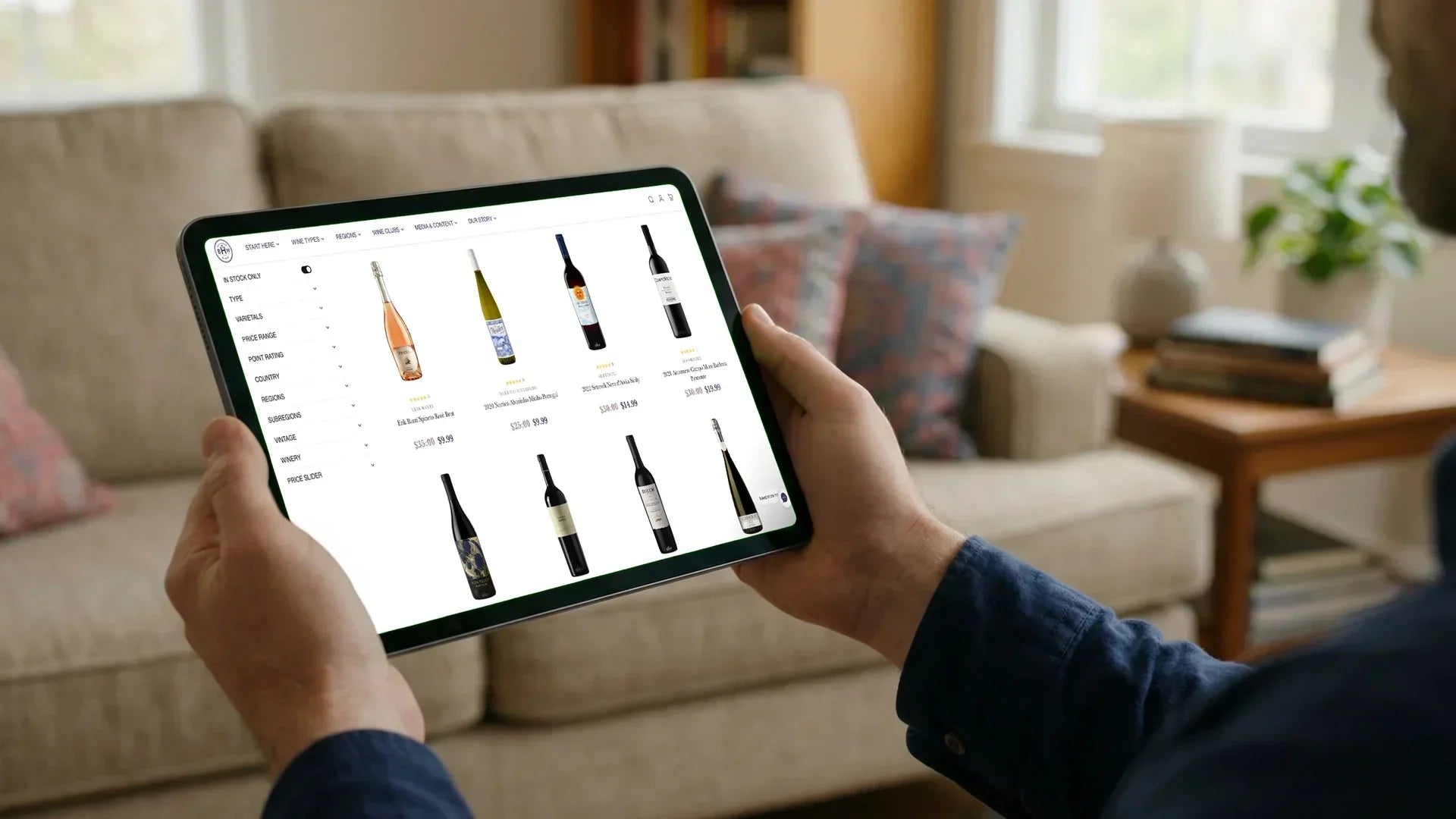
Looking for wines that deliver quality without the tariff markup? Browse the Big Hammer Wines collection — we source directly from family estates and small producers so more of your dollar goes to what’s in the glass.
Want curated picks and insider access delivered by text? Apply for the Text2Sip Founders Text Club.












































Share:
The Real Cost of Cheap Wine: Where Your $10 Actually Goes
Buying Wine Online: A Beginner’s Guide to Choosing Well
Comments Section