

Donum Estate in Sonoma's Carneros region is a winery unlike any other in California.
Founded in 2001 by Anne Moller-Racke and now owned by Allan and Mei Warburg, it combines limited-production, regenerative-organic Pinot Noir and Chardonnay with a private sculpture collection of 60+ monumental works by artists including Ai Weiwei, Yayoi Kusama, Louise Bourgeois, and Olafur Eliasson.
A visit feels less like a winery tour and more like walking through a living museum.
Key Takeaways
- Donum Estate was founded in 2001 by Anne Moller-Racke in Carneros and acquired in 2010 by Danish entrepreneur Allan Warburg and his wife Mei.
- The estate grows Pinot Noir and Chardonnay across four vineyard sites: Carneros, Russian River Valley, Anderson Valley, and TFV — all farmed to regenerative organic standards.
- The sculpture collection features 60+ monumental works by Ai Weiwei, Yayoi Kusama, Louise Bourgeois, Olafur Eliasson, Keith Haring, Anselm Kiefer, and many others.
- Donum is one of the first Sonoma wineries to achieve Regenerative Organic Certified (ROC) status — farming philosophy is as intentional as the art program.
- It's the kind of producer Big Hammer Wines was built to find: quality-obsessed, story-rich, and completely indifferent to the ordinary.
I Wasn't Expecting This

I've visited a lot of wineries. You develop a rhythm after a while — the tour, the barrel room, the tasting, the gift shop. You know what's coming before you arrive.
Donum Estate broke that rhythm completely.
A few months ago I made the drive out to their property in Sonoma, not entirely sure what to expect beyond good Pinot Noir. What I found was something I'm still thinking about.
Built by People Who Cared Deeply — and Kept Caring
Donum's story starts with a woman named Anne Moller-Racke. She arrived in California from Germany in 1981 to help manage Buena Vista Winery in Sonoma Valley, eventually rising to Vice President. In 1997, she planted the estate's original vines in Carneros. When the Moller-Racke family sold Buena Vista in 2001, they kept the Carneros vineyards — renaming the property The Donum Estate, making it Anne's defining project.
The name itself is telling. Donum is Latin for gift — the idea that wine is a gift given by the land, not manufactured from it.
In 2010, the estate found new owners in Allan and Mei Warburg. Allan is Danish, born into a family that valued both wine and art; Mei is Chinese, and together they split their time between Beijing and Hong Kong. Allan had been drinking Donum wines for years before his brother — who imported the label to Denmark — tipped him off that the estate was for sale. He moved quickly. Within the year, they were the majority owners of 170 acres of rolling Sonoma vineyards.
What the Warburgs found when they arrived was a serious wine estate with exceptional bones. What they built from there is something entirely their own — a place where their combined passions for wine, contemporary art, and sustainable land stewardship have converged into something that didn't exist anywhere before.
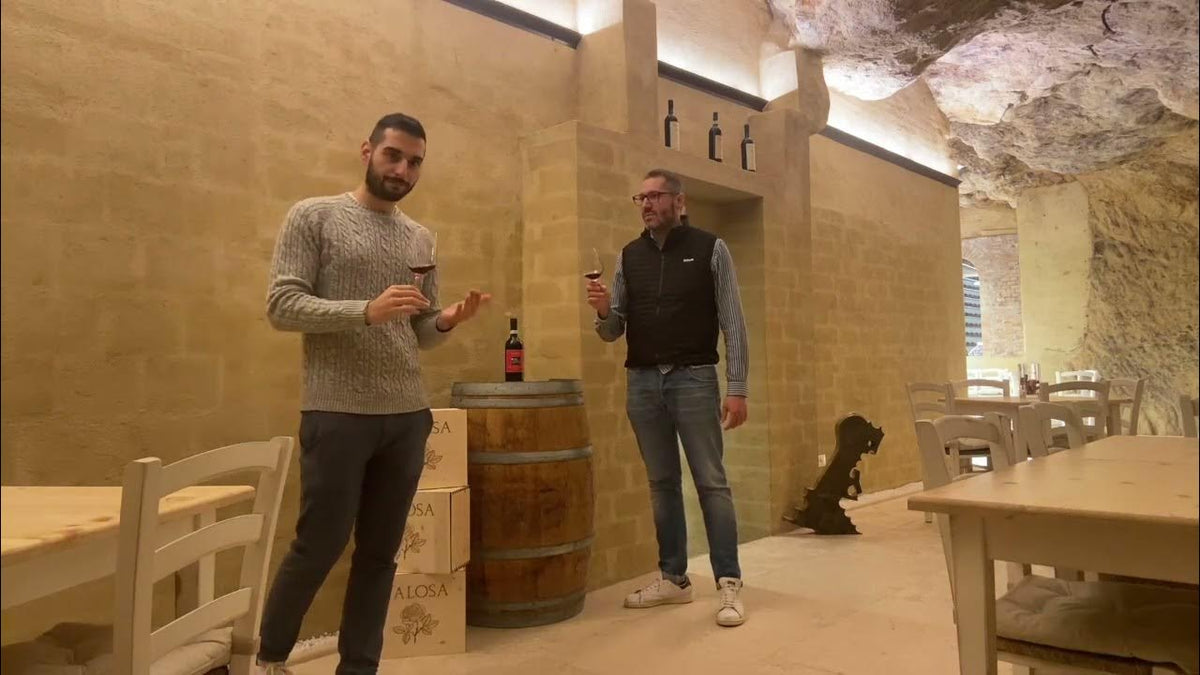
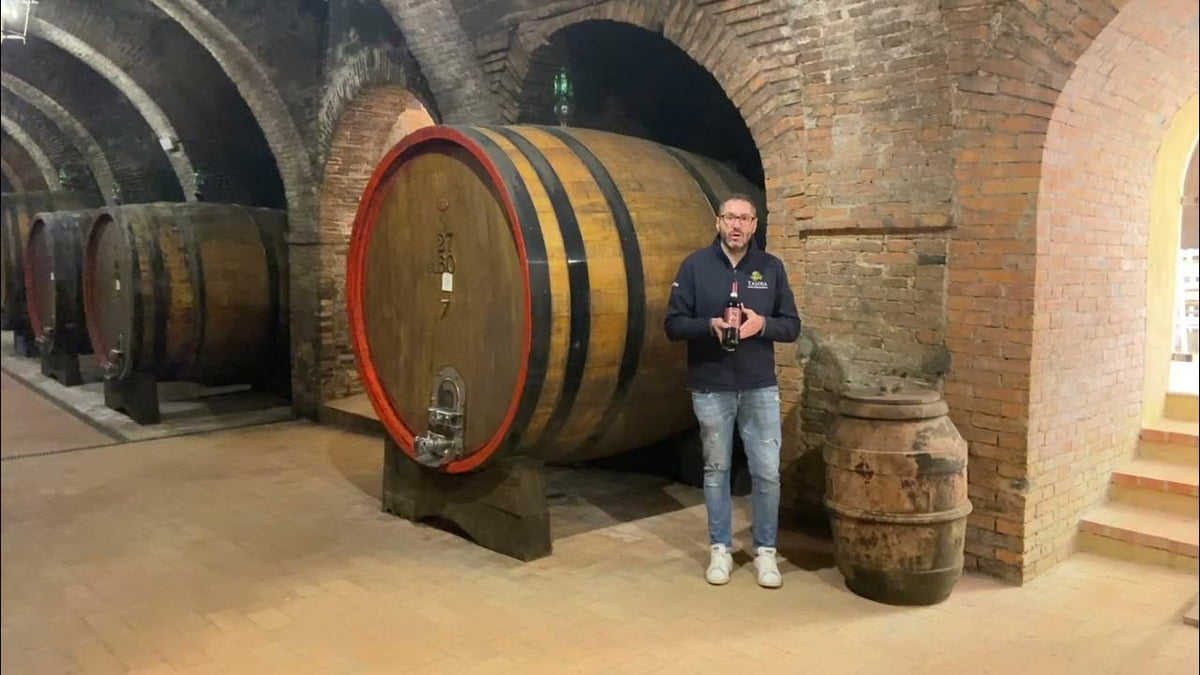
If you'd rather hear the full story directly, I broke down Donum’s background, the art, and their farming philosophy — in this short video:
Walking Through the Vineyards Felt Different Here

The first thing you notice — before you even think about wine — is the art.
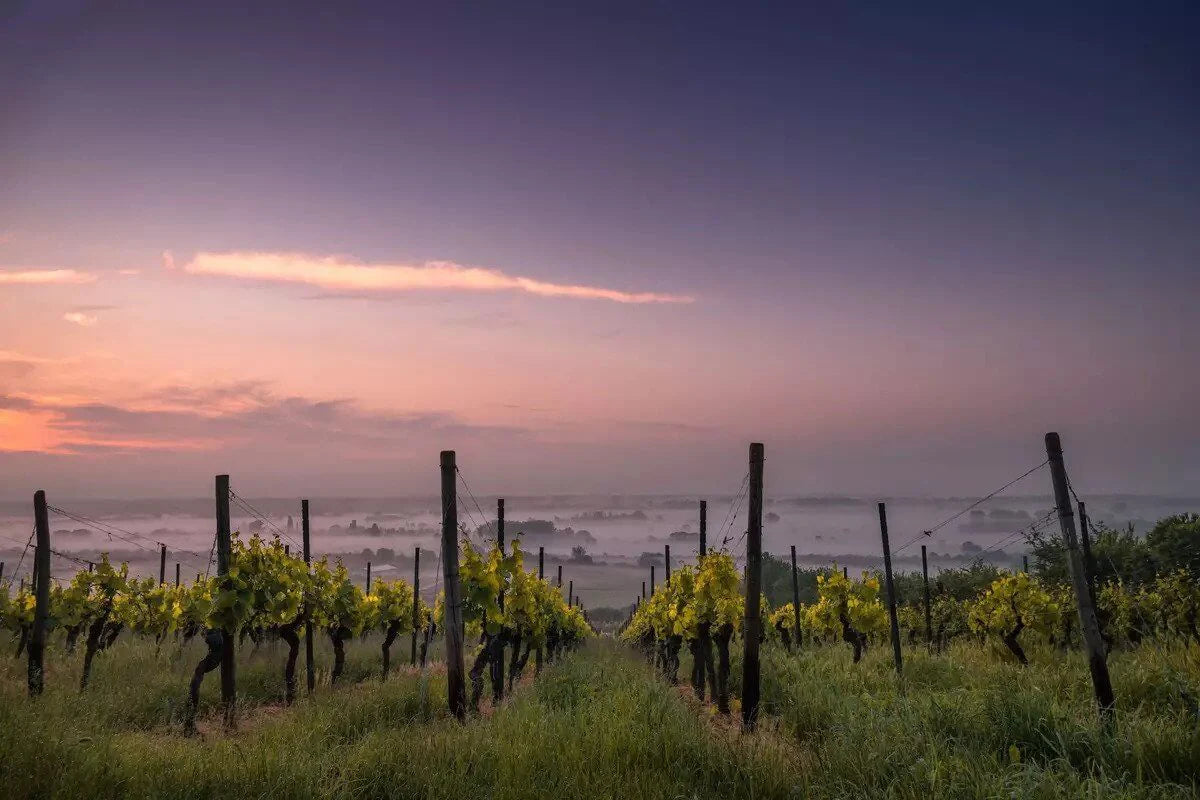
Donum maintains a private sculpture collection of over 60 monumental works spread across the property. Not tucked into a gallery. Not arranged near the tasting room. Out in the vineyards, surrounded by vines, sky, and the particular quality of Sonoma light that makes everything look slightly more saturated than it should.
Fernando Botero's bronze figures sit heavy and serene near the vines. Yayoi Kusama's polka-dotted pumpkin appears around a bend like a hallucination you weren't expecting. Louise Bourgeois's work creates an entirely different emotional register — intimate and unsettling in the best way. Ai Weiwei's Circle of Animals / Zodiac Heads — a series of 12 bronze animal heads referencing the Chinese zodiac — feels at home here, an image the estate uses on several of its wine labels.
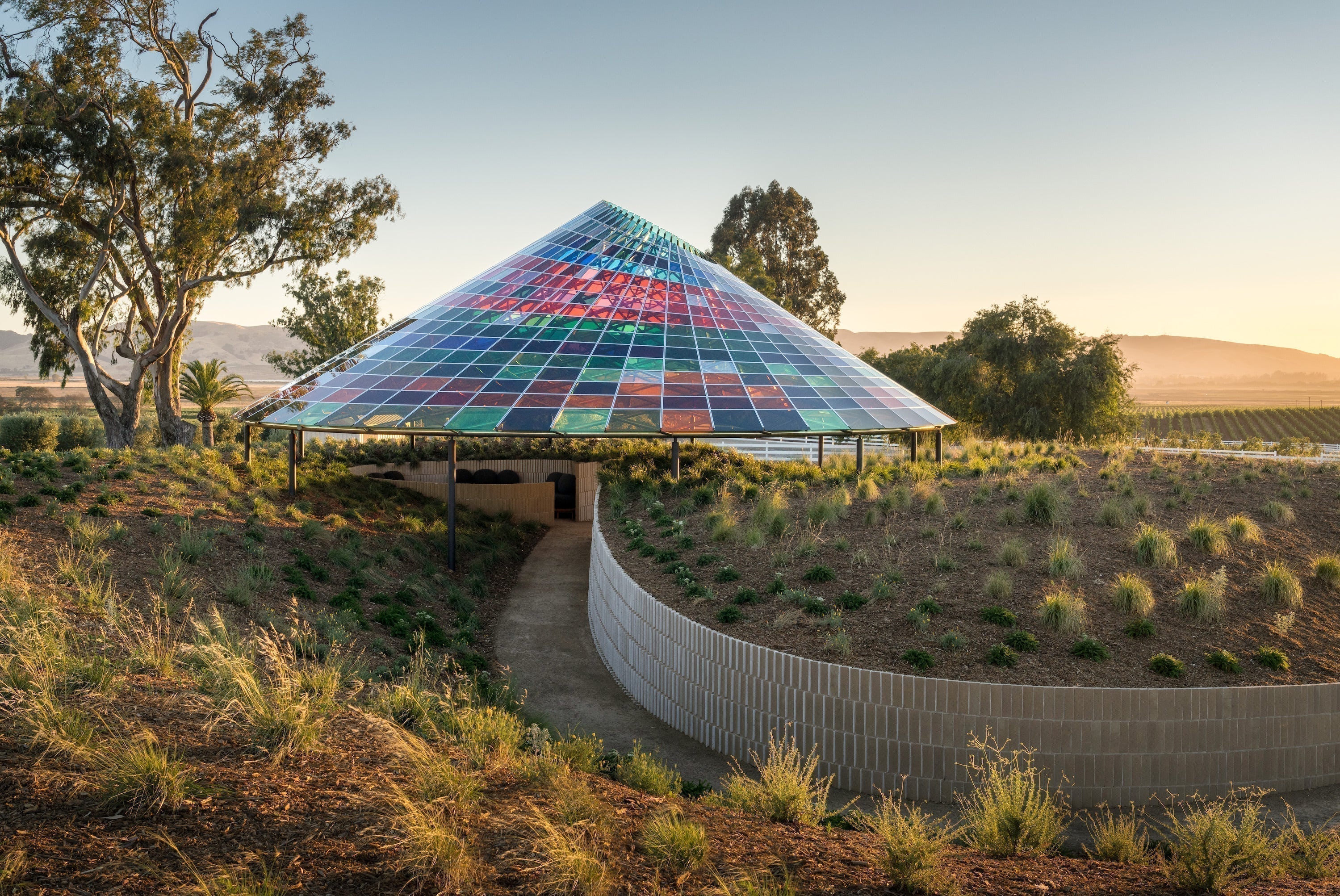
Then there's Keith Haring's unmistakable graphic energy; Anselm Kiefer's heavy, mythological weight; Tracey Emin's raw emotionality; Lynda Benglis's fluid, frozen forms; Doug Aitken's Sonic Mountain, a melodic installation made of 365 wind chimes; and the Vertical Panorama Pavilion by Olafur Eliasson and Sebastian Behmann — a commissioned tasting space with a roof of 832 recycled glass panels that fractures light across the vineyards below it. Over a third of the works on the property were commissioned specifically for this land.
Walking between all of it, I kept having the same thought: this isn't decoration. The art inhabits the land the same way the vines do. Both are expressions of intention and patience. Both require years before they reveal what they actually are.
The Wine Earns Its Place Here
I'll be honest — when a winery leans hard into something beyond the bottle, sometimes the wine is the weak link. A beautiful estate with mediocre wine is just an expensive garden party.

That's not the case at Donum. The wine earns its place on this land.
Donum focuses on Pinot Noir and Chardonnay — varieties that punish lazy winemaking and reward producers who are willing to step back and let the place speak. Their estate fruit is limited-production by design, not by accident. They're not trying to scale. They're trying to say something specific about a specific piece of California ground.
Four Vineyards, One Philosophy
Donum sources fruit from four distinct vineyard sites, each contributing a different dimension to the portfolio.
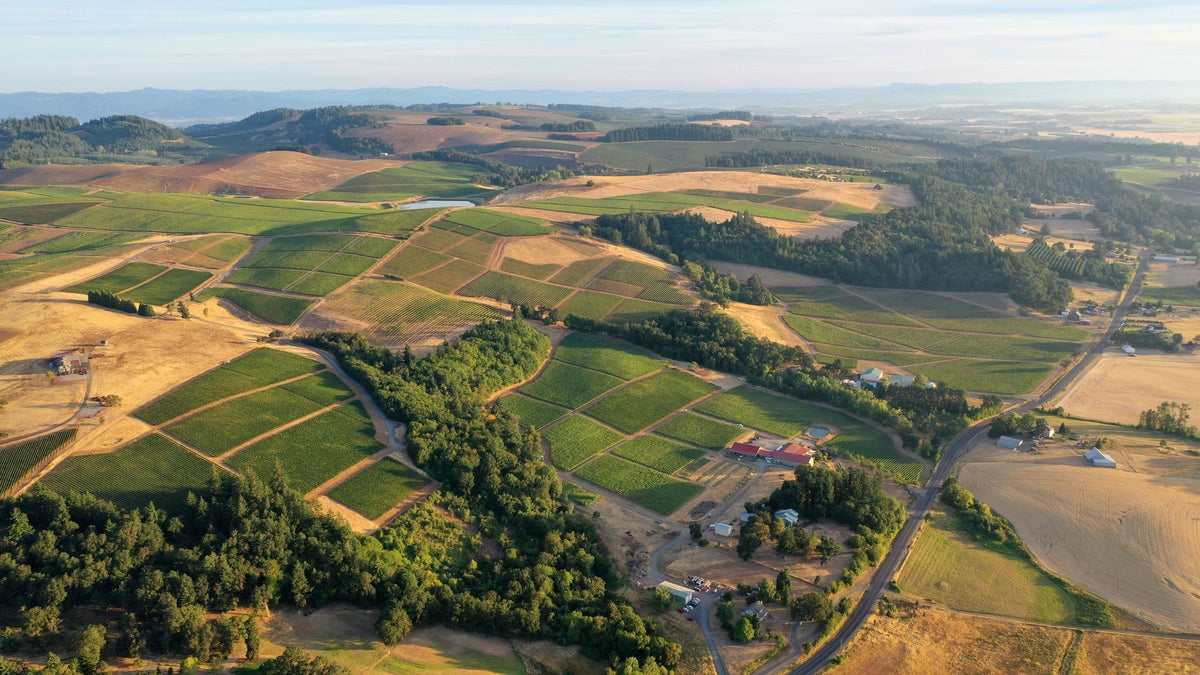
The Carneros Estate is the heart of the operation — nearly 200 acres of rolling hills where the original vines were planted and where the winemaking facility now sits in a restored dairy barn. The Home vineyard block, with some of the estate's oldest plantings, produces what many consider Donum's most site-specific expression. Just a mile away sits TFV — originally planted in 1974 by Thomas Ferguson, one of the most unique sites in Carneros, with rocky cobblestone terrain and silica-rich soils that give the wines a distinctive mineral quality.
In the Russian River Valley, the Ten Oaks Vineyard was planted in 1997 and acquired by Donum in 2013. Its warmer microclimate yields a richer, more powerful style of Pinot Noir than the windswept Carneros sites. And in 2023, Donum acquired the historic Savoy Vineyard in Anderson Valley — a cool, high-wind site planted in 1991 with over 40 acres of established Pinot Noir and Chardonnay, adding another distinct voice to the already layered conversation.
Across all four sites, the farming philosophy is the same: leave as little mark on the land as possible, while doing everything necessary to help it express itself fully. Donum is one of the first wineries in Sonoma County to achieve Regenerative Organic Certified status — a designation that goes well beyond standard organic. In practice, that means native yeast fermentation, small-lot production, compost tea, biochar, cover crops, and a working population of sheep, chickens, and ducks roaming the vineyard rows for natural pest and weed management.
There's also an organic kitchen garden, a lavender field, a grove of 150-year-old olive trees, and a plum orchard of over 100 trees planted by Mei Warburg — beautiful in spring, and significant to her in ways that go beyond aesthetics. The estate has always been about more than wine, and the farming makes that visible.
We carry a selection of Donum wines at Big Hammer Wines. Current bottles available include the 2021 Home Ranch Pinot Noir Carneros, 2021 Single Vineyard Carneros Chardonnay and the 2022 Donum Pinot Noir Single Vineyard Carneros The wines tell the same story the estate does: unhurried, precise, worth your attention.
What Makes Donum Different — And Why It Matters
There's a version of California wine that gets made by committee. Focus-grouped, engineered for consistency, designed to taste the same every year regardless of what the vintage actually did. You know the type. It fills the shelves at every grocery chain in the country.
Donum is the opposite of that.
Everything about the estate — the art acquisition, the farming decisions, the winemaking — reflects a point of view. Someone made deliberate choices here. You can taste it, and you can feel it walking the property. There's no pretense of being all things to all people. It's a wine for people who want to know where something came from and why it matters.
As someone who spends a lot of time thinking about why wine is worth caring about, visiting places like Donum reminds me why I do this. The wine industry has plenty of mediocrity to go around. Producers who refuse to participate in it are worth knowing.
If You Go: What to Know Before Your Visit

A Few Terms Worth Knowing
Carneros AVA
A cool, wind-driven appellation straddling the southern ends of both Napa and Sonoma counties. The marine influence from San Francisco Bay keeps temperatures low and extends the growing season — ideal for Pinot Noir and Chardonnay.
Regenerative Organic Certified (ROC)
The highest tier of organic certification, requiring not just the absence of synthetic chemicals but active soil regeneration, animal welfare standards, and social equity practices. Donum is among the first Sonoma wineries to earn this designation.
Estate wine
Wine produced exclusively from grapes grown on the winery's own land. A direct connection between place and bottle — the producer controls the entire process from vine to glass.
Single-appellation
A wine made from grapes grown entirely within one designated region, rather than blended across multiple origins. Donum's wines are single-vineyard or single-appellation by design.
Native yeast fermentation
Fermentation driven by wild yeasts naturally present on the grape skins and in the winery environment, rather than commercially cultured yeasts. Associated with complexity and site expression.
Terroir
The complete natural environment of a vineyard — soil, climate, topography, sun exposure — and how that environment expresses itself in the wine.
Frequently Asked Questions
1. What is Donum Estate?
Donum Estate is a Sonoma, California winery in the Carneros AVA, known for limited-production, regenerative-organic Pinot Noir and Chardonnay, and for one of the world's most significant private sculpture collections — over 60 monumental works displayed across its vineyard property.
2. Who founded Donum Estate?
Donum Estate was founded in 2001 by Anne Moller-Racke, a German-born winemaker who had spent decades working in Sonoma, including as Vice President of Buena Vista Winery. She planted the estate's original Carneros vines in 1997. Allan and Mei Warburg purchased the estate in 2010 and have continued developing it as both a wine and art destination.
3. Who owns Donum Estate today?
Donum Estate is owned by Allan Warburg, a Danish entrepreneur, and his wife Mei, who was born in China. They split their time between Beijing and Hong Kong. Their combined backgrounds — Danish design sensibility, deep connection to Chinese art and culture — directly influenced the international scope of the sculpture collection.
4. What vineyards does Donum farm?
Donum farms four estate vineyards: the Carneros Estate (the original home site), TFV in Carneros (rocky, cobblestone terrain planted in 1974), Ten Oaks in the Russian River Valley (acquired 2013), and Savoy in Anderson Valley (acquired 2023). All are certified or in-process for Regenerative Organic Certification.
5. What artists are in the Donum Estate sculpture collection?
The collection includes works by Ai Weiwei, Yayoi Kusama, Louise Bourgeois, Fernando Botero, Keith Haring, Anselm Kiefer, Lynda Benglis, Tracey Emin, Doug Aitken, Olafur Eliasson, Zhan Wang, Ugo Rondinone, Jaume Plensa, Ghada Amer, Richard Hudson, Danh Vo, and many others. Over a third were commissioned specifically for the estate.
6. Is Donum Estate organic?
Yes. Donum is certified organic by the California Certified Organic Farmers (CCOF) association and is one of the first Sonoma wineries to achieve Regenerative Organic Certified (ROC) status — a more comprehensive standard that includes soil health, biodiversity, and animal welfare.
7. Is Donum Estate worth visiting?
Yes, particularly if you appreciate both wine and art. The combination of walking a working, regeneratively-farmed vineyard surrounded by monumental sculpture — with serious wine to taste at the end — is genuinely unlike any other winery experience in California.
8. Do you need a reservation to visit Donum Estate?
Yes. Donum visits are by appointment only. Book directly through their website. The estate is private and intentionally limits access to preserve the quality of the experience.
9. What kind of wine does Donum Estate make?
Donum focuses on Pinot Noir and Chardonnay from four estate vineyard sites across Carneros, Russian River Valley, and Anderson Valley. Wines are limited-production, single-vineyard or single-appellation, and made with minimal intervention to reflect each site's distinct character.
10. Can I buy Donum Estate wine without visiting?
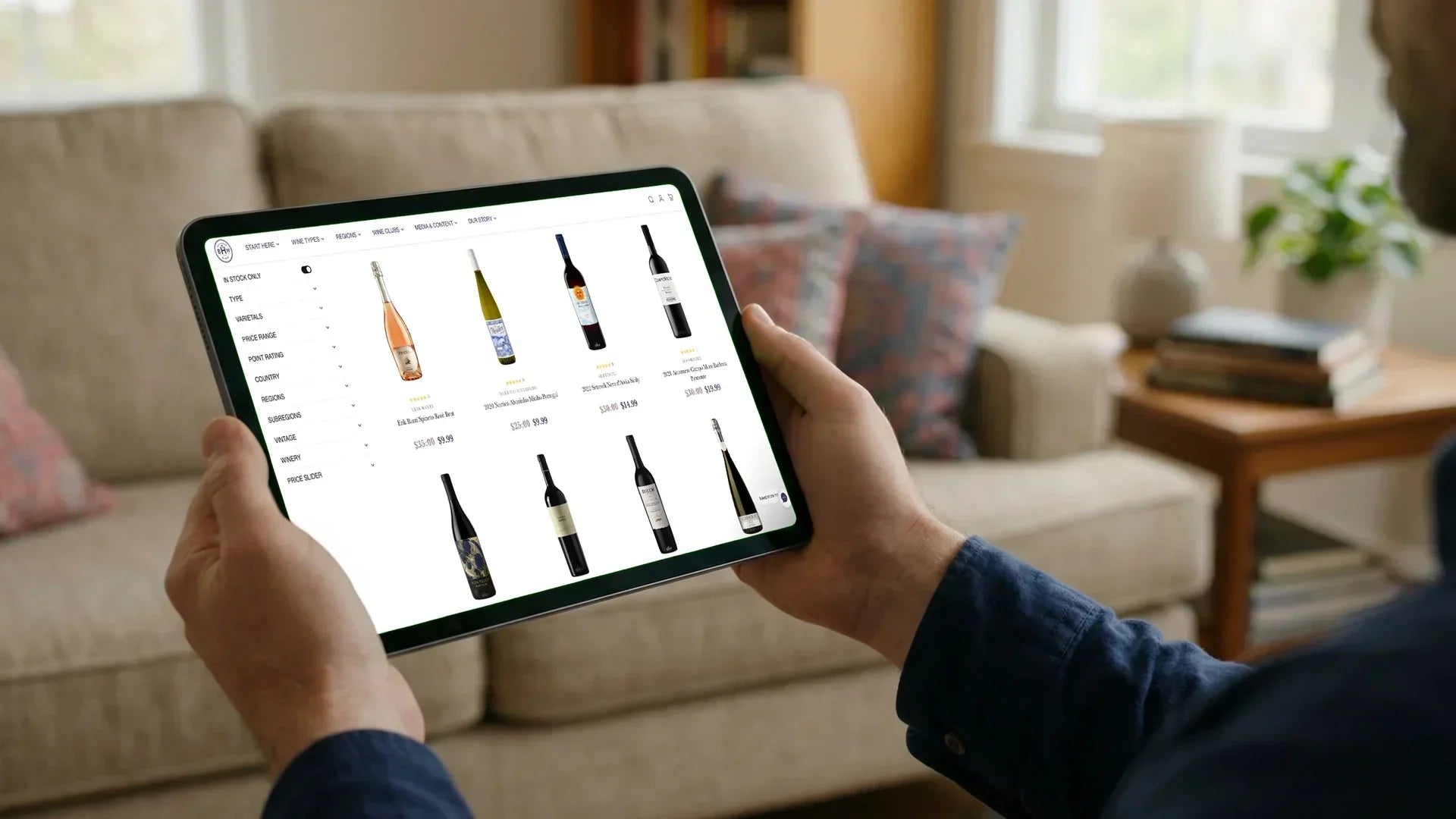
Yes. Big Hammer Wines carries a curated selection of Donum wines. If you can't make the trip to Sonoma, the bottles are a worthy introduction to what the estate is about.
Explore Donum Wines
If a visit to Sonoma isn't in the cards right now, the wines are a worthy consolation — and honestly, a good reason to plan the trip.
Choose your sip from our Donum collection here:
→ 2021 Donum Home Ranch Pinot Noir Carneros
→ 2021 Donum Single Vineyard Carneros Chardonnay
→ 2022 Donum Pinot Noir Single Vineyard Carneros
Want to get exclusive deals? Join our Text2Sip program and receive deals twice a week with special prices. It's easy, you click, add order, and get your bottles of wine at your doorstep. → Get curated picks sent by text — join Text2Sip












Share:
Wine, GLP-1s, and the J-Curve: What the Science Actually Says
Stop Asking Me What My Favorite Wine Is
Comments Section