


For years, South African wine was the bottle you bought to feel clever and thrifty at the same time. That era is over. Today it's some of the most honest value in the store, and I'll line its best reds and whites up against anything at twice the price.
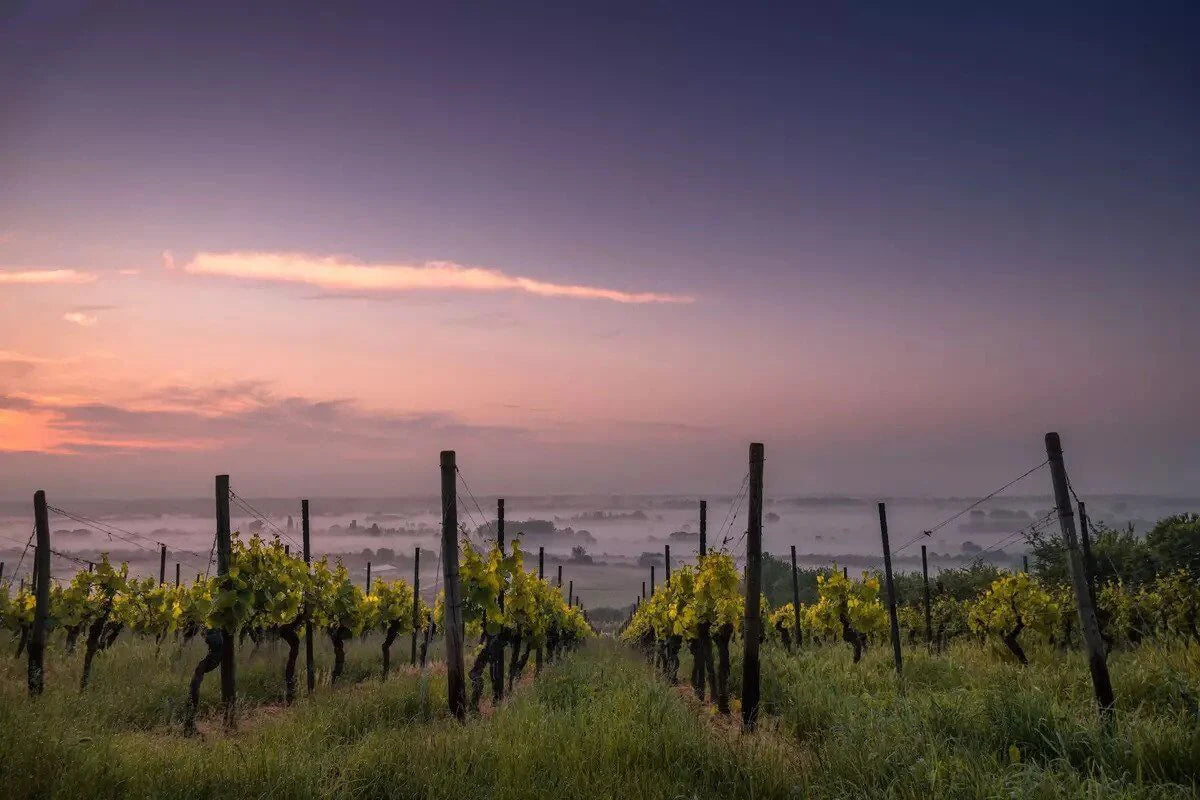
Picture the bottom of Africa, where the Atlantic and Indian oceans collide. The wine country sits right in that crossfire: ancient soils, cold sea wind, mountain slopes, and sun for days.
You can taste that combination in the glass. Serious Cabernet, the oldest Chenin Blanc vines on earth, and one red grape the rest of the world can't grow.
Here's what to know, and exactly what I'd pour first.
Three Grapes Worth Your Money
South African estates grow a little of everything, some working two dozen varieties at once. Ignore most of it. Three grapes are the reason to care.
Chenin Blanc: Start here. No country on earth grows more Chenin than South Africa, France included, and much of it comes off gnarled old bush vines that have been in the ground for decades. That age is the secret. It shows up as weight, texture, and a savory edge cheap Chenin never has. Dry, off-dry, sweet, sparkling, it does all of it, but the dry old-vine bottlings are the real steal. If you drink one white from the Cape, drink this.

Pinotage: Give it another shot. This is South Africa's own invention, crossed in 1925 by a Stellenbosch professor named Abraham Perold from Pinot Noir and Cinsaut, which locals then called Hermitage. Pinot plus Hermitage, hence Pinotage. It spent decades earning a bad name for burnt, coffee-and-tar flavors, and the cheap stuff still tastes that way. But the new generation stripped that out and chased the fruit instead. A well-made Pinotage today is bright, gently smoky, and unlike anything else in your rack.

Cabernet Sauvignon: The serious play. Bordeaux still owns the crown, and I won't pretend otherwise. But Stellenbosch Cabernet earns its seat at the table: dark, muscular, and kept honest by that ocean air so it never turns flabby. The one I'd hand you right now is the 2018 Raats Family Cabernet Franc from Stellenbosch, from a family that has staked its whole reputation on this grape. Savory, structured, built for a steak. We have very little of it.

The Must-See South African Wine Regions
While South Africa is often called ‘a wine region’ on its own, it’s actually made up of several regions and sub-regions that are all responsible for their own style of South African wine.
For someone visiting the country on a wine tour, each of these regions stands out for its own landscape, wine styles, culture and experiences. 3 Regions well worth visiting are:
Stellenbosch: This is the wine capital of South Africa - renowned for those Bordeaux varieties (like the Cabernet) - but also for its iconic scenery. This gem is a mere 40-minute drive from the city of Cape Town, with rolling mountains and vineyards as far as the eye can see - this is a wine region not to be missed for anyone looking for the real South African wine experience.
Paarl: Paarl is a neighbor of Stellenbosch in theory, but in reality the regions are vastly different. With a quick 20-minute drive north of Stellenbosch, you can reach Paarl and its extraordinary vineyards. This region is much less well-known but offers an incredible range of robust (yet smooth) red wines. The region is also known for its unique range of local cheeses and tasting experiences worth trying at least once.
Franschhoek: A half hour east, founded by French Huguenots, and it still looks and drinks the part. Gorgeous, historic, and home to some of the Cape's benchmark estates, Boschendal among them. The region has some of the most renowned wineries in the country, making it a must-visit for wine aficionados.
Swartland. The one to watch, full stop. An hour north of Cape Town, hot and rugged, covered in old dry-farmed bush vines nobody wanted twenty years ago. Then a pack of young winemakers moved in and turned it into the most exciting corner of the country, built on old-vine Chenin and Rhône-style Syrah. If you want to taste where South African wine is going, not where it's been, start in the Swartland.
The Best Times to Visit The South African Wine Regions

Timing is everything when it comes to savoring your way through South Africa's Winelands. Each season offers a unique experience, enabling you to tailor your visit based on what you want to experience.
Spring (September to November): This is the time the vineyards awaken with new life - filling the vineyards with blossoms, greenery and the first signs of growth. This is an exceptionally pleasant time to visit the area since the weather is mild, the vineyards are beautiful and it’s out of the tourist season.
Harvest Season (January to March): January and February are some of the hottest months of the year - making them ideal for a summer vacation. This is also when most grapes are harvested - allowing a range of activities for tourists or locals to partake in. This includes wine tours, harvesting or even winemaking.
The Bottom Line
No region gives you more for the money right now. Real history, a grape the rest of the world can't copy, and quality that climbs with every vintage. Whether you're booking a trip to the Cape or just want something great open by Friday, South Africa earns the pour.
We taste thousands of wines a year chasing quality and value. When a South African bottle clears our bar, it's because it beat wines that cost a lot more.

South African Wine: Quick Questions
What is South Africa's signature grape?
Pinotage. It was created there in 1925 by crossing Pinot Noir and Cinsaut, and no one else grows it at any real scale. Chenin Blanc is the other one to know: South Africa grows more of it than any country in the world.
Is Pinotage a good wine?
It can be very good. Older, cheap versions gave it a reputation for burnt, coffee-like flavors, but a new generation of winemakers has shifted toward fresh red fruit and spice. A well-made modern Pinotage is worth a fresh look.
Which South African wine region is best?
Stellenbosch is the heartland and the safest bet, especially for reds. Paarl and Franschhoek sit close by and are worth the trip. The Swartland, an hour north of Cape Town, is the most exciting region right now for old-vine Chenin Blanc and Syrah.
Is South African wine worth buying?
Yes. Dollar for dollar it's some of the best value in the store, and the quality climbs every vintage. You get real history, a grape you can't get elsewhere, and reds and whites that drink above their price.









Shop Our South Africa Collection
SHOP COLLECTIONShare:
Talosa Vino Nobile Cantina Storica in Montepulciano
A Detailed Review of Italian Wine Regions, By Italian Wine Expert
Comments Section