

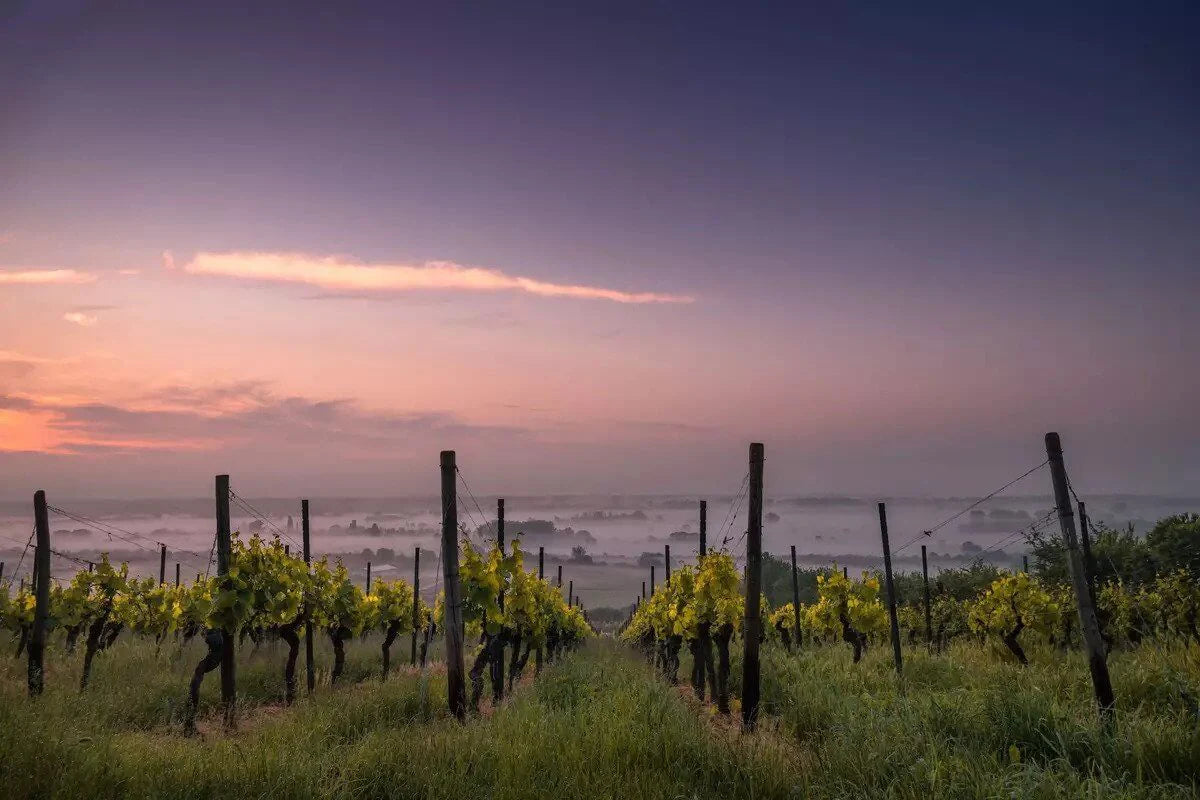

The 2021 vintage is one of Tuscany’s finest in a generation. Spring frost reduced yields, but a hot (not scorching) summer and crucial late-August rains produced small, concentrated berries with exceptional balance.
The result: intense, layered Brunellos with 10–15+ years of aging potential, Chianti Classicos that Antonio Galloni called “the single greatest young vintage I have ever tasted,” and Bolgheri Super Tuscans earning record-high scores. Whether you collect or drink now, 2021 Tuscany deserves a place in your cellar.
Key Takeaways
- A defining year for Sangiovese: Spring frost slashed yields by up to 50% in some areas, but surviving vines produced small, intensely concentrated berries with brilliant natural acidity.
- Critics are unanimous: Wine Spectator’s Bruce Sanderson called 2021 a vintage of “unquestionable quality.” Decanter’s Michaela Morris rated Brunello 2021 at 4.5 out of 5 stars. Vinous’s Galloni called the Chianti Classicos the best young wines he’s tasted in over 25 years.
- The entire region thrived: From Montalcino to Bolgheri, from Chianti Classico to Montepulciano, 2021 delivered excellence across every major Tuscan appellation.
- A new generation leads the way: Younger winemakers at estates like Il Marroneto, Castello Tricerchi, L’Aietta, and Castello di Ama are adapting vineyards to climate change and producing some of the vintage’s most exciting bottles.
- Buy with confidence, but know your style: Some 2021s reward immediate drinking, others need years. Use the region-by-region guide and pairing table below to choose wisely.
The 2021 Growing Season: What Happened in the Vineyards
Tuscany’s 2021 vintage was shaped by three dramatic chapters. The first was an early April frost that devastated some lower-elevation vineyards, with losses exceeding 50% in the hardest-hit pockets. For luckier growers, it served as a kind of natural green harvest, thinning the crop before summer even began.

The second chapter was a long, hot, dry summer. Precipitation was the lowest since the notorious 2003 vintage. But here’s where the story gets interesting: because the frost had already reduced crop loads, the surviving vines were under less water stress than they would have been with a full crop. The vines, carrying fewer bunches, could channel energy into ripening what remained.
The third and decisive chapter came in mid-to-late August, when rainstorms brought relief just in time. This combination of low yields, steady heat, and last-minute hydration produced small, thick-skinned berries bursting with concentration. And crucially, marked temperature swings between warm days and cool nights during the lead-up to harvest preserved the natural acidity that gives great Tuscan wines their backbone and aging potential. For a broader look at how Sangiovese expresses itself across these sub-regions, see our and our overview of .
How Tuscan Winemakers Adapted
The 2021 vintage also showcased a new generation of winemakers adapting to climate change in real time. At Montalcino’s Franco Pacenti estate, Lorenzo Pacenti replanted vineyards with north-to-south row orientation instead of the traditional east-to-west layout, specifically to protect bunches from midday sun. At Cupano, winemaker Andrea Polidoro reduced alcohol from 15% down to 14–14.5% by allowing shoot tips to continue growing rather than topping the vines. Le Chiuse’s Lorenzo Magnelli innovated with a “reverse saignée” technique, removing the top layer of the fermentation cap to maintain elegance despite the concentrated fruit.
As Decanter’s Michaela Morris put it, describing the style: the wines possess “a delicious mouth-staining quality” — yet for all that richness, they “soar with massive elegance and immense balance.”
Brunello di Montalcino 2021: The Headliner
Decanter Rating: 4.5 / 5 Stars
Brunello di Montalcino is the headline story of 2021 Tuscany, and with good reason. These are powerful, deeply colored wines with jewel-like ruby hues and layers of ripe, fleshy fruit. If you’re new to the appellation, our covers the history and terroir that make these wines so distinctive. Morris coined the term “Brunellone” to describe the 2021 character — an Italian suffix that means “big” or “turned up.” In other words, these are Brunellos with the volume dial cranked, but without losing their essential Sangiovese grace.
Argiano’s Bernardino Sani captured the vintage neatly: “2021 has the precision of 2016 with the concentration of 2019.” That’s high praise — 2016 is widely considered one of Brunello’s greatest modern vintages, and 2019 was known for its opulence.
Morris suggests a drinking window of 10 to 15-plus years for the best 2021 Brunellos, and she’s more confident in their aging potential than with the 2020 vintage. That said, some will be approachable sooner — estates like Giodo have introduced new labels like Prètto, specifically designed for earlier enjoyment.
If you want to explore the 2021 vintage now, the 2021 Col di Lamo Brunello di Montalcino Riserva DOCG is available for pre-order at BHW. Col di Lamo shares its origins with Casanova di Neri — the producer behind Wine Spectator's #1 Wine of the Year — and earned 96 points from James Suckling, who called it "gorgeous now." The estate's winemaker Giovanna Neri has called this her greatest Brunello release to date.
Top-Scoring Brunello di Montalcino 2021 (Decanter)

Chianti Classico 2021: A Historic Benchmark
Antonio Galloni of Vinous didn’t mince words when reviewing the 2021 Chianti Classicos. He called 2021 “the single greatest young vintage I have ever tasted in Chianti Classico” — a statement that carries serious weight from a critic who has been visiting the region for more than 25 years.
Wine Spectator’s Bruce Sanderson reinforced this assessment, noting that Chianti Classico, Bolgheri, and Maremma all thrived in 2021, calling it a vintage of “unquestionable quality” driven by comparatively mild conditions combined with winemaker innovation. His vintage chart awarded Chianti 2021 a 98 out of 100.
What makes the 2021 Chianti Classicos stand out is the rare combination of concentration and freshness. The hot summer built structure and richness, while the cool nights and natural acidity of Sangiovese kept the wines vibrant and energetic. The Gran Selezione tier — the pinnacle of the Chianti Classico quality pyramid — has produced truly exceptional wines, with Castello di Ama’s Vigneto Bellavista earning a perfect 100 points from Vinous in the 2022 vintage, building on the momentum that began with the 2021s.
For the wine lover looking for extraordinary quality at a fraction of Brunello prices, the 2021 Chianti Classicos represent one of the best values in all of Italian wine right now.
The 2018 Mannucci Droandi Chianti Classico Ceppetto Alto DOCG at BHW is a great entry point into this style — estate-grown Sangiovese from one of the region's family-run producers, currently available at a significant markdown.
Bolgheri & Super Tuscans 2021: Record-Setting Scores
The coastal Bolgheri appellation, home to Italy’s most famous Bordeaux-style blends, hit extraordinary heights in 2021. The combination of regular, dry summer heat without extreme spikes, and the moderating influence of the Tyrrhenian Sea, created ideal conditions for Cabernet Sauvignon, Merlot, and Cabernet Franc.
The numbers tell the story. Wine Spectator’s vintage chart gave Bolgheri 2021 a 99 out of 100 — its highest rating in the current chart. Ornellaia’s 2021 earned 99 points from Vinous, with Galloni writing that it “captures all the magic of this sensational vintage on the Tuscan coast.” Sassicaia 2021 earned 98+ points, described as one of the most concentrated in the estate’s history.
And then there’s Tignanello. The 2021 marks the wine’s 50th anniversary vintage, and Galloni called it “silky and polished, with exceptional finesse” — a wine with the pedigree to become a modern benchmark for Italian wine. It was named Vinous’s #8 Wine of the Year for 2024.
Vino Nobile di Montepulciano 2021: The Sleeper Pick
Montepulciano has historically been the underappreciated sibling in Tuscany’s Sangiovese family, but 2021 may be the vintage that changes that narrative. The Vino Nobile di Montepulciano consorzio awarded 2021 a rating of 4.5 stars, and the wines show an engaging fleshiness without the drying tannins that sometimes marked younger vintages here.
Montepulciano’s advantage is its continental climate with constant Apennine ventilation, which preserved acidity even during the hot 2021 summer. Poliziano’s Maria Stella Carletti described the vintage conditions starkly: after March, it essentially did not rain at all, with less than 100mm of precipitation between budbreak and harvest. Despite that extreme dryness, the wines emerged balanced and structured.
For the savvy wine buyer, 2021 Vino Nobile offers serious Sangiovese at prices well below Brunello or Chianti Classico Gran Selezione. Producers like Boscarelli, Dei, and Poliziano are the names to look for — and you can.
2021 Tuscany at a Glance: Region-by-Region Comparison

Your 2021 Tuscany Buying Decision Framework
Not sure where to start? Use this quick checklist to match the right 2021 Tuscan wine to your situation:
- If you want to cellar for 10–15+ years: Brunello di Montalcino from top estates (Il Marroneto, Canalicchio di Sopra, Le Ragnaie, Salvioni, Poggio di Sotto)
- If you want to drink beautifully now through 2030: Chianti Classico and Chianti Classico Riserva (look for Castello di Ama, Volpaia, Fontodi, Felsina)
- If you’re building an investment-grade collection: Bolgheri icons — Sassicaia, Ornellaia, Masseto, Tignanello — all earned record or near-record scores
- If you want exceptional value: 2021 Vino Nobile di Montepulciano from Boscarelli, Dei, or Poliziano delivers serious Sangiovese at a fraction of Brunello’s price
- If you love powerful reds for grilled meats and winter braising: Seek out the brawnier Brunello bottlings from Uccelliera and Pietroso, or opulent examples from Camigliano’s Paesaggio Inatteso and La Fiorita. La Fiorita only produces Brunello in top vintages, and 2021 is exactly that — 100% Sangiovese from organically farmed Montalcino vineyards with the estate's signature combination of rich dark fruit and fresh acidity.
Food Pairing Guide for 2021 Tuscan Wines
The beauty of 2021 Tuscany is the range of styles available. Here’s how to match them to your table:

Definitions: Essential 2021 Tuscany Terms
- Brunello di Montalcino DOCG: A 100% Sangiovese wine from the Montalcino area of Tuscany, aged a minimum of 5 years before release (including at least 2 years in oak).
- Chianti Classico DOCG: A Sangiovese-dominant wine (minimum 80%) from the historic heartland between Florence and Siena. Gran Selezione is its highest quality tier.
- Bolgheri DOC: A coastal Tuscan appellation known for Bordeaux-style blends of Cabernet Sauvignon, Merlot, and Cabernet Franc.
- Super Tuscan: An unofficial term for premium Tuscan wines that blend international grapes with or without Sangiovese, often classified as IGT Toscana rather than DOCG.
- Vino Nobile di Montepulciano DOCG: A Sangiovese-based wine (locally called Prugnolo Gentile) from the town of Montepulciano — not to be confused with the Montepulciano grape from Abruzzo.
- Diurnal Temperature Variation: The difference between daytime high and nighttime low temperatures. Wider swings preserve acidity and develop complex aromas in grapes.
- Saignée (Reverse): A winemaking technique. Traditional saignée removes juice to concentrate skins; Le Chiuse’s reverse version removes cap material to lighten concentration.
- Gran Selezione: The highest quality tier of Chianti Classico, requiring estate-grown grapes and longer aging than Riserva.
- Alberello: Bush-vine training, a traditional Mediterranean method prized for drought resistance. L’Aietta’s bush-vine Brunello bottling takes its name from this technique.
- IGT Toscana: Indicazione Geografica Tipica, a broad geographical designation that allows winemakers more freedom with grape varieties and blending than DOCG rules permit.
Frequently Asked Questions
1. Is 2021 a good vintage for Tuscany?
Yes, 2021 is considered one of Tuscany’s finest vintages in a generation. Spring frost reduced yields, but the surviving crop benefited from ideal summer conditions and crucial late-season rain, producing intensely concentrated wines with exceptional balance across all major appellations.
2. How does Brunello di Montalcino 2021 compare to other recent vintages?
Producers compare 2021 to a combination of 2016’s precision and 2019’s concentration. Decanter rated it 4.5 out of 5 stars, and critics generally see it as a stronger vintage for long-term aging than 2020.
3. When should I drink 2021 Brunello di Montalcino?
Most 2021 Brunellos will benefit from several years of cellaring. Decanter suggests a drinking window of roughly 10 to 15-plus years for top wines. Some approachable early-drinking cuvées exist, but the vintage’s strength lies in its aging potential.
4. What are the best 2021 Brunello producers?
Among the top-scoring wines reviewed by Decanter: Il Marroneto, Canalicchio di Sopra (Vigna Montosoli), Le Ragnaie (Casanovina Montosoli), Pieve Santa Restituta (Sugarille), Altesino (Montosoli), L’Aietta, Le Chiuse, Salvioni, and Poggio di Sotto all scored 96–98 points.
5. Is 2021 Chianti Classico worth buying?
Absolutely. Vinous’s Antonio Galloni described the 2021 Chianti Classicos as the greatest young vintage he has tasted in over 25 years. Wine Spectator gave the vintage a 98 rating on its vintage chart. Gran Selezione bottlings are the standouts.
6. How did Bolgheri and Super Tuscans perform in 2021?
Exceptionally well. Wine Spectator’s vintage chart rated Bolgheri 2021 at 99. Ornellaia earned 99 points from Vinous, Sassicaia earned 98+, and Tignanello was named Vinous’s #8 Wine of the Year for 2024.
7. What makes the 2021 vintage different from 2020?
The 2020 vintage was also warm but lacked the concentration and depth of 2021. Critics note that 2021 wines have greater layering, better aging potential, and more freshness than 2020 across most Tuscan appellations.
8. Are there good value wines from Tuscany 2021?
Yes. Chianti Classico annata (the base tier) starts around $15–25 and delivers outstanding quality in 2021. Vino Nobile di Montepulciano from producers like Dei, Boscarelli, and Poliziano offers serious Sangiovese at prices well below Brunello.
9. What food pairs best with 2021 Tuscan reds?
Elegant Brunellos and Chianti Classicos are natural partners for bistecca alla fiorentina, wild boar ragù, and aged Pecorino. Richer Bolgheri wines pair beautifully with grilled ribeye and venison. Vino Nobile suits lamb chops, roasted root vegetables, and hard cheeses.
10. Should I cellar or drink 2021 Tuscan wines now?
It depends on the wine. Many 2021 Chianti Classicos and Vino Nobiles are drinking well now. Most Brunellos and top Super Tuscans will reward cellaring of 5–15+ years. The vintage has both immediate pleasure and long-haul options.
11. How do I know if a 2021 Tuscan wine is authentic and not mass-produced?
Look for DOCG or DOC designations on the label, which guarantee origin and production standards. Smaller estate-bottled producers (look for “imbottigliato all’origine”) generally offer more terroir-driven wines. The names mentioned throughout this guide are all family-run or estate-focused producers.
12. What is a Super Tuscan, and why are they so expensive?
Super Tuscans are premium blends (often Cabernet Sauvignon with Merlot and/or Sangiovese) that don’t conform to traditional DOCG regulations. Pioneers like Sassicaia and Tignanello created the category in the 1970s. Prices reflect small production, critical acclaim, and global collector demand.
Explore 2021 Tuscan Wines
Ready to build your Brunello cellar?
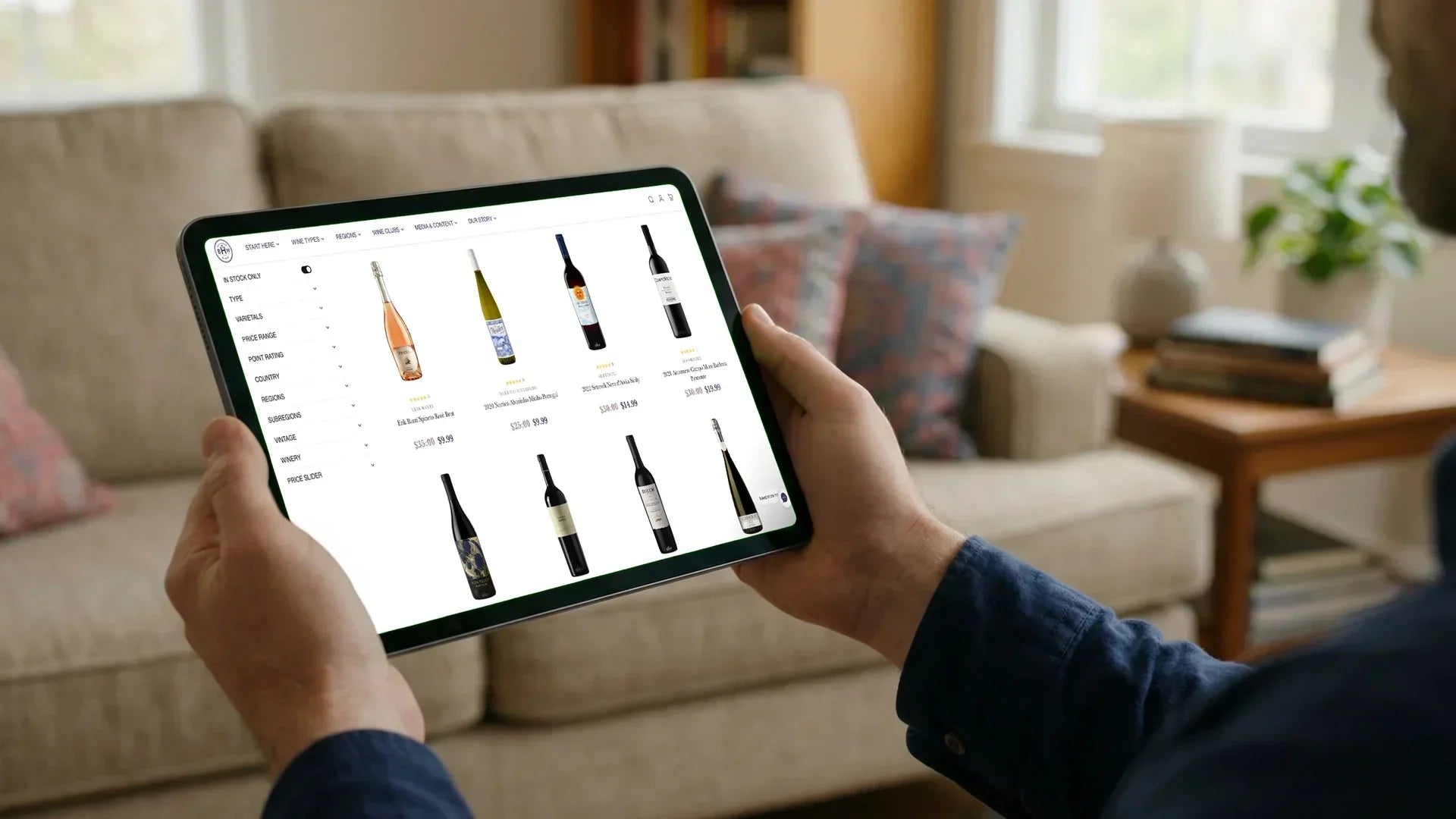
Browse BHW's full Brunello di Montalcino collection — estate-grown, family-produced bottles from Montalcino's top producers, all 90+ rated and available at the lowest price anywhere.


















Explore Our Brunello Collection
SHOP COLLECTIONShare:
Michel Rolland’s Legacy: The Full Story Behind the Man Who Shaped Modern Wine
Chillable Red Wines: The Complete Guide to Reds You Should Be Refrigerating
Comments Section