

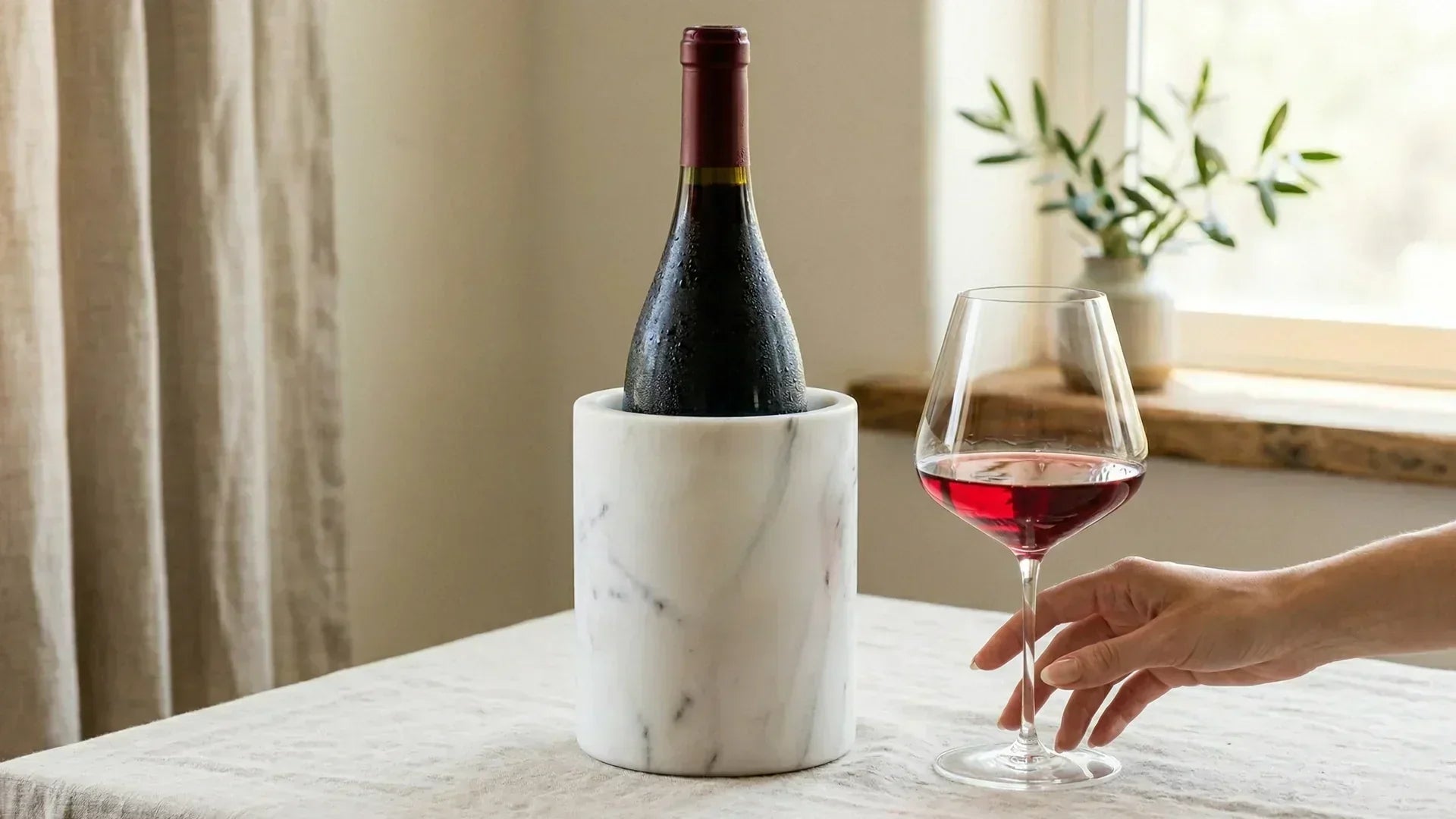
Yes, some red wines taste better cold. Lighter reds with lower tannins and higher acidity — like Beaujolais, Pinot Noir, and Gamay — shine when chilled to 50–55°F.
Warm-weather months are prime season for chillable reds, and serving them cold masks harsh tannins while brightening fruit-forward flavors. Think of it as a style choice, not a rule.
Key Takeaways
- Light, fruity reds with low tannins are "chillable" — Beaujolais, Pinot Noir, Gamay, and Grenache taste sharper and more refreshing when cold.
- Serve chillable reds at 50–55°F, not ice cold — Fridge temperature (35°F) mutes flavor; slightly warmer unlocks complexity.
- Tannins are the gatekeeper — High-tannin reds (Cabernet, Syrah) lose structure when cold; low-tannin reds gain brightness.
- Acidity + fruit drive the choice — Reds with vibrant acidity and red-fruit focus are natural chilled candidates.
- Chilled reds pair differently — Cold red wine works best with light appetizers, fresh salads, and warm-weather fare rather than traditional red-wine pairings.
Why Chillable Reds Matter Now
The chillable-red trend isn't new, but it hits peak relevance every spring. As temperatures climb and outdoor dining season kicks in, sommeliers and home drinkers alike rediscover that not all reds need to be served at room temperature (ideally 60–65°F, not a warm American living room at 70°F+).
Wine Enthusiast and major retailers have published guides on the why and what of chillable reds, but most stop at education. They explain the concept but don't tell you which bottles to buy or how they actually taste side by side. That's where we come in.
This guide gives you the merchant's perspective: what makes a red chillable, how to spot candidates in a wine shop or online, and which bottles deliver the best value for your table.
What Makes a Red Wine "Chillable"?

A red wine is chillable when three things align:
- Low tannin content — Tannins are the drying compounds that come from grape skins, seeds, and oak. When a red is too tannic, chilling makes it taste bitter and astringent. Chillable reds are naturally low in tannins, so cooling actually softens what little tannin is there.
- High to medium acidity — Acidity is the wine's backbone. Cold temperatures amplify acidity, so chillable reds need enough of it to stay lively when chilled. High-acid reds feel crisp and food-friendly; low-acid reds turn flat and lifeless when cold.
- Fruit-forward flavor profile — The wine should taste like red or black fruit first, structure second. Earthy, herbal, or oak-heavy reds often feel hollow when chilled. Fruit-driven wines maintain complexity at lower temps.
Quick Chillability Checklist
Ask yourself these four questions at the wine shop:
- Is the alcohol level ≤13%? (Lower ABV often = lighter body = chillable candidate)
- Does the tasting note mention "light," "juicy," "red fruit," or "refreshing"? (Good signs)
- Is the wine from a cool-climate region known for acidity? (Loire Valley, Burgundy, New Zealand, Oregon, German Ahr Valley — all classics)
- Does the price point suggest it's meant to drink young, not age? (New-release, current-vintage reds = chillable; Collectors' Reserve = not)
If you answer yes to 3 or 4, you have a chillable candidate.
Best Chillable Red Wine Varieties
Beaujolais (Gamay)
Beaujolais is the textbook chillable red. Made from Gamay grapes in France's Beaujolais region, these wines are naturally low in tannin, high in acidity, and bursting with red-fruit flavors.
Flavor Profile: Tart red cherry, cranberry, subtle spice, often a hint of floral or banana from carbonic maceration.
Why It Works Cold: Tannins are almost non-existent. Chilling to 50°F amplifies the acidity and cherry-brightness while keeping the wine's lightness intact.
Serving Temperature: 50–54°F (pull from the fridge 10 minutes before serving).
Food Pairing: Charcuterie, grilled chicken, tomato-based pasta, fresh salads, roasted vegetables.
Price Range: $12–$25 for entry-level to mid-quality; $25–$45 for cru Beaujolais.
The 2022 Domaine Laurent Martray Côte de Brouilly is a standout example — 100% Gamay from 100+ year-old vines on volcanic soils, with bright red fruit, mineral lift, and a long finish.
Pinot Noir
Pinot Noir is the sophisticate's chillable red. From Burgundy, Oregon, New Zealand, and California, quality Pinot Noir has delicate tannins, bright acidity, and layered fruit complexity.
Flavor Profile: Red cherry, strawberry, raspberry, subtle earth and oak, sometimes a mineral or floral note depending on region.
Why It Works Cold: Pinot's tannin structure is fine-grained and silky. Chilling emphasizes brightness without flattening depth.
Serving Temperature: 52–56°F.
Food Pairing: Salmon, roasted turkey, mushroom dishes, lighter red-sauce pasta, cheese boards.
Price Range: $15–$30 for everyday Pinot Noir; $30–$100+ for premium regions.
Gamay (Non-Beaujolais)
Beyond Beaujolais, Gamay is grown in the Loire Valley and emerging regions like California and Switzerland.
Flavor Profile: Similar to Beaujolais but often with more mineral or herbal undertones depending on terroir.
Why It Works Cold: Same low-tannin profile as Beaujolais. Loire Valley Gamay often has even higher acidity, making it a stellar chilled option.
Serving Temperature: 50–54°F.
Food Pairing: Light appetizers, seafood, picnic foods, outdoor patio fare.
Price Range: $13–$28.
For a cru-level expression with serious terroir, the 2022 Alexandre Burgaud Beaujolais-Lantignié delivers — old-vine Gamay from granite soils with the floral lift of Fleurie and the dark-fruited grip of Morgon. Watch for Lantignié: Wine Advocate calls Burgaud a "Superstar of the Future."
Grenache (Garnacha)
Grenache from Spain and southern France is a bit richer than Beaujolais but still chillable if sourced from cooler sites.
Flavor Profile: Red cherry, strawberry, white pepper, subtle spice, sometimes herbal notes.
Why It Works Cold: Grenache's natural acidity and fruit-forward character mean chilling enhances drinkability without harshness.
Serving Temperature: 54–58°F (slightly warmer than Beaujolais; don't over-chill).
Food Pairing: Spanish ham, grilled vegetables, lighter stews, goat cheese.
Price Range: $12–$30.
Valpolicella
From northern Italy's Veneto region, Valpolicella is made primarily from Corvina grapes and is naturally bright, low-tannin, and fruity.
Flavor Profile: Red cherry, plum, subtle almond, balanced acidity, fresh and immediately approachable.
Why It Works Cold: Corvina is delicate. Chilling locks in the wine's fresh, sappy quality.
Serving Temperature: 50–54°F.
Food Pairing: Italian charcuterie, tomato dishes, light pasta, risotto.
Price Range: $10–$25.
Bardolino
Bardolino is Valpolicella's lighter, higher-acid cousin — an extremely refreshing option for warm-weather drinking. Look for young, current-vintage bottles; the best examples have a snap of cherry and a whisper of almond that opens up beautifully at 50°F.
Flavor Profile: Red cherry, almond, floral notes, very high acidity, minimal tannin.
Serving Temperature: 48–52°F.
Food Pairing: Appetizers, seafood, light starters, picnics.
Price Range: $9–$18.
Côtes du Rhône
Entry-level Côtes du Rhône (typically under $15) uses a Grenache-forward blend that leans light and fruit-forward — a solid chillable option. Avoid heavier, oaked versions from older vintages; those belong at room temperature.
What to Look For: Current vintage, tasting notes that say "light" or "red fruit," and a price point under $15. Skip the reserve or single-domaine bottlings for chilling purposes.
Serving Temperature: 54–58°F (don't go too cold).
Food Pairing: Herb-roasted meats, light stews, Mediterranean fare.
Price Range: $10–$15 for chillable styles.
Chillable Red Wines Comparison Table

How Cold Should You Serve Chillable Reds?
The Sweet Spot: 50–55°F
This is not ice-cold. Your kitchen fridge runs at 35–40°F, which is too cold for most chillable reds. At fridge temperature, the wine numbs, flavors flatten, and you lose the complexity you paid for.

How to Hit 50–55°F
- Pull the bottle from the fridge 10–15 minutes before serving. A cold bottle will reach optimal temp just as you pour.
- Use a wine cooler or ice bucket with water (not ice alone). A 50-50 mix of ice and water brings a room-temp bottle to 50°F in about 5 minutes.
- Chill the glass, not the wine. Put your wine glass in the freezer for 2 minutes before pouring.
- Serve in batches. Pour just enough for one round; re-chill the bottle between pours to prevent it warming past 55°F.
Why This Matters
- Too cold (35°F): Tannins clamp up, acidity tastes sharp, fruit fades. Muted and one-dimensional.
- Just right (50–55°F): Tannins soften, acidity pops, fruit blooms. You taste the wine's intended character.
- Too warm (60°F+): The wine loses its refreshing edge, tastes flat, and alcohol becomes noticeable.
Food Pairings for Chillable Reds
Chilled reds work best with lighter, fresher fare. Think warm-weather eating.

Appetizers & Starters
- Charcuterie boards (especially cured ham, prosciutto)
- Goat cheese with berries
- Smoked salmon canapés
- Grilled vegetables with vinaigrette
- Tomato crostini
Main Courses
- Grilled chicken breast or thighs
- Roasted or grilled fish (salmon, trout)
- Turkey (roasted or grilled)
- Herb-roasted lamb
- Light pasta with tomato sauce
Salads & Sides
- Spinach or arugula salad with vinaigrette
- Caprese (tomato, mozzarella, basil)
- Roasted beet salad
- Grilled vegetable platters
- Couscous or grain bowls with fresh herbs
Cheese
- Burrata
- Fresh mozzarella
- Chèvre (goat cheese)
- Manchego (not aged)
- Gruyère (mild versions)
Pro Tip: Pair chillable reds with dishes that have acidity or brightness (vinaigrette, citrus, fresh herbs). This mirrors the wine's crisp profile and creates harmony on the palate.
Common Mistakes with Chillable Reds
1. Serving Them Too Cold
The Mistake: Grabbing a bottle straight from the fridge and pouring at 35°F.
Why It Fails: The wine tastes one-dimensional and sour. You lose the fruit character that makes chillable reds special.
Fix: Let the bottle sit at room temperature for 10–15 minutes after pulling from the fridge.
2. Buying the Wrong Reds and Expecting Them to Be Chillable
The Mistake: Buying a full-bodied, tannic Cabernet Sauvignon and chilling it because you read that chillable reds are trendy.
Why It Fails: Chilling a tannic red turns it astringent and undrinkable. Not all reds are chillable — only those naturally low in tannins.
Fix: Use the chillability checklist above. Look for Beaujolais, Pinot Noir, Gamay, or other low-tannin varieties.
3. Confusing Chilled Reds with Rosé
The Mistake: Thinking chillable reds taste like rosé, buying them expecting a pink-wine experience.
Why It Fails: Chillable reds are still red wines — darker, more complex, and less sweet than rosé. You'll be disappointed if you're expecting rosé.
Fix: Understand that chillable reds are a style choice, not a different category. They're red wines optimized for cold service.
4. Aging Chillable Reds
The Mistake: Buying a bottle of Beaujolais and cellaring it for 5 years.
Why It Fails: Chillable reds are meant to drink young. They're light, fruity, and built for immediate gratification.
Fix: Buy chillable reds from the current or recent vintage. Drink within 1–2 years of release.
5. Pairing Them with Heavy Foods
The Mistake: Serving a chilled Beaujolais with a rare steak or rich beef stew.
Why It Fails: The food overwhelms the delicate wine. There's no balance; the wine tastes thin and lost.
Fix: Match chillable reds with lighter, fresher dishes: grilled chicken, fresh salads, seafood, appetizers.
6. Not Checking Tasting Notes First
The Mistake: Buying without checking tasting notes or asking a wine shop staffer.
Why It Fails: You might grab a Côtes du Rhône that's heavy and oaky (not chillable), rather than the lighter style that is.
Fix: Always read tasting notes. Words like "light," "juicy," "red fruit," and "refreshing" are green lights. Words like "powerful," "full-bodied," "oaked," and "structured" are red flags.
Wine Terms Glossary
Acidity: The tartness or crispness in a wine. High-acid wines taste lively and food-friendly; low-acid wines taste flat and dull. Chillable reds need good acidity to shine when cold.
Body: The wine's weight or fullness on the palate. Light-bodied wines feel delicate; full-bodied wines feel heavy. Chillable reds are light to medium-bodied.
Tannins: Compounds from grape skins, seeds, and oak that create a drying sensation in your mouth. High-tannin reds feel astringent; low-tannin reds feel soft. Chillable reds have low tannins.
Terroir: The environmental factors (soil, climate, altitude) that shape a wine's character. Cool-climate terroir often produces higher-acidity, lower-tannin wines — ideal chillable candidates.
Carbonic Maceration: A winemaking technique where whole grape clusters ferment before crushing. Produces wines with low tannins and fruity, floral notes — like Beaujolais. Also called whole-bunch fermentation.
Vintage: The year the grapes were harvested and the wine was made. Chillable reds are best when young; look for current-year or previous-year releases.
ABV (Alcohol by Volume): The percentage of alcohol in the wine. Chillable reds typically have 11–13% ABV. Higher ABV (14%+) often signals a heavier, warmer-climate wine that's less chillable.
Dry vs. Off-Dry: A dry wine has little to no residual sugar; an off-dry wine has slight sweetness. Most chillable reds are dry, but some Lambrusco and Valpolicella releases are off-dry and still chillable.
Cool-Climate vs. Warm-Climate: Cool-climate regions (Loire Valley, Burgundy, Oregon, New Zealand) produce high-acidity, low-alcohol wines. Warm-climate regions produce lower-acidity, higher-alcohol wines. Chillable reds usually come from cool-climate regions.
Residual Sugar: The natural grape sugar left in wine after fermentation. Dry wines have very little; off-dry wines retain a perceptible sweetness. In chillable reds, residual sugar is typically low, letting acidity and fruit do the work.
Cuvée: A blend of wines. Some chillable reds are blends (Côtes du Rhône, Valpolicella), while others are single-varietal (Beaujolais is 100% Gamay).
Frequently Asked Questions
1. Can I chill any red wine?
Not optimally. Full-bodied, tannic reds like Cabernet Sauvignon, Syrah, or Bordeaux blends are best served at room temperature (ideally 60–65°F). Chilling them makes them taste bitter and unbalanced. Stick with naturally light, low-tannin reds.
2. How long can I keep a chillable red in the fridge?
Once opened, keep it sealed and refrigerated. A chillable red will stay fresh for 3–5 days in the fridge. After that, oxidation kicks in and the wine starts to taste flat or vinegary.
3. What's the difference between a chillable red and rosé?
Rosé is made from red grapes but the skins are removed early, giving it its pink color and lighter body. Chillable reds are red wines served cold. Rosé is typically lighter, drier, and has less tannin. Both work well in warm weather, but they're different categories.
4. Do chillable reds age well?
Generally, no. Chillable reds like Beaujolais and most Pinot Noir are meant to drink young (within 1–2 years of release). Aging them can cause them to dry out or lose their vibrant fruit character. Premium Burgundy Pinot Noir is an exception — it can age for 5–10+ years.
5. What temperature should my fridge be set to?
Most home fridges run at 35–40°F, which is too cold for wine service. For immediate service, pull the bottle and let it warm up to 50–55°F. If you're storing wine long-term, a dedicated wine fridge at 55°F is ideal.
6. Can I use an ice bucket for chillable reds?
Yes, but use ice and water. Ice alone will over-chill the bottle. A 50-50 ice-water mix will bring a room-temp bottle to 50°F in about 5 minutes and hold it steady.
7 Are chillable reds more expensive?
No. Many of the best chillable reds (Beaujolais, Valpolicella, Bardolino) are budget-friendly ($10–$20). Premium chillable reds like Burgundy Pinot Noir run $25–$50+, but entry-level options are very affordable.
8. Can I serve chillable reds at a dinner party?
Absolutely. Chillable reds are great for entertaining because they're lower-stress to serve (no need to decant), pair with a wide range of foods, and feel refreshing and approachable to most guests. Just chill them to 50–55°F, not ice-cold.
9. Does the type of glass matter for chillable reds?
Not as much as for still reds, but use a standard wine glass. Avoid tiny glasses (they warm up too fast). If you want to keep the wine cold longer, chill the glass before pouring.
10. What if I don't have a thermometer to check the temp?
Use the touch method. Wrap your hand around the bottle. If it feels cool but you can hold it comfortably for a few seconds, it's roughly 50–55°F. If it feels cold but not freezing, you're in the sweet spot.
11. Are there any rules about which reds to chill?
The best rule is: low tannins + high acidity + fruit-forward = chillable. If you're unsure, ask a wine shop staffer. Most will be happy to recommend a chillable red based on your taste.
Ready to explore?
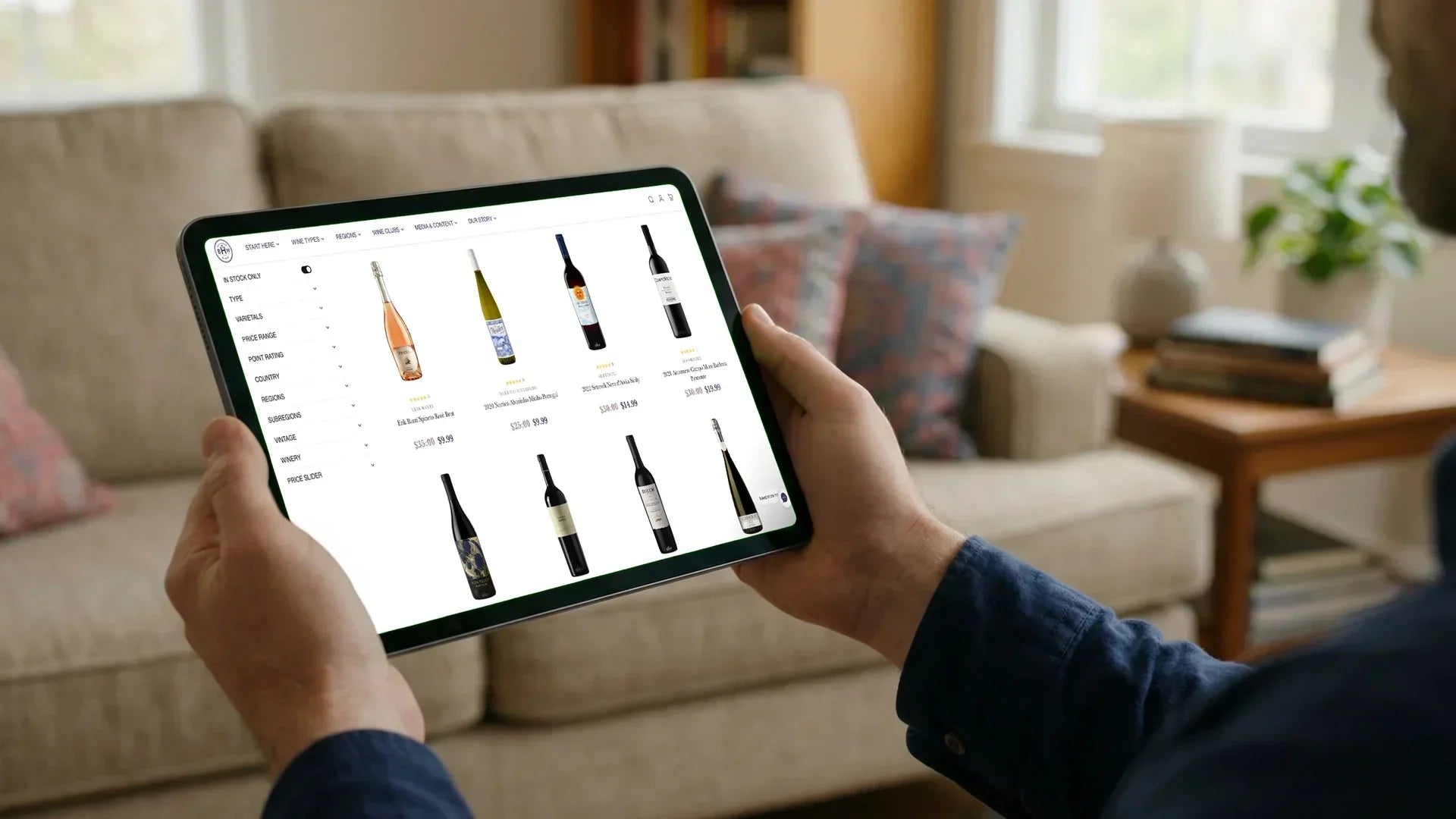
Great chillable reds don't have to be hard to find. Browse our red wine selection and let the season guide your glass.
























Share:
What Makes the 2021 Tuscany Vintage So Special? A Region-by-Region Breakdown
Wine Trends 2026: What We’re Actually Seeing From the Buying Desk
Comments Section