

Chardonnay Day is celebrated annually on May 21st, before Memorial Day. It was created in 2010 by wine social-media expert Rick Bakas.
Three days later, May 24 marks the anniversary of the 1976 Judgment of Paris — the blind tasting where a California Chardonnay beat the best of Burgundy and rewrote the wine world's hierarchy. The two dates are linked by the same grape and the same story.
Key Takeaways
- Chardonnay Day falls on the Thursday before Memorial Day every year — typically the third or fourth Thursday of May.
- On May 24, 1976, a 1973 Chardonnay from Chateau Montelena in Calistoga, California, beat the best white Burgundies in a blind tasting in Paris.
- The winemaker, Mike Grgich, was a Croatian immigrant. He did not know the wine had been entered.
- The Judgment of Paris ended the assumption that great wine could only come from France. The bottle now sits in the Smithsonian.
- Modern Chardonnay is more versatile than ever — from lean, unoaked Chablis to rich, barrel-aged Meursault to elegant Blanc de Blancs Champagne.
The Day France Lost Its Crown

For most of the twentieth century, the wine world had a simple hierarchy. At the top: France. Everything else: somewhere below, ranked roughly by how closely it imitated the French.
Nobody questioned this. Not seriously. The great Chardonnays of Burgundy — the Puligny-Montrachets, the Meursaults, the Bâtard-Montrachets — were the standard against which every white wine on earth was measured. California made wine. It was fine. It was for Americans.
A British wine merchant named Steven Spurrier thought it might be interesting to put that assumption to the test.
He was not trying to start a revolution. He just wanted attention for his Paris wine school. The idea was elegant and slightly mischievous: fly to California, buy the best Chardonnays he could find, bring them to Paris, and have nine of France's most distinguished wine experts taste them blind, side by side with the best white Burgundies in his cellar.
Everyone assumed the French wines would win. Spurrier probably assumed it too.
On May 24, 1976, the judges sat down to taste. They swirled. They murmured. One of them held up a glass and said, with confidence, 'definitely California — it has no nose.' He was tasting a Grand Cru Burgundy.
When Spurrier tallied the scores, the top white wasn't a Meursault. It wasn't a Puligny-Montrachet. It was a 1973 Chardonnay from Chateau Montelena, a boutique winery in Calistoga, made by a Croatian immigrant named Mike Grgich who didn't even know he had been entered. (We tell the broader story of both the white and red flights in the full Judgment of Paris story. This piece is about the Chardonnay half.)
The French judges were not pleased. One tried to take her scorecard back. Several argued that the California wines wouldn't age. The French press barely covered it.
The only journalist in the room worked for Time magazine. He called it 'The Judgment of Paris.' The name stuck — because it was, genuinely, a judgment on who made the best wine in the world. And the answer shocked everyone who thought they already knew.
What That Moment Did to the Wine World
Mike Grgich found out he had won when the phone rang and someone told him the New York Times was sending a reporter. He started dancing around the winery, he later said, singing in Croatian that he was born again.
That is a good way to describe what happened to the entire American wine industry.
Before Paris, California wine was a curiosity. After Paris, it was a destination. Before Paris, the idea that a winemaker in Napa or Sonoma could compete with the greatest estates in Burgundy was considered charming and naive. After Paris, it was just a fact.
And the ripple did not stop at California. The message coming out of that hotel room in 1976 was something bigger: that great wine could be made anywhere. Terroir mattered, yes. History mattered, yes. But skilled winemakers, working with good vineyards in the right climate, could produce wines that the best palates in France could not tell apart from the finest bottles in Burgundy.
That is the world we live in now. It is why you can open a Chardonnay from Sonoma, or the Adelaide Hills, or the Willamette Valley, or Mendoza, or Sicily — and find something genuinely great. Some of the most exciting Chardonnays being made anywhere today come from places nobody took seriously a generation ago.

The bottle that won — the 1973 Chateau Montelena Chardonnay — now sits in the Smithsonian Institution's National Museum of American History. When Montelena released that vintage in 1974, Jim Barrett, the owner, set the retail price at $6.50.
The Part Nobody Writes About
There is a lot of ink spilled about the so-called 'Anything But Chardonnay' crowd — the ABC backlash from the late nineties, when over-oaked, over-buttered California Chardonnay made a lot of people reach for something, anything, else.
That story is old news. The world moved on. Winemakers learned. The heavy-handed style gave way to something more interesting and more honest.
What has been happening for the last decade — and almost nobody writes about it — is that Chardonnay is better than it has ever been.
Want a lean, mineral, Chablis-style Chardonnay to drink with oysters? You have dozens of options now, from California, from Australia, from France itself. Want something richer, with well-integrated oak, that sings with a roast chicken? Hundreds. Want a Chardonnay-dominant Champagne that drinks like the most elegant wine you have ever had in your hand? It exists, and it is more accessible than it has ever been.

The grape that Mike Grgich carried into the history books is, right now, in the middle of its best run. Most of it is available at prices that would have seemed impossible to wine lovers a generation ago.
Nobody writes about this because nothing dramatic happens when a craft is quietly perfected over twenty years. The story of steady improvement is less fun to tell than the story of a scandal or a revolution.
But it is the real story. And Chardonnay Day is a good excuse to tell it.
The Many Faces of Chardonnay
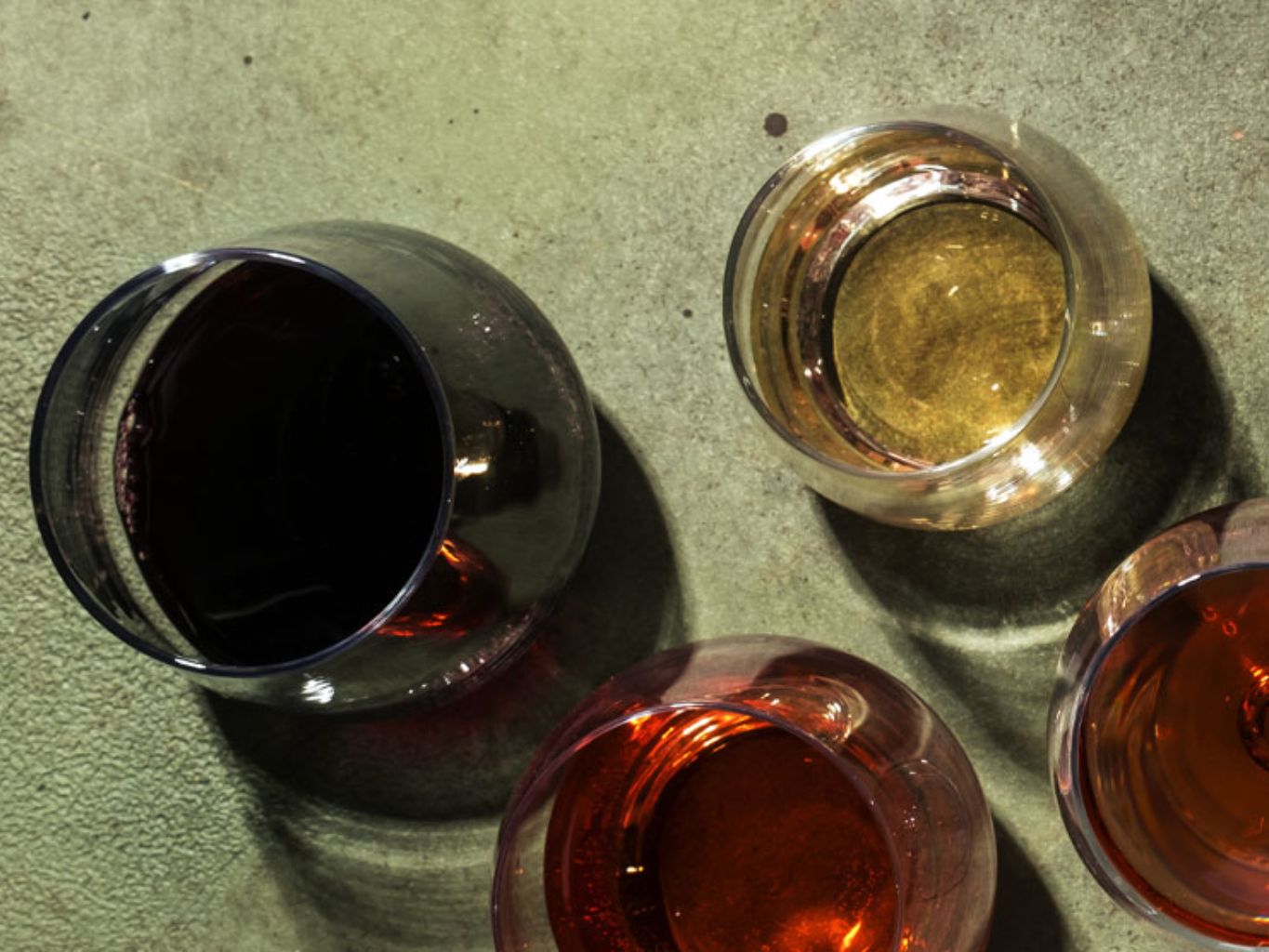
Chardonnay is sometimes called the 'winemaker's grape' because it shows the maker's choices as clearly as it shows the place. Same grape, very different wines, depending on where it grows and what the winemaker decides to do with it.

How to Actually Celebrate Chardonnay Day

Here is the approach we suggest. You do not have to do all of it. Pick one.
1. Taste the range.
Put three different Chardonnays on the table — one leaner and unoaked, one with moderate oak, one from Burgundy or a Burgundy-style producer. Taste them side by side. The grape's versatility is its most underrated quality, and you will not understand it until you see it next to itself.
2. Honor the history.
If you can get your hands on a bottle from Chateau Montelena or Grgich Hills — the winery Mike Grgich founded after Paris — open one. You are drinking a piece of wine history. If you can't find those, any serious California Chardonnay from a producer who was around in the seventies counts.
3. Drink a Burgundy.
Open the wine that lost. The Côte de Beaune still produces some of the most haunting, age-worthy Chardonnays on the planet. Look for a village wine from Meursault, Puligny-Montrachet, or Chassagne-Montrachet from a Burgundy from a great producer. The 1976 result didn't make Burgundy worse. It just made California real.
4. Try a Blanc de Blancs.
Most people forget that Chardonnay is also a Champagne grape. A Blanc de Blancs is 100% Chardonnay, and it is the most elegant way to drink the grape. Open one — a grower Champagne from a producer like Pierre Peters or Agrapart, or anything you can find — and you will see what we mean.
5. Ignore the snobbery.
The lesson of 1976 is that the best wine is the wine that tastes best in the glass, wherever it comes from. Buy a Chardonnay from a region you have never tried. You might find your new favorite.
6. Drink it with food.
Chardonnay is the most food-friendly white wine in the world. Roast chicken, creamy pasta, seafood, soft cheeses, grilled fish — there is almost no category where a well-chosen Chardonnay does not belong.
Chardonnay and Food: A Quick Pairing Guide

For more on pairing principles, we have more food and wine pairing guides in the Vine Blog.
A Quick Chardonnay Glossary
Burgundy. The historic French wine region that is the spiritual home of Chardonnay. The grape was named after a village in the Mâconnais part of Burgundy.
Chablis. The northernmost Chardonnay-growing area of Burgundy. The style is lean, mineral, and almost always unoaked, with a distinct chalky character.
Cote de Beaune. The southern half of Burgundy's main slope, home to the world's most celebrated white wine villages: Meursault, Puligny-Montrachet, and Chassagne-Montrachet.
Malolactic fermentation. A secondary fermentation that converts sharper malic acid (think green apple) into softer lactic acid (think milk). It gives Chardonnay a creamy mouthfeel. Some winemakers block it for a brighter style.
Battonage. French for 'stirring the lees.' Winemakers stir the spent yeast cells in the barrel, which adds body, texture, and a faint nutty richness to the wine.
Blanc de Blancs. Champagne or sparkling wine made entirely from white grapes — almost always 100% Chardonnay. The most precise, elegant style of Champagne.
Reserve oak. Used barrels that have already held one or more vintages. They impart less oak flavor than new barrels, allowing the fruit to lead.
Premier Cru and Grand Cru. The two top tiers in Burgundy's vineyard classification. Grand Cru is the apex; Premier Cru sits just below. Both indicate sites with exceptional history of quality.
Judgment of Paris. The blind tasting held on May 24, 1976, where California wines beat top French wines. The 1973 Chateau Montelena Chardonnay won the white flight.
ABC ('Anything But Chardonnay'). A late-1990s consumer backlash against heavily oaked, buttery California Chardonnay. Largely faded as winemaking styles became more restrained.
Frequently Asked Questions
1. When is Chardonnay Day?
Chardonnay Day is celebrated annually on the Thursday before Memorial Day in the United States — typically the third or fourth Thursday of May. The date was chosen deliberately to align with National Wine Day (May 25) and the start of the summer entertaining season.
2. Who created Chardonnay Day?
Chardonnay Day was created in 2010 by Rick Bakas, a wine social-media expert and former Nike brand manager. It was launched as a Twitter-driven campaign to help the wine industry rebuild engagement and sales after the 2008 financial crisis.
3. What was the Judgment of Paris?
The Judgment of Paris was a blind wine tasting held on May 24, 1976, organized by British wine merchant Steven Spurrier and American Patricia Gallagher. Nine French wine experts tasted top California and French wines without knowing the identities. California wines won both the white and red flights.
4. What Chardonnay won the Judgment of Paris?
The 1973 Chateau Montelena Chardonnay from Calistoga, California won the white wine flight. It beat top white Burgundies including Meursault Charmes and Bâtard-Montrachet. The bottle now sits in the Smithsonian Institution's National Museum of American History.
5. Who made the winning Chardonnay?
Miljenko 'Mike' Grgich, a Croatian immigrant who had arrived in California in the 1950s, made the 1973 Chateau Montelena Chardonnay. After the Paris win, he co-founded Grgich Hills Estate in 1977. He died in 2023 at age 100.
6. Why is Chardonnay sometimes called the 'winemaker's grape'?
Chardonnay is neutral and reflects winemaker choices clearly — oak versus stainless steel, malolactic fermentation versus none, lees stirring versus settling. The same grape from the same vineyard can produce dramatically different wines depending on what the winemaker decides.
7. What's the difference between French and California Chardonnay?
Generalizing: French Chardonnay (Burgundy and Chablis) tends to lean leaner, with mineral and chalky notes and more restrained oak. California Chardonnay tends fuller-bodied, with riper fruit and often more pronounced oak influence — though both regions now produce wines in nearly every style.
8. What food pairs best with Chardonnay?
Chardonnay is the most versatile white wine for food. Lean, unoaked styles work with oysters, sushi, and goat cheese. Mid-weight oaked styles pair beautifully with roast chicken, lobster, and creamy pastas. Rich, oak-aged styles handle holiday roasts and richer dishes.
9. Is Chablis the same as Chardonnay?
Yes — Chablis is 100% Chardonnay. Chablis is the northernmost wine region in Burgundy. By law, Chablis can only be made from Chardonnay. The cool climate and limestone soils produce a leaner, more mineral style than most other Chardonnays.
10. Is Champagne made from Chardonnay?
Often, yes. Chardonnay is one of the three main Champagne grapes, along with Pinot Noir and Meunier. A Champagne labeled 'Blanc de Blancs' is made from 100% Chardonnay and is considered the most elegant style of Champagne.
11. Did the Judgment of Paris really change the wine industry?
Yes. Before 1976, French wines were considered the unchallenged global benchmark and California wines were largely dismissed by serious collectors. The number of California wineries grew from 330 in 1975 to over 1,600 by 2004. The event also opened the door for fine wine recognition from Australia, New Zealand, Chile, and Argentina.
12. What's the best way to celebrate Chardonnay Day at home?
Open three different styles of Chardonnay side by side — one unoaked, one moderately oaked, one from Burgundy or in a Burgundian style — and taste them with a roast chicken or simple pasta. You will understand the grape's range better in one evening than in a year of reading about it.
Where to Go From Here
If you want to drink something exceptional this Chardonnay Day, explore our current Chardonnay selection — we feature small-production bottlings from Burgundy, California, and a handful of other producers we work with directly.
Browse a few options and save the ones you like.
















Share:
How to Pick the Best Wine for Memorial Day BBQ
How to Pick Wine for a Graduation Party: A June Celebration Buying Guide
Comments Section