

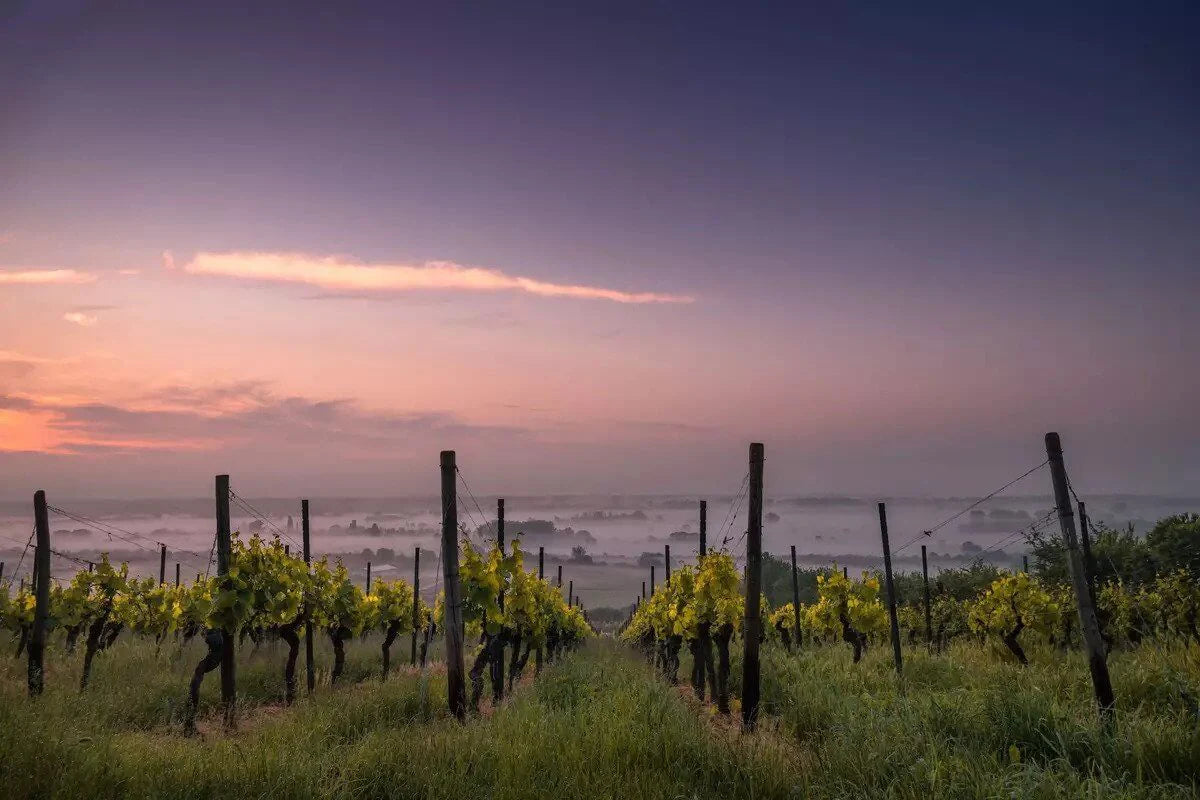
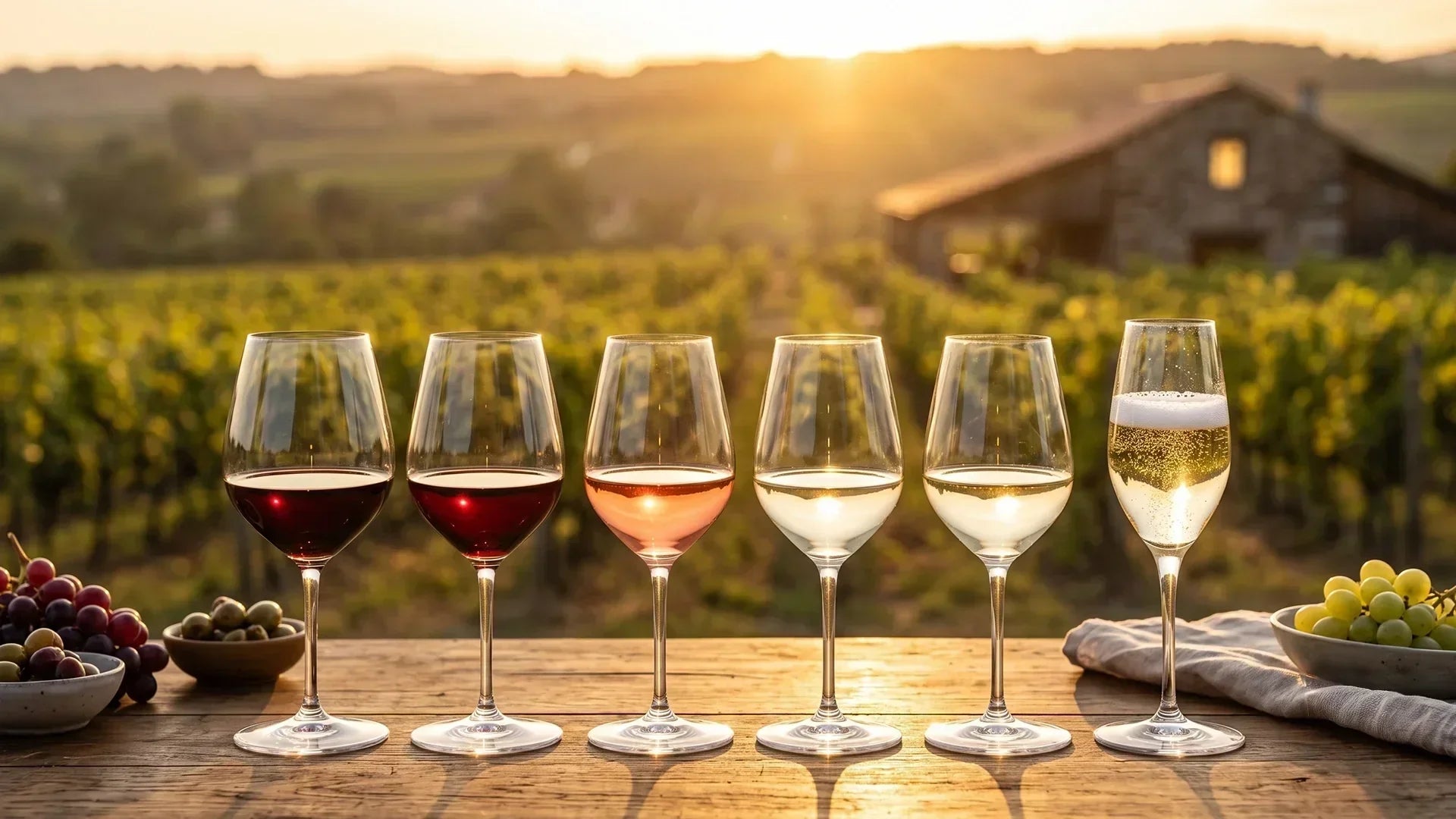
Wine is fermented grape juice. Crush grapes, and the juice releases natural sugar. Yeast converts that sugar into alcohol and carbon dioxide — that process is fermentation. In most wines, the CO₂ escapes, leaving a still wine at roughly 11.5% to 14.5% ABV.
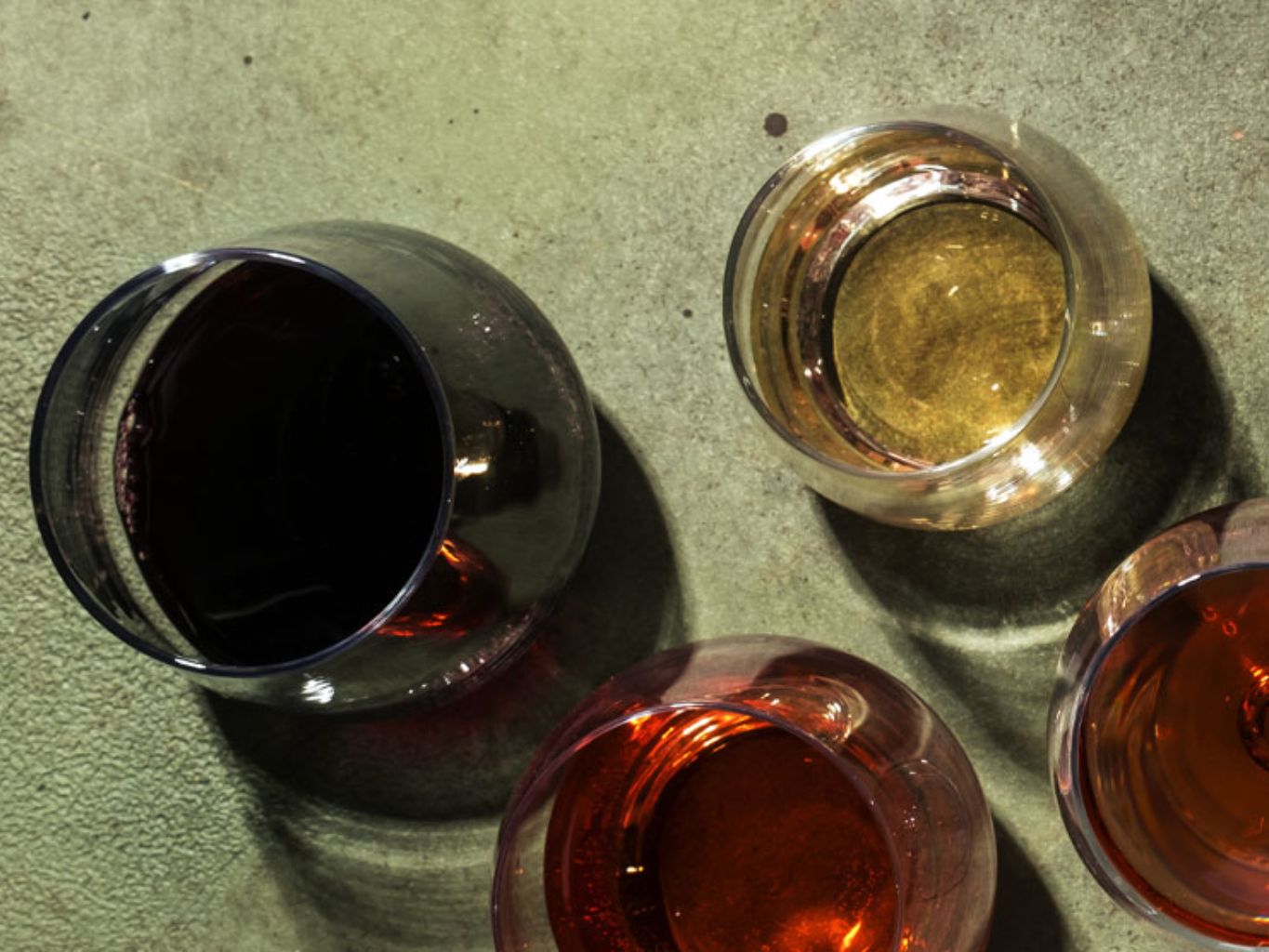
Color comes from skin contact: no contact produces white, a few hours produces rosé, and several days produces red.
Key Takeaways
- Wine is fermented grape juice — yeast converts grape sugars into alcohol and CO₂.
- Every grape has three parts: skin, pulp, and seeds. Each plays a distinct role in flavor and structure.
- Grape pulp is always colorless. Color comes entirely from the skin.
- White wine uses little or no skin contact. Red wine macerates with skins for days during fermentation.
- You can make white wine from red grapes — but red wine requires red grape skins.
- Every wine belongs to one of three families: still, sparkling, or fortified. The difference is what happens to CO₂ — and in fortified wine, whether grape spirit was added to stop fermentation early.
1.1 What Is Wine?
Start with the shortest version: wine is fermented grape juice.
That’s not an oversimplification. That’s the whole thing. Everything after that is detail.
Here’s how it works. You crush grapes. Sweet juice comes out — that juice already contains natural sugar. Then yeast arrives. Yeast eats the sugar and converts it into two things: alcohol and carbon dioxide. That conversion is fermentation.
In most wines, the CO₂ escapes into the air. What stays behind is wine — liquid with alcohol, acids, color, and flavor. In sparkling wine, that CO₂ gets trapped, which gives you the bubbles. That’s a separate process — its own episode.
Most table wines land between 11.5% and 14.5% ABV. Cooler climates produce lower alcohol because grapes reach harvest with less sugar. Warmer climates push numbers higher.
Every wine starts in the same place: grape juice, sugar, and yeast. The difference comes from everything after.
1.1b The Three Wine Families: Still, Sparkling, and Fortified

Every wine you’ll ever encounter belongs to one of three families. All three start with the same raw material — fermented grape juice. What separates them is what happens during and after fermentation.
Still Wine
In still wine, the CO₂ produced during fermentation escapes into the air. What stays behind is a stable, bubble-free wine. This is the default category — every red, white, and rosé on a standard restaurant list is a still wine.
Sparkling Wine
In sparkling wine, the CO₂ stays trapped. The bubbles are dissolved gas, retained either by sealing the wine during a second fermentation in bottle (the traditional method) or by carbonating under pressure in a sealed tank (the Charmat method). Champagne, Cava, Prosecco — we’ll cover how each is made in a later episode.
Fortified Wine
Fortified wine is different in one key way: partway through fermentation, a shot of grape spirit — distilled grape alcohol — is added to the wine. That kills the yeast, stops fermentation before all the sugar converts, and leaves the wine both stronger and often slightly sweet.
The result sits between 15% and 22% ABV, well above any table wine.
Why did winemakers start doing this? History. Before refrigeration, wine spoiled fast on long ocean voyages — turning to vinegar before it reached its destination. Adding spirit preserved it long enough to survive the journey. That one practical solution gave the world Port, Sherry, Madeira, and Marsala — four traditions with centuries of production behind them.
|
The three families at a glance: Still — CO₂ escapes. Table wine. 11.5–14.5% ABV. · Sparkling — CO₂ trapped. Bubbles. Champagne, Cava, Prosecco. · Fortified — grape spirit stops fermentation early. 15–22% ABV. Port, Sherry, Madeira, Marsala. |
1.2 Anatomy of a Grape

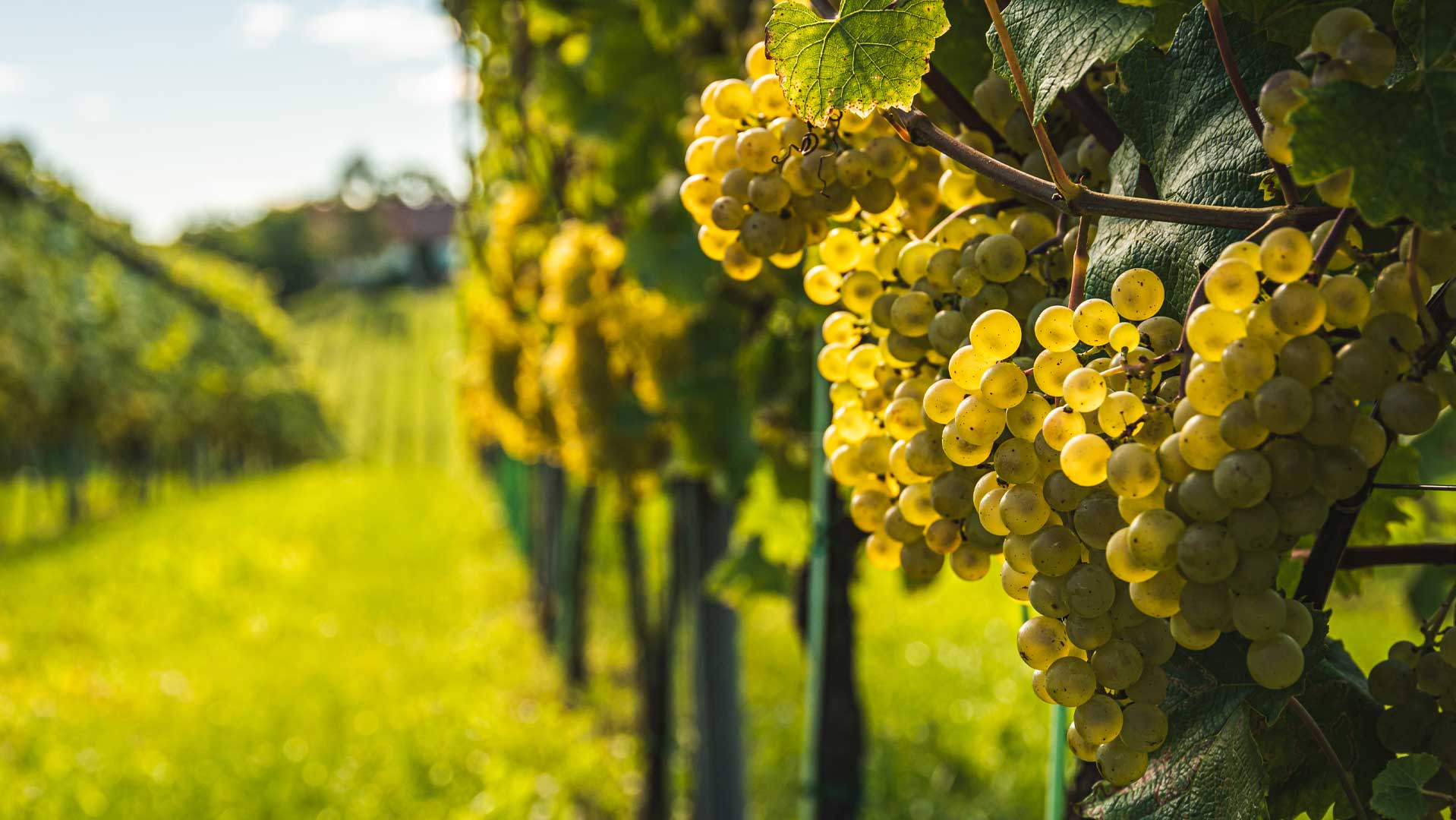
A grape has three parts: skin, pulp, and seeds. Each one does a different job.
The Pulp
The pulp is the flesh of the grape — juice, water, and sugar. Here’s what most people don’t expect: grape pulp is always colorless. It doesn’t matter if the grape is red or white. The juice inside is clear.
That’s why you can make white wine from red grapes. No skin contact means no color transferred.
The Skin
The skin is where things get complicated — and interesting.
Skin contains tannins, color compounds (anthocyanins in red grapes), and aromatic compounds. When skin sits in contact with juice, it transfers all of those things. The longer the contact, the more transfer.
You know that dry, grippy feeling when you over-steep tea? That’s tannins. The skin does the same thing to wine. Extended contact with red grape skins during fermentation is what makes red wine firm and structured.
The Seeds
Seeds also contain tannins, but winemakers generally avoid crushing them. Broken seeds release harsh, bitter compounds. Modern winemaking is careful about seed handling for this reason.

1.3 How White Wine Is Made

White wine starts the same way every wine does: grapes are harvested, then crushed.
Here’s where it diverges. The juice is immediately separated from the skins. No maceration. The clear juice goes straight into fermentation.
Step by step:
- Harvest — picked earlier than reds in most regions to preserve acidity
- Crush and press — skins separated from juice immediately
- Clarification — juice settled or filtered to remove solids
- Fermentation — typically in stainless steel at cool temperatures (50–65°F), which preserves aromatic freshness
- Aging — most whites go straight to bottle; some see oak or lees aging for added complexity
- Bottling
The cool fermentation temperature matters. Heat drives off delicate aromatic compounds — that’s why most crisp whites (Sauvignon Blanc, Pinot Grigio, Riesling) ferment cold.
Oak is the wildcard. A stainless-steel white stays bright and fruit-forward. An oak-fermented white — many Chardonnays, white Rioja — gains texture, roundness, and toasty notes.
|
Worth knowing: White wine can be made from red grapes, as long as the juice has no skin contact. Blanc de Noirs Champagne is a well-known example — made from red Pinot Noir and Pinot Meunier, pressed gently without skin contact, producing a white or pale sparkling wine. |
1.4 How Red and Rosé Wine Is Made

Red Wine
Red wine keeps the skins in contact with the juice during fermentation. That’s the fundamental difference from white wine production.
After harvest, red grapes are crushed (destemmed, typically) and the whole mass — juice, skins, and seeds — goes into a fermentation vessel together. As yeast works, alcohol and heat extract color, tannin, and flavor compounds from the skins.
Step by step:
- Harvest — typically riper than whites, with higher sugar
- Crush and destem — skins remain in contact with juice
- Fermentation with maceration — 5–30 days depending on style; a skin cap forms at the surface and is punched down or pumped over regularly
- Pressing — skins pressed to extract remaining wine
- Malolactic fermentation (MLF) — most reds convert sharp malic acid to softer lactic acid, adding roundness
- Aging — often in oak barrels for months to years
- Bottling — often with additional bottle time before release
The length of maceration determines style. A light Pinot Noir might macerate for a few days. A structured Barolo can macerate for 30 days or more.
Rosé Wine
Rosé is made by cutting the maceration short.
After crushing, red grapes sit with their skins for just a few hours — typically 2 to 24 hours — before the juice is drained off and fermented like a white wine. The brief contact gives rosé its color, from palest blush to deep salmon.
A second method is the saignée (French: “to bleed”). A portion of juice is bled off early from a red wine fermentation. What stays becomes a more concentrated red. What leaves becomes rosé. This two-for-one method is common in Burgundy and parts of Napa.
|
A note on blending: Blending red and white wine to make rosé is legal in most wine-producing countries but specifically banned in France for still rosé. French Provence rosé gets its color from short maceration only — not blending. |
White vs. Rosé vs. Red: A Side-by-Side

Decision Framework: What Wine Should I Start With?
New to wine and not sure where to begin? Work through this:
1. Light and crisp, or full and rich?
Light and crisp: start with whites — Pinot Grigio, Sauvignon Blanc, Riesling. Full and rich: start with reds — Cabernet Sauvignon, Malbec, Syrah. In between: rosé or lighter reds like Pinot Noir or Gamay.
2. With food or without?
With food: red or a full white — acidity and tannin cut through fat and protein. Solo drinking: rosé or light white — easier, no need to match.
3. Sensitive to bitterness?
Yes: white or rosé. No: red wine’s tannins won’t be a problem.
4. Budget:
The $18–$35 range is where quality-per-dollar peaks in every color category. Spend here until you know what you love.
Wine Glossary
Fermentation: The process by which yeast converts grape sugar into alcohol and carbon dioxide. The core transformation that turns juice into wine.
Tannin: Naturally occurring polyphenols found in grape skins, seeds, stems, and oak barrels. Creates a dry, grippy texture. The primary structural element in red wines.
Maceration: The period when grape skins are in contact with juice during or after fermentation. Longer maceration = more color and tannin.
Must: Freshly crushed grape juice that still contains skins, seeds, and stems. The raw material at the start of fermentation.
ABV (Alcohol by Volume): The percentage of alcohol in a finished wine. Most table wines: 11.5–14.5%. Fortified wines (Port, Sherry): 15–22%.
Fortified Wine: A wine to which grape spirit (distilled grape alcohol) has been added during fermentation. The spirit kills the yeast and stops fermentation, leaving the wine stronger and often sweeter. Fortified wines run 15–22% ABV. Classic examples: Port, Sherry, Madeira, Marsala.
Malolactic Fermentation (MLF): A secondary, bacterial process that converts sharp malic acid into softer lactic acid. Gives reds roundness; used selectively in whites (notably full-bodied Chardonnay).
Pressing: The mechanical process of separating liquid from grape solids (skins, seeds, stems) after crushing or fermentation.
Saignée: French for “to bleed.” A rosé production method where juice is bled off early from a red wine fermentation, concentrating the red while producing rosé from the runoff.
Varietal: A wine named for and primarily made from a single grape variety (e.g., Cabernet Sauvignon, Chardonnay).
Vintage: The year grapes were harvested. Climate in that year affects ripeness, acidity, and overall wine character.
Frequently Asked Questions
What is wine, exactly?
Wine is fermented grape juice. Yeast converts the natural sugar in grape juice into alcohol and carbon dioxide. The CO₂ escapes in still wines and is trapped in sparkling wines. That transformation — fermentation — is all wine requires to exist.
What are the three parts of a grape?
Every grape has skin, pulp, and seeds. The pulp provides juice and sugar. The skin provides color, tannins, and aromatic compounds. The seeds contain bitter tannins and are managed carefully during winemaking to avoid harsh flavors.
Why is wine red?
Red wine gets its color from contact between juice and red grape skins during fermentation. Grape pulp is colorless — color comes entirely from anthocyanins in the skins. Longer skin contact means deeper, more intense color.
Can white wine be made from red grapes?
Yes. Since grape pulp is colorless, removing skins immediately after crushing produces white wine regardless of grape color. Blanc de Noirs Champagne is a well-known example — made from red Pinot Noir and Pinot Meunier, pressed without any skin contact.
What is skin contact in wine?
Skin contact refers to the time grape juice spends in contact with grape skins after crushing. This is how color, tannin, and certain flavor compounds transfer into the wine. No contact = white; a few hours = rosé; days to weeks = red.
How is rosé wine made?
Rosé is made by briefly macerating red grapes — leaving juice in contact with skins for roughly 2 to 24 hours — then draining the juice and fermenting without skins, like a white wine. The brief contact provides the color. The saignée method bleeds juice off early from a red wine fermentation.
What does ABV mean in wine?
ABV stands for Alcohol by Volume — the percentage of a wine’s total volume that is alcohol. Most table wines range from 11.5% to 14.5% ABV. Fortified wines (Port, Sherry) run 15–22% because fermentation was stopped early by adding grape spirit.
What is fortified wine?
Fortified wine is wine to which grape spirit has been added during fermentation. The added alcohol kills the yeast, stops fermentation early, and preserves residual sugar — leaving the wine stronger and often partially sweet. Port, Sherry, Madeira, and Marsala are the best-known examples. Historically, fortification solved a practical problem: wine spoiled during long ocean voyages. Stopping fermentation with spirit gave it the stability to survive the journey.
What is fermentation in winemaking?
Fermentation is the biological process by which yeast converts grape sugar into alcohol and carbon dioxide. It’s the central transformation in winemaking. Without fermentation, you have grape juice, not wine.
What are tannins in wine?
Tannins are naturally occurring polyphenolic compounds found in grape skins, seeds, and stems. In wine, they create a dry, astringent sensation — a feeling of grip in the mouth. They’re structural in red wines and minimal to absent in whites and rosés.
What is malolactic fermentation?
Malolactic fermentation (MLF) is a secondary bacterial process that converts sharp malic acid into softer lactic acid. Nearly all red wines go through MLF. Some whites — especially full-bodied Chardonnay — use it to add richness and reduce acidity.
What is “must” in winemaking?
Must is freshly crushed grape juice that still contains skins, seeds, and stems. It’s the raw material at the start of fermentation. In red winemaking, the must ferments with the skins. In white winemaking, skins are pressed out before fermentation begins.
How long does it take to make wine?
It varies by style. A basic white can be ready for bottling in three to six months. A structured Barolo or Napa Cabernet may spend two or more years in barrel before release, then additional time in bottle. Fermentation itself takes roughly one to three weeks.
What’s the difference between white and red wine production?
The key difference is skin contact. White wine separates juice from skins immediately, then ferments the clear juice cool. Red wine keeps skins in contact during fermentation — sometimes for weeks — to extract color, tannin, and structure. Everything else follows from that one decision.
Explore the Collection
The fundamentals make a lot more sense once you can taste the difference.
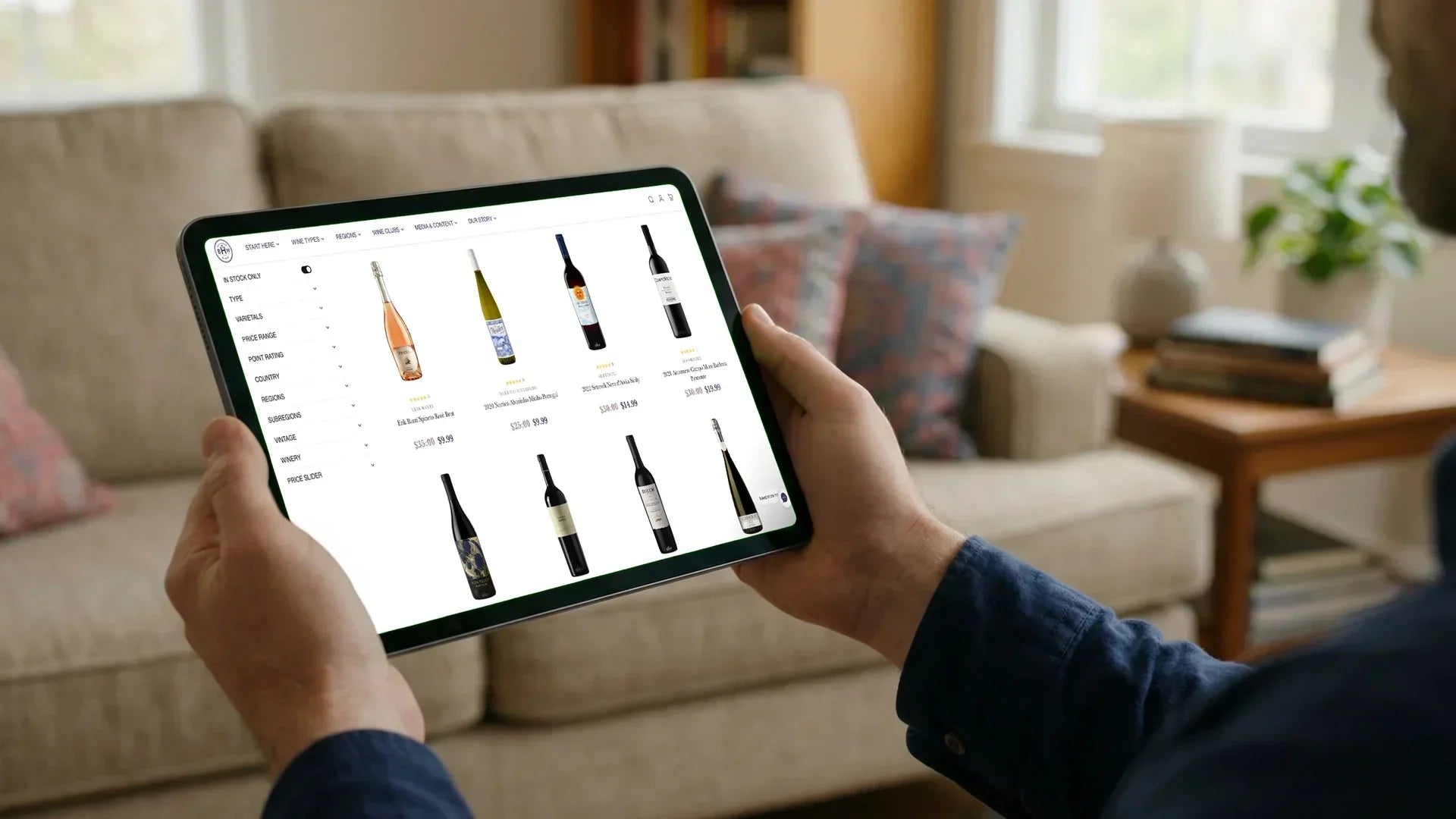
Browse all available wines by color, region, and variety: All Wines at Big Hammer Wines
Skip the research and go straight to what’s proven: Best Sellers





















Share:
The Best Wine for 4th of July BBQ: A Food-by-Food Pairing Guide
Comments Section