

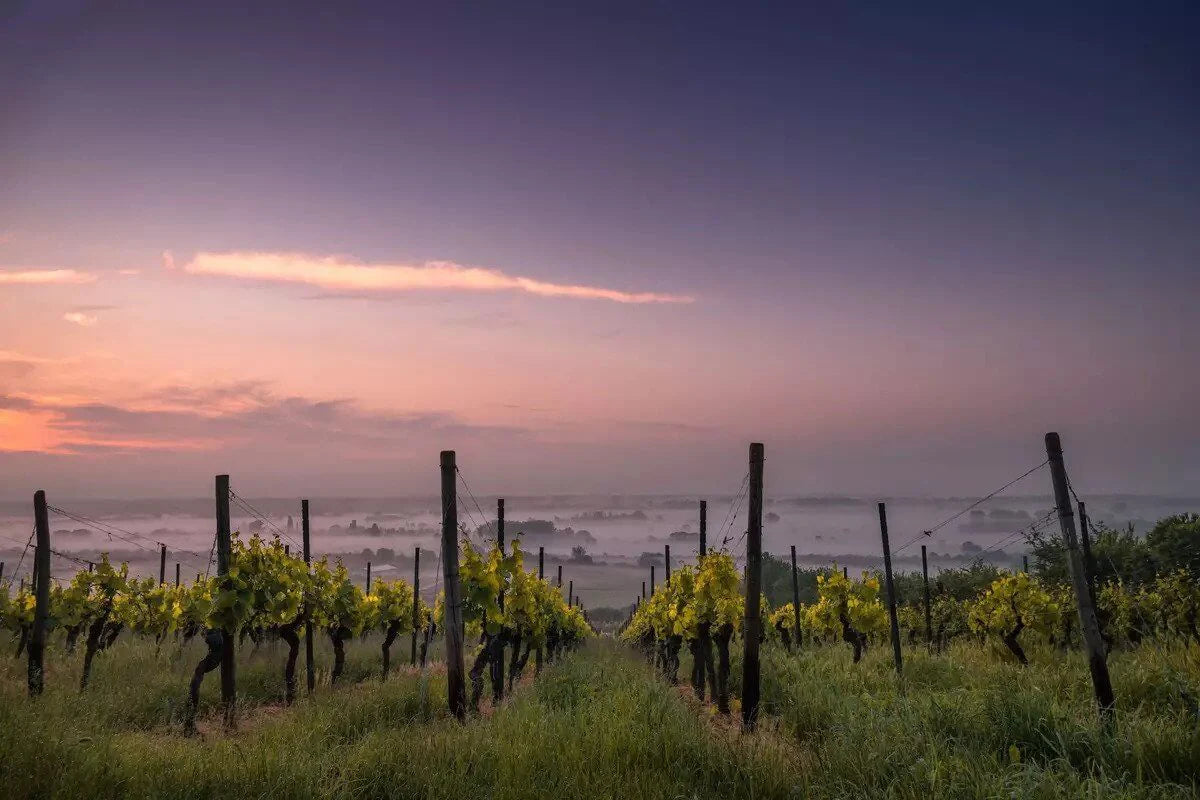
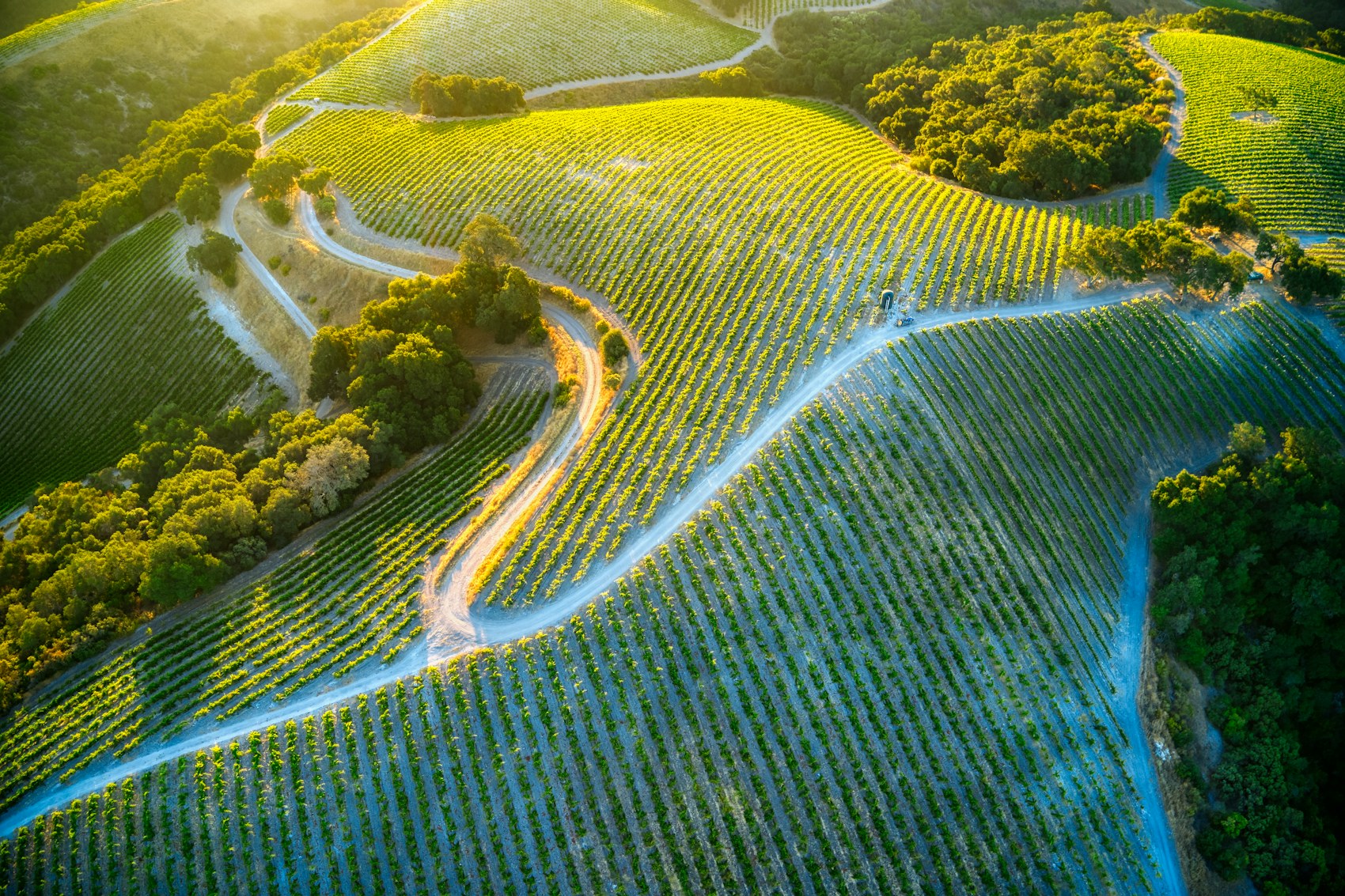
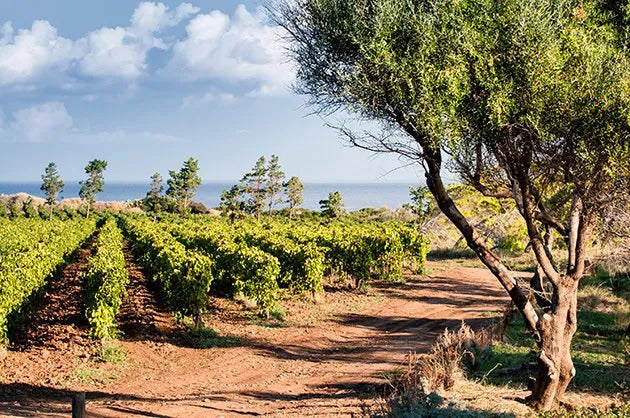
In 1989, an American importer named Robert Haas and the Perrin family of Château de Beaucastel, one of the great estates of Châteauneuf-du-Pape, went looking for a place in California that could grow Rhône varieties properly.
They wanted limestone, big temperature swings, and a Mediterranean climate. They found all three on the dry, oak-studded west side of Paso Robles, bought a ranch, and imported certified Rhône cuttings through quarantine to plant them. Those Tablas Creek vines have since been propagated into vineyards across the entire country.
It's the clearest possible statement about this place: when French vignerons went hunting for a second home, they chose a stretch of ranch country halfway between Los Angeles and San Francisco that most Americans still can't reliably place on a map.

The Gap in the Mountains
Paso Robles is enormous, over 600,000 acres, the largest appellation on California's Central Coast, and it works because of a hole in the coastal range. The Templeton Gap is a low pass that lets cold Pacific air and fog pour inland every afternoon and evening. Summer days regularly break 100 degrees Fahrenheit; nights fall into the 50s. That diurnal swing of 40 to 50 degrees is among the most dramatic in California, and it's the entire quality engine: heat builds sugar, colour, and ripe tannin, while the nightly cold snap preserves acidity and aromatics that a warm region has no business retaining.
The other divide is rainfall and rock. The west side - closer to the ocean, higher, up to 2,400 feet - gets around 30 inches of rain and sits on calcareous soils: chalky limestone and shale from an ancient uplifted seabed, the same kind of ground that makes Chablis and Châteauneuf behave.
The east side is flatter, hotter and drier, with perhaps 10 inches of rain and more alluvial and sandy soils, producing plusher, softer, more immediately generous wines. In 2014 the region formalised this complexity into eleven sub-AVAs, including Adelaida District, Willow Creek District, Templeton Gap District and Paso Robles Geneseo District - a useful map once you know which side of the divide you prefer.
Three Wines Paso Does Better Than Anywhere
Rhone blends are the connoisseur's answer. Grenache, Syrah, and Mourvèdre, plus whites like Roussanne, Grenache Blanc, Viognier, and Picpoul, found a climate here that flatters them, and the movement Tablas Creek seeded has produced genuinely world-class results at Saxum, Linne Calodo, Booker, Epoch, and Denner. Saxum's James Berry Vineyard bottling was named Wine Spectator's Wine of the Year in 2010, which did for Paso what a good review does for a restaurant: the allocation lists haven't shortened since.
Cabernet Sauvignon is the volume leader and the region's commercial engine, now around forty percent of plantings. Paso Cabernet is unapologetically ripe, dark, and plush, a different animal from Napa's more structured style, and typically half the price. Justin's Isosceles, Daou, Halter Ranch, and Austin Hope built their reputations here.
Zinfandel is the heritage claim, and it predates all of it. Franciscan missionaries planted the first vines around Mission San Miguel Arcángel in 1797. In the 1920s, the Polish pianist and statesman Ignacy Paderewski, who served briefly as Prime Minister of Poland, bought a ranch here and planted Zinfandel and Petite Sirah, convinced the ground was exceptional. He was right, and old-vine Paso Zinfandel remains a specialty.

The Paso Blend
Here's the region's most quietly radical habit. In Bordeaux, blending Syrah into Cabernet Sauvignon is illegal. In the Rhône, blending Cabernet into Syrah is illegal. In Paso Robles, nobody is stopping you, and it turns out the combination works beautifully in this climate, giving Cabernet's structure and blackcurrant a layer of Syrah's pepper, olive, and savoury depth.
The style, sometimes just called a "Paso blend," was pushed hardest by Stephan Asseo of L'Aventure, a Bordeaux winemaker who emigrated in 1996 specifically because French appellation law wouldn't let him make the wine he wanted. He's the region's philosophy in a single biography.
Farming at the Front of the Argument
Paso's water is scarce, and its growers know it, which has pushed the region toward dry-farming, head-trained vines, and serious regenerative agriculture. Tablas Creek became the world's first vineyard certified Regenerative Organic in 2020, and the practices- cover cropping, sheep grazing between rows, composting, minimal tillage- have spread widely. For a region often caricatured as sunshine-and-power, the farming conversation here is among the most advanced in California.
How to Buy Paso Robles
Decide which side of the gap you want. For structure, minerality and age-worthy Rhône blends, look for west-side AVAs - Adelaida, Willow Creek, Templeton Gap - and expect $45 to $90 for wines that compete with far pricier Châteauneuf.
For plush, crowd-pleasing Cabernet, the east side delivers Napa-style generosity in the $30s and $40s. Old-vine Zinfandel and Petite Sirah are the value sleepers, and the white Rhône blends - Roussanne, Grenache Blanc, Viognier - are among the most interesting and least-known whites in the state. Decant the big reds, serve them at 17 degrees rather than warm, and buy the west-side wines to cellar: the limestone gives them a spine that outlasts the sunshine.
Quick Answers: Paso Robles
What is Paso Robles known for?
Bold Cabernet Sauvignon, which is now about 40 percent of plantings, plus world-class Rhône-style blends of Grenache, Syrah and Mourvèdre, and heritage old-vine Zinfandel. The region is the largest appellation on California's Central Coast.
What is the difference between east side and west side Paso Robles?
The west side is cooler, higher, and wetter, with calcareous limestone soils that give structure and minerality - ideal for Rhône varieties. The east side is hotter, flatter and drier with sandier soils, producing plusher, softer, more approachable wines.
Why does Paso Robles have such big temperature swings?
The Templeton Gap, a low pass in the coastal range, funnels cold Pacific air and fog inland every afternoon. Days above 100 degrees Fahrenheit fall into the 50s at night - swings of 40 to 50 degrees that build ripeness while preserving acidity.
What is a Paso blend?
A blend of Cabernet Sauvignon with Syrah - illegal in both Bordeaux and the Rhône, but permitted and popular in Paso Robles. It combines Cabernet's structure and blackcurrant with Syrah's pepper and savoury depth, and was championed by Stephan Asseo of L'Aventure.
Ready to explore? Our Paso Robles collection carries our current selection. And if you are hunting a specific bottle from the region, contact us for a quote - we source wine globally, with a 12-bottle minimum on special orders.


Shop Our Paso Robles Collection
SHOP COLLECTIONShare:
Oregon Wine: Pinot Noir at the 45th Parallel
Italian Wine: Twenty Regions, 500 Grapes, One Table
Comments Section