

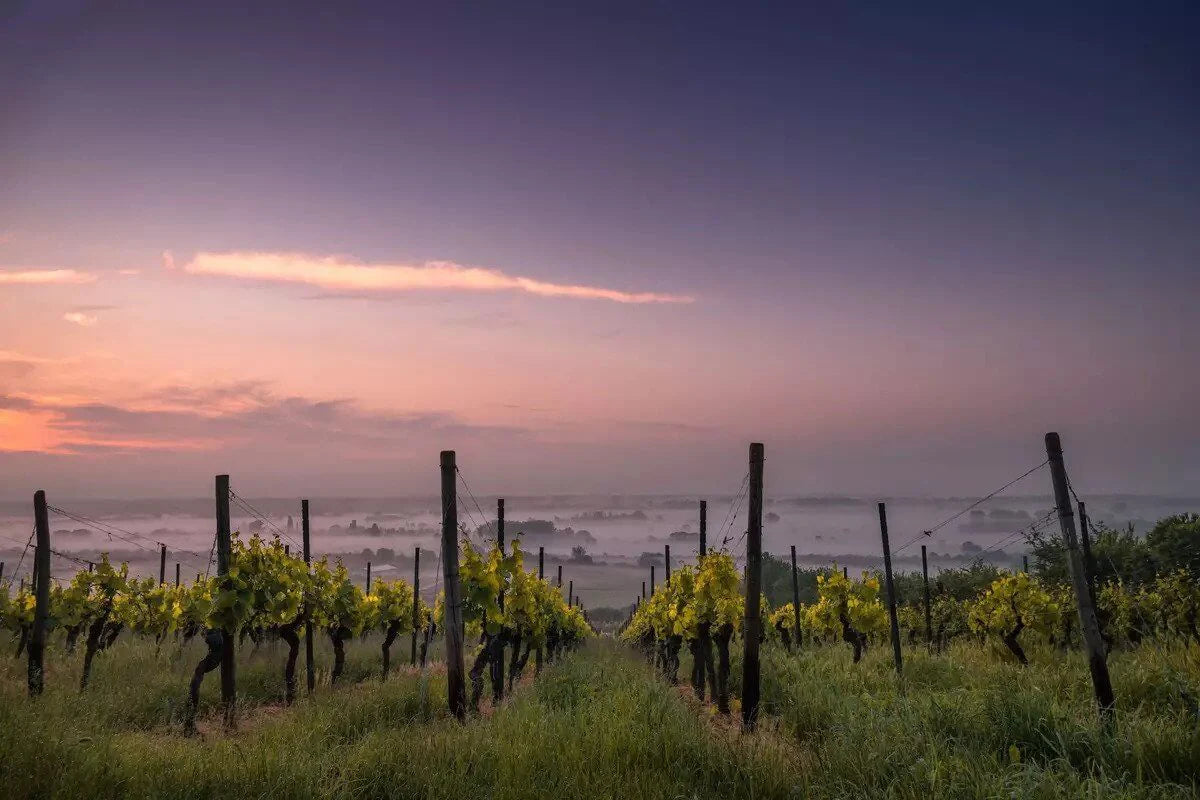
Burgundy is thirty miles of gentle limestone slope that the wine world has spent a thousand years arguing over, hectare by hectare.
Two grapes. One escarpment. And 1,247 named parcels — climats — mapped so precisely that a hedge, or a few inches of topsoil, can separate a good wine from a great one and multiply its price by ten.
The monks started it. Cistercians farmed these hills from the 12th century, tasting and comparing and walling off the plots that behaved differently — building the world's first serious theory of terroir in the process.
Everything modern wine believes about place showing up in a glass began on this slope. The argument has never stopped.
The Slope, and Why the Middle Wins
The Cote d'Or — the "golden slope" — runs roughly north to south and faces east, so the vines catch morning sun and dry fast.
Its magic is in cross-section. At the bottom of the hill sits deep, fertile clay: perfectly fine for regional Bourgogne. At the very top, thin wind-scoured soil and cold.
In between, on the mid-slope where limestone bedrock sits close under a workable skin of marl and the drainage is exactly right, sits almost every grand cru in Burgundy.
The escarpment is fractured by ancient faults that expose different limestone strata at different heights. That's why neighboring parcels genuinely taste different, and why a system this obsessive is observation rather than snobbery.
Reading the Pyramid
Four tiers. The more specific the name on the label, the higher the wine.
Regional (Bourgogne Rouge) can come from anywhere in the region. Village (Gevrey-Chambertin, Meursault) comes from one commune. Premier Cru names the village plus the vineyard — Chambolle-Musigny Les Amoureuses — and is about ten percent of production. Grand Cru, just 33 vineyards and roughly one percent, drops the village name entirely and stands alone: Chambertin, Montrachet, Corton.
Here's the trap that catches people. In the 1800s villages hyphenated themselves to their most famous vineyard, so Gevrey borrowed Chambertin and Puligny borrowed Montrachet. "Gevrey-Chambertin" is the village. "Chambertin" on its own is the grand cru, at roughly ten times the price. Read the label twice.
North to South
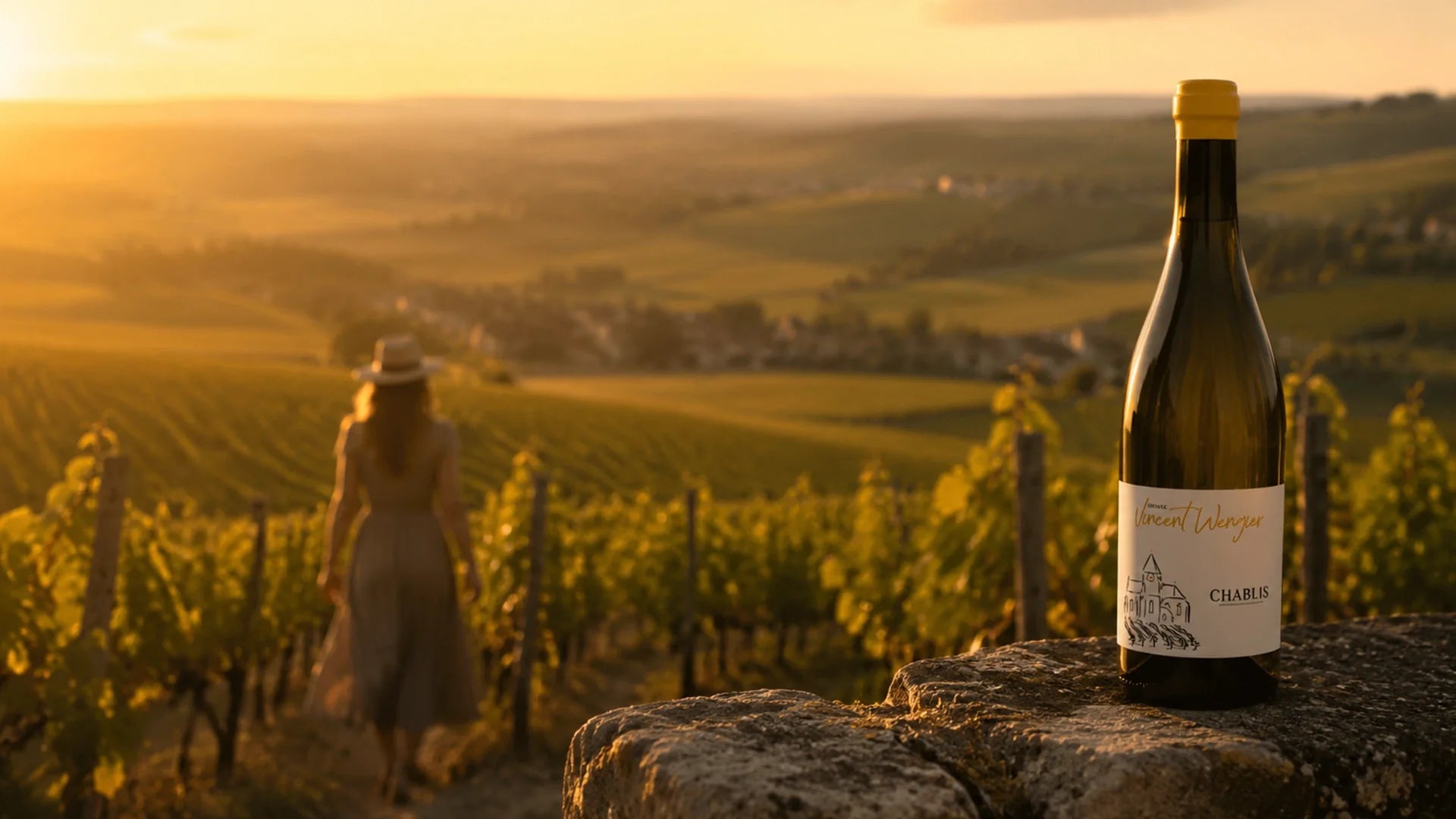
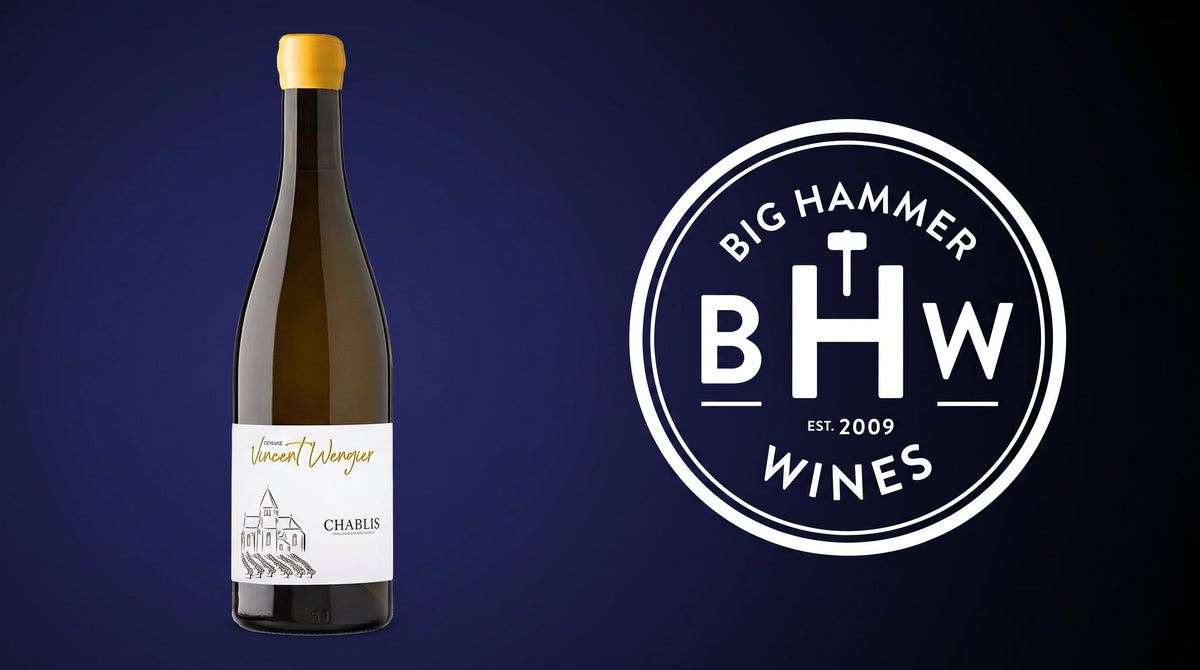
Chablis sits isolated a hundred miles north, growing Chardonnay on Kimmeridgian marl packed with fossilized oyster shells. Steel, citrus, and a saline chalkiness you don't find anywhere else. Its grand crus all sit on one southwest-facing hill above the town.
The Cote de Nuits, the northern half of the Cote d'Or, is Pinot Noir's throne room — Gevrey, Vosne-Romanee, Chambolle, Nuits-Saint-Georges, and the monopole of La Romanee-Conti, routinely the most expensive wine in the world.
The Cote de Beaune to the south makes what I'd call the greatest white wines anywhere: Montrachet, Corton-Charlemagne, Meursault. Its reds at Pommard and Volnay are no afterthought either.

Below that, the Cote Chalonnaise — Rully, Mercurey, Givry — offers the same two grapes at civilian prices. The Maconnais ripens sunny, generous Chardonnay in Pouilly-Fuisse and Saint-Veran, and has quietly become one of the best values in France.
Beaujolais, immediately south, is administratively Burgundy and practically a different planet: Gamay on granite. Its ten named crus — Morgon, Fleurie, Moulin-a-Vent — are the region's standing bargain.
Why Burgundy Got So Expensive, and Where to Escape
Production here is microscopic. Napoleonic inheritance law split plots among heirs for two centuries, so a domaine might farm a few hectares scattered across a dozen parcels. Add a run of frost- and hail-shortened vintages, then global demand discovering the region all at once, and grand cru left the atmosphere.
The escapes are real, though, and I use them constantly.
A village wine from a great grower routinely outperforms a premier cru from an indifferent one. Look to the quieter communes — Marsannay, Fixin, Saint-Aubin, Savigny-les-Beaune, Monthelie — and to the Chalonnaise and Maconnais.
Chablis is still the best value in serious white wine, full stop. And Aligote, Burgundy's other white grape, has gone from afterthought to sommelier handshake in about a decade.
The Names That Define It
Domaine de la Romanee-Conti is the benchmark and the price ceiling. Around it: Leroy and Leflaive for obsessive biodynamic farming, Armand Rousseau and Georges Roumier in the Cote de Nuits, Coche-Dury and Comtes Lafon in Meursault, Raveneau and Dauvissat in Chablis.
But the structural lesson matters more than the names. In Burgundy the producer outranks the appellation almost every time. Find three growers whose style you love and follow them across their whole range. That's how experienced Burgundy drinkers actually buy, and it's how I buy.
Drinking It
Serve red Burgundy cool — around 59–61°F (15–16°C), cellar temperature, not room temperature. Use a wide glass and give young premier crus an hour of air.
White Burgundy wants to be warmer than you'd think, around 54°F (12°C), where the texture finally opens up. Straight from the fridge it's mute.
Village wines drink well at three to six years. Premier and grand crus reward eight to twenty.
And the pairing that explains the whole region: roast chicken with village red Burgundy. I'm not sure there's a better simple meal on earth.

Quick Answers: Burgundy Wine
What do village, premier cru and grand cru mean in Burgundy?
They're levels of geographic precision. Village wine comes from one commune, premier cru from a named vineyard within it, and grand cru from one of just 33 exceptional vineyards that stand alone on the label without a village name.
Why is Burgundy so expensive?
Tiny production is the core reason. Napoleonic inheritance law split vineyards into thousands of small parcels, so most domaines farm only a few hectares. Add recent frost-hit vintages and worldwide demand, and prices for the top wines have gone vertical.
What is a climat?
A named, precisely delimited vineyard parcel, mapped over centuries and now UNESCO-listed. Burgundy has 1,247 of them along the Cote d'Or, each with its own soil, slope and aspect — the foundation of the region's terroir thinking.
What is the best value in Burgundy?
Chablis for white, the Cote Chalonnaise and Maconnais for both colors, and lesser-known Cote d'Or villages like Marsannay, Saint-Aubin and Savigny-les-Beaune. A village wine from a great grower usually beats a premier cru from an average one.
What temperature should Burgundy be served at?
Red Burgundy at around 59–61°F (15–16°C) — cool, cellar temperature, not room temperature. White Burgundy at around 54°F (12°C), warmer than fridge-cold, so the texture can open.
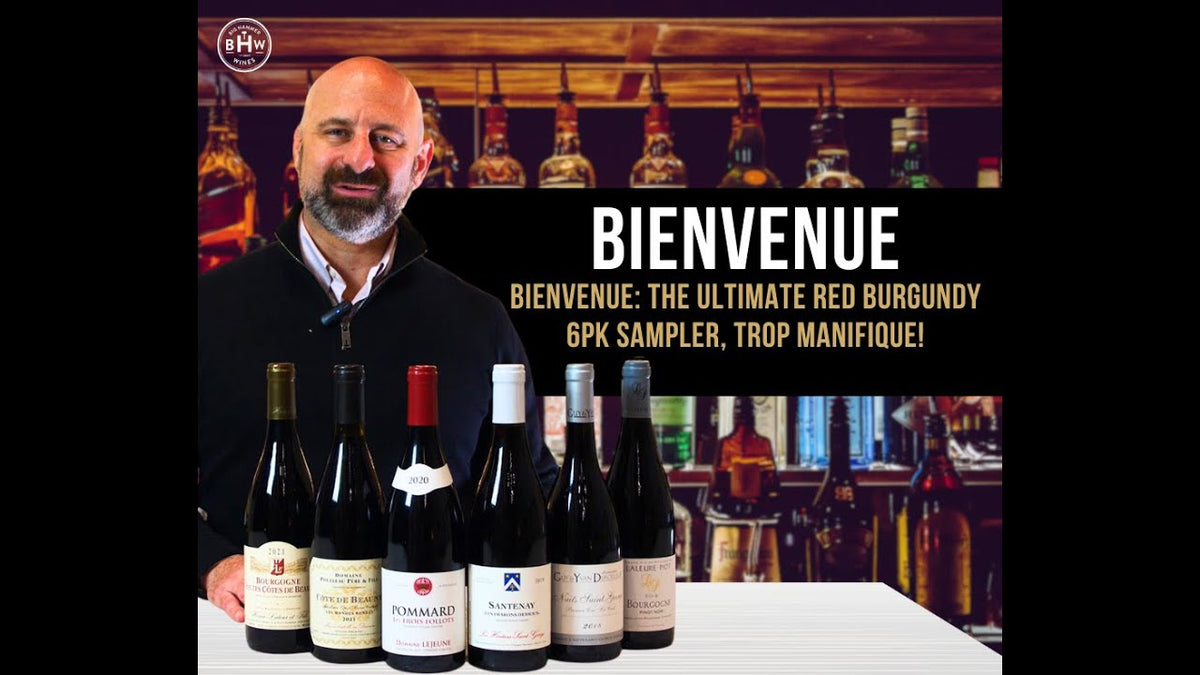
Ready to explore? Our Burgundy collection carries our current selection. And if you're hunting a specific bottle from the region, contact us for a quote — we source wine globally, with a 12-bottle minimum on special orders.
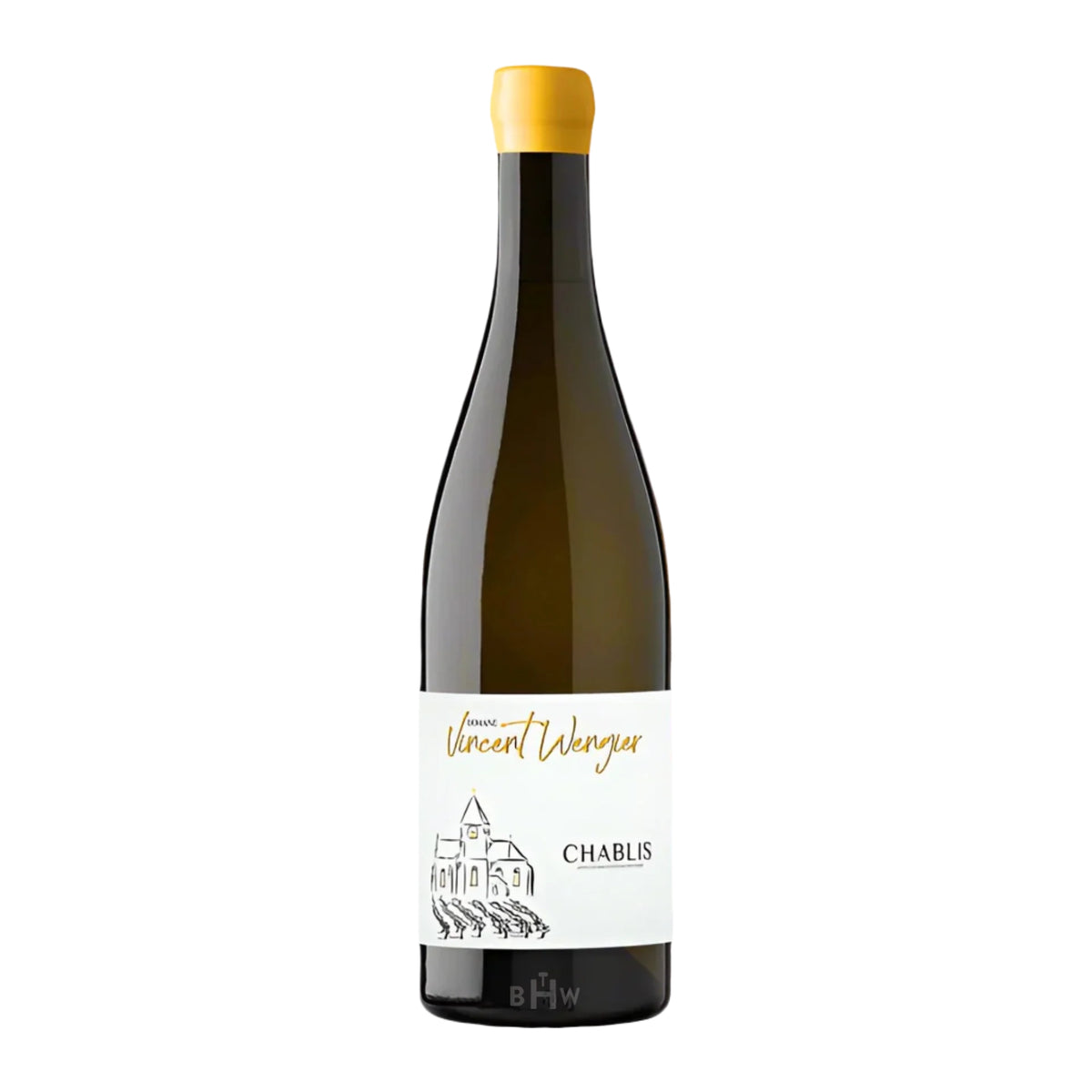
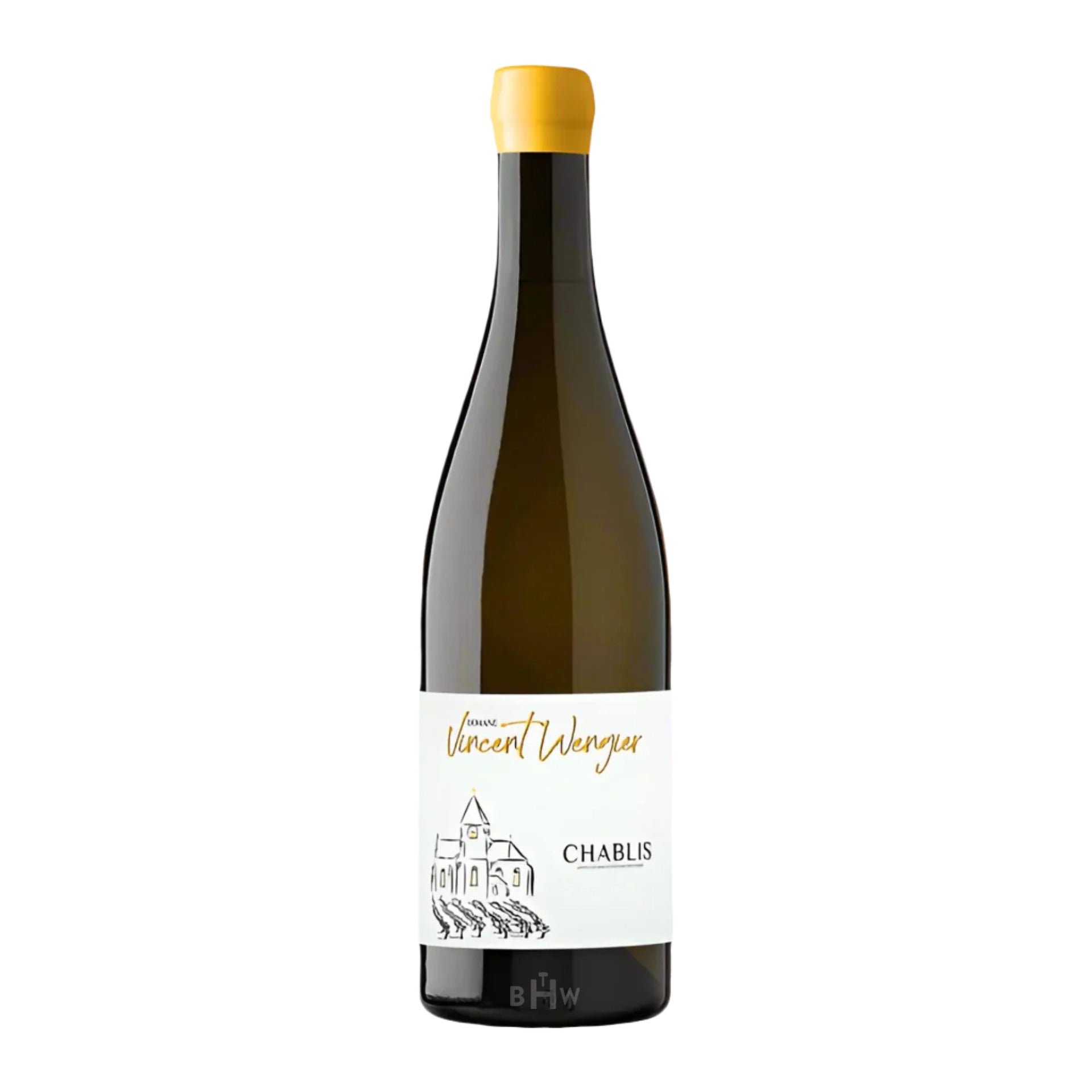

Shop Our Burgundy Collection
SHOP COLLECTIONShare:
Tuscan Wine: Sangiovese, Cypress Hills, and the Rebellion That Changed Italy
Bordeaux Wine: Two Banks, Five Growths, and the Gravel That Decides Everything
Comments Section