

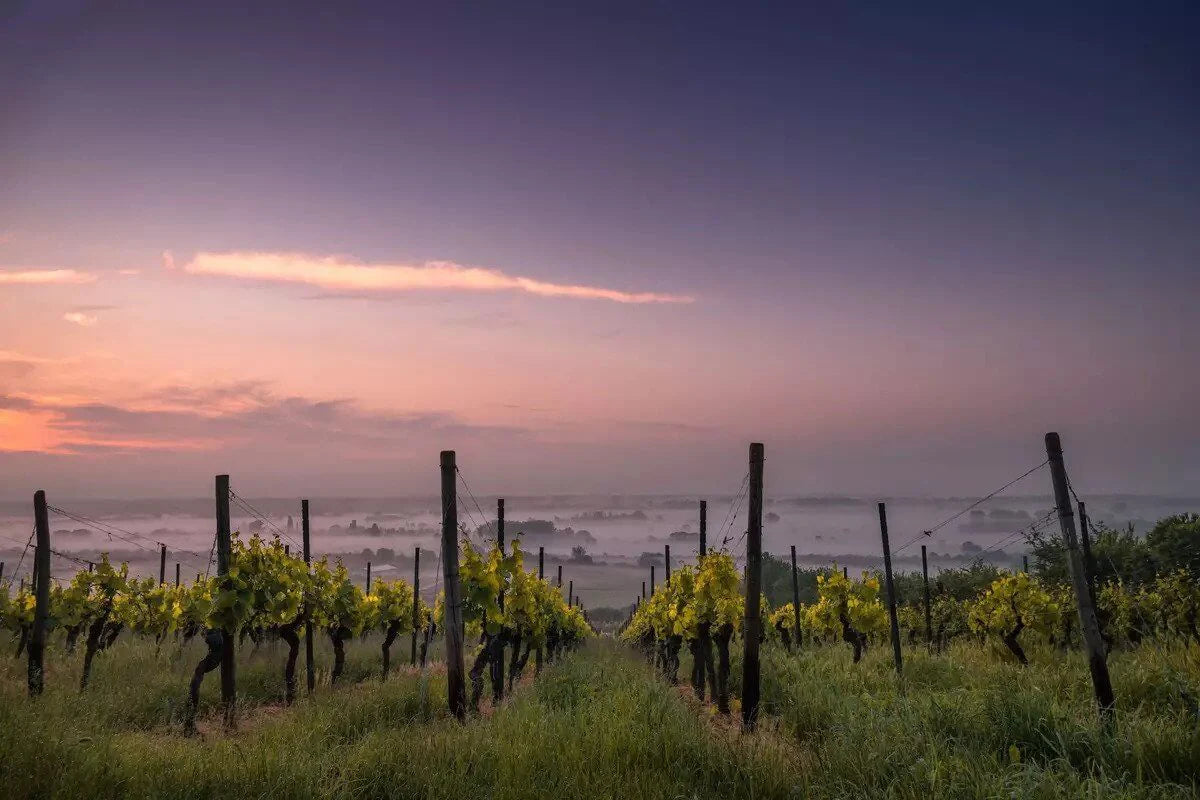
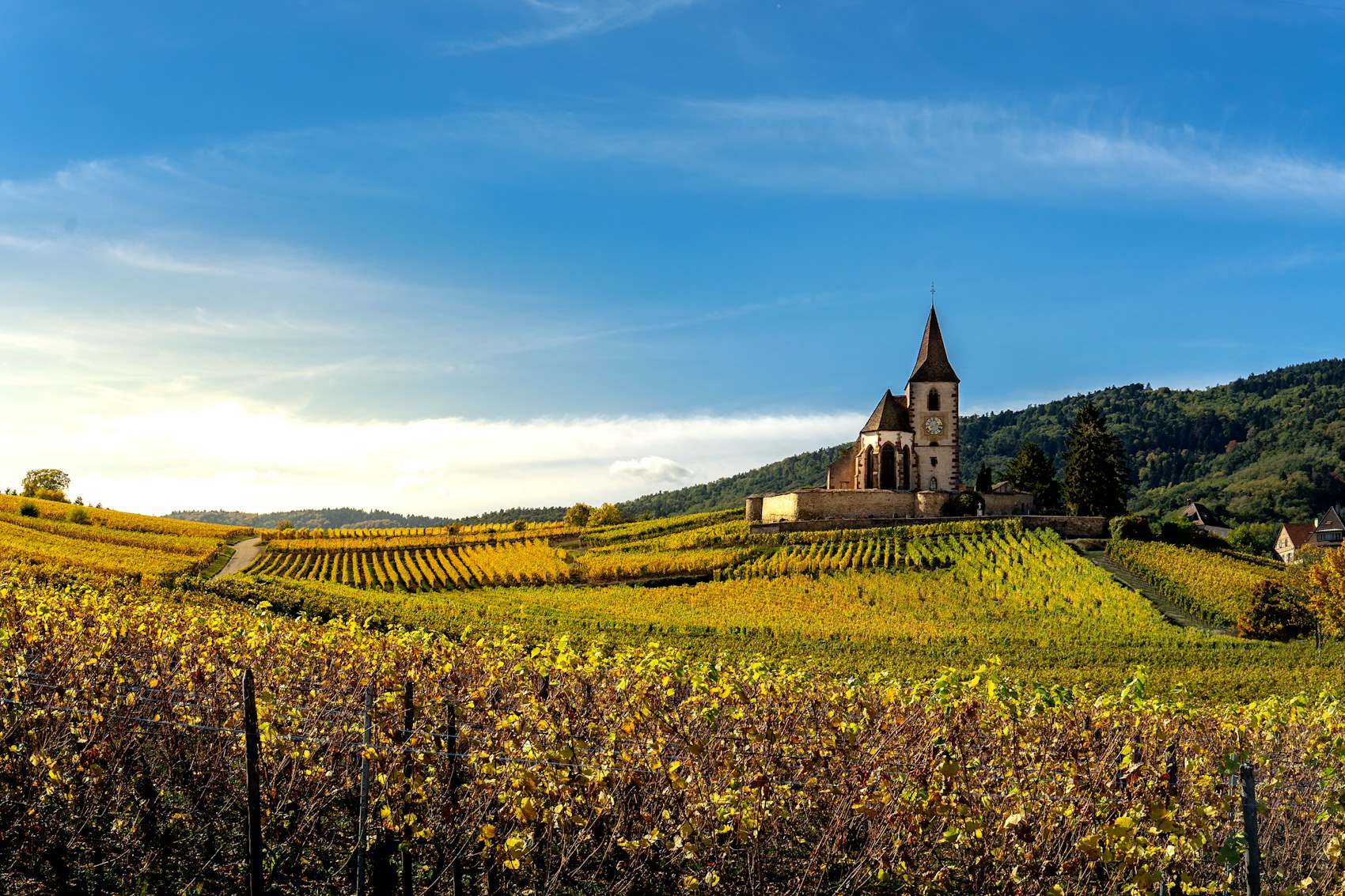
Alsace has changed nationality four times since 1870, and you can taste the argument. The bottles are tall and green like Germany's, the villages are half-timbered, and the names on the labels read Trimbach, Hugel, Zind-Humbrecht, and yet the wines are, with rare and deliberate exceptions, bone dry in a way German Riesling traditionally was not.
This is France's most Germanic region and Germany's most French one, sheltered behind a mountain range that makes the city of Colmar one of the driest places in the entire country. It's also, by a distance, the easiest French wine region for a newcomer to read: Alsace prints the grape name on the label, which almost nowhere else in France will do for you.

The Rain Shadow That Makes It Possible
The Vosges mountains run along Alsace's western edge and strip the moisture out of Atlantic weather systems before they reach the vineyards. What arrives on the eastern slopes is dry, sunny, and warm. Colmar receives around 500 millimetres of rain a year, less than Perpignan on the Mediterranean. Combine that with a narrow north-south strip of foothills at 200 to 400 metres facing east and southeast, and you have long, slow ripening with plenty of sunshine and cool nights.
The other gift is geological chaos. The Rhine rift valley fractured the bedrock here, exposing an extraordinary jumble of soils along a few dozen kilometres: granite, volcanic sedimentary rock, limestone, sandstone, schist, marl, and clay, often changing within a single village.
That's why Alsace makes a serious case for site-specific wine, and why the same grape from two neighbouring hillsides can taste genuinely different.
The Noble Four - Plus the Everyday Heroes
Riesling is the region's aristocrat: dry, taut, citrus-and-stone, with real structure and the ability to age for decades. Alsace Riesling is drier and broader-shouldered than the Mosel's featherweight style.
Gewurztraminer is unmistakable - lychee, rose petal, ginger, exotic and full-bodied, sometimes with a touch of residual sweetness, and the classic partner for Munster cheese and Asian spice.
Pinot Gris here is nothing like Italian Pinot Grigio: rich, smoky, honeyed and weighty, superb with roast pork or foie gras.
Muscat, the fourth noble grape, is the trick wine - it smells intensely of fresh grapes and table flowers, then finishes dry.
Beneath them: Pinot Blanc and Sylvaner make excellent everyday whites, Pinot Noir - the region's only red - has improved dramatically as the climate has warmed, and Cremant d'Alsace is one of the best-value traditional-method sparkling wines in France, accounting for roughly a quarter of production.
Grand Cru, and the Sweetness Question
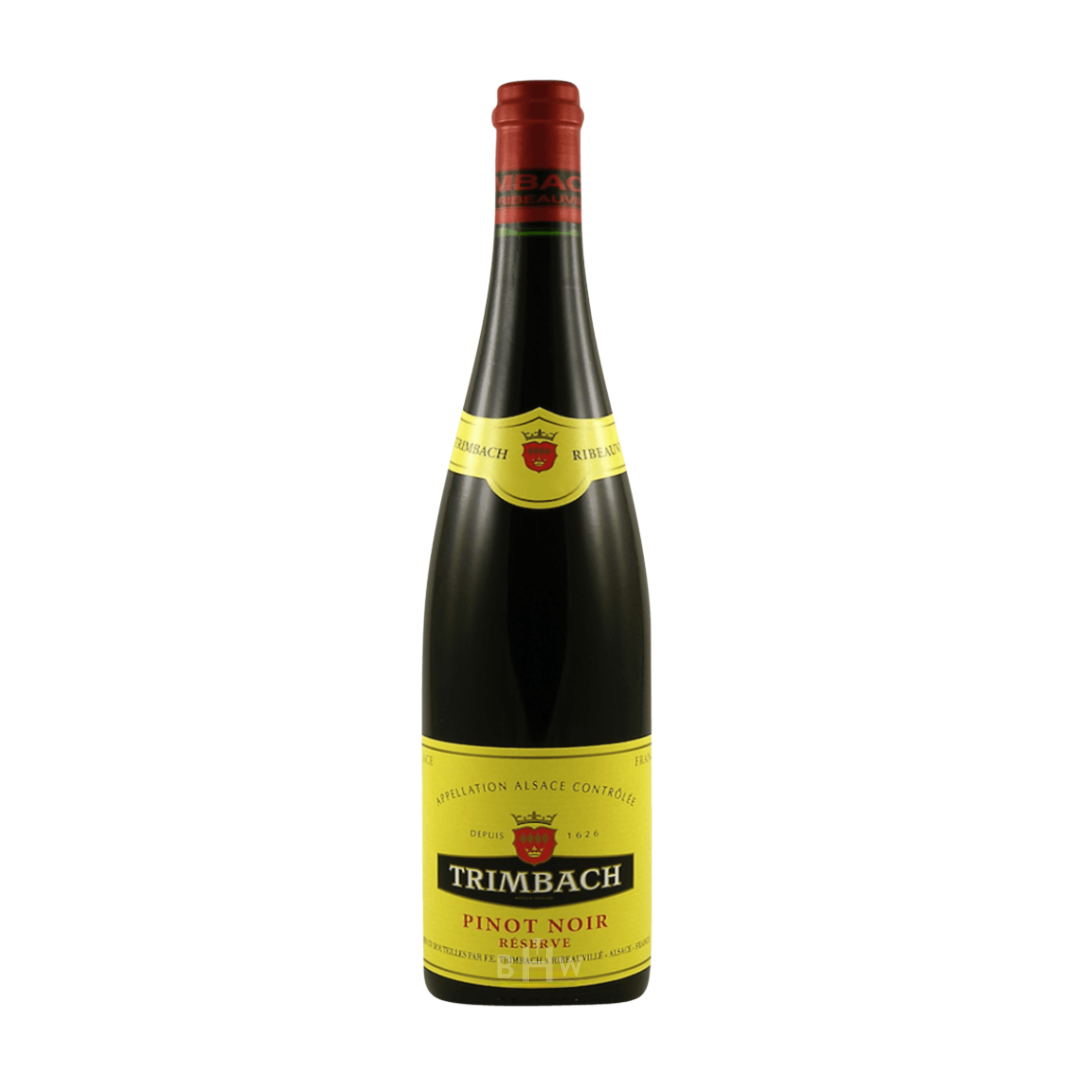
Alsace has 51 Grand Cru vineyards, delimited between 1975 and 2007, and only the four noble grapes may normally be bottled under them. The system is genuinely useful but imperfect - some crus are far better than others, and a few of the region's greatest wines deliberately sit outside it. Trimbach's Clos Sainte Hune, arguably the finest dry Riesling made anywhere, is bottled as a simple appellation wine from a plot inside the Rosacker grand cru, out of the family's long-standing disagreement with the classification.
The one real difficulty for buyers is sweetness. Most Alsace is dry, but Pinot Gris and Gewurztraminer are sometimes off-dry with no clear declaration, so producer knowledge matters.
Two designations are explicit: Vendanges Tardives (late harvest, concentrated, often sweet) and Sélection de Grains Nobles (individually picked botrytised berries, rare, unctuous, superb). Many estates now print a dryness scale on the back label - a welcome modern habit.

Names and the Route des Vins
The reference producers are family houses going back centuries: Trimbach (1626, the standard for steely dry Riesling), Hugel (1639), Zind-Humbrecht and Marcel Deiss (both biodynamic pioneers, Deiss controversially co-planting field blends by site rather than by variety), Weinbach, Albert Boxler and Josmeyer.
Alsace is also France's most walkable wine region: the Route des Vins runs 170 kilometres past storybook villages like Riquewihr, Hunawihr and Eguisheim, with vineyards starting at the edge of the town square - one of the most rewarding wine trips in Europe.
Buying and Drinking Alsace
This may be the most food-flexible white wine region in the world, and it's priced as though nobody has noticed. Dry Riesling from a good grower runs $25 to $40 and rivals wines at twice that, and grand cru bottlings age twenty years.
Reach for Pinot Blanc as a house white, Pinot Gris with anything rich and roasted, Gewurztraminer with spice or washed-rind cheese, and Crémant whenever Champagne feels excessive.
Serve a touch warmer than most whites, around 10 to 12 degrees, so the texture and aromatics open. And if the label leaves you unsure about sweetness, buy from a producer you trust. In Alsace, as everywhere in France, the name in small print is the real appellation.
Quick Answers: Alsace
Is Alsace wine sweet or dry?
Most Alsace is dry, especially Riesling, Muscat, Pinot Blanc and Sylvaner. Pinot Gris and Gewurztraminer are sometimes off-dry without saying so, which is why many producers now print a dryness scale on the back label. Vendanges Tardives and Sélection de Grains Nobles are explicitly sweet.
Why does Alsace put grape names on the label?
Alsace is the one French region that labels primarily by variety rather than place, a legacy of its German periods. Riesling, Gewurztraminer, Pinot Gris and Muscat are the four noble grapes, which makes Alsace the easiest French region for newcomers to navigate.
How is Alsace Riesling different from German Riesling?
Alsace Riesling is normally fully dry, with more body, higher alcohol and a broader, stonier texture. Classic German Riesling, especially from the Mosel, is often lighter, lower in alcohol and balanced by a touch of sweetness.
What is Alsace Grand Cru?
A set of 51 delimited vineyards, classified between 1975 and 2007, that may normally be bottled only from the four noble grapes. It is a useful guide, though a few of the region's finest wines - including Trimbach's Clos Sainte Hune - sit deliberately outside the system.
Ready to explore? Our Alsace collection carries our current selection. And if you are hunting a specific bottle from the region, contact us for a quote - we source wine globally, with a 12-bottle minimum on special orders.

Shop Our Alsace Collection
SHOP COLLECTIONShare:
Ribera del Duero: High, Harsh, and Home to Spain's Most Coveted Reds
Ribera del Duero: High, Harsh, and Home to Spain's Most Coveted Reds
Comments Section