

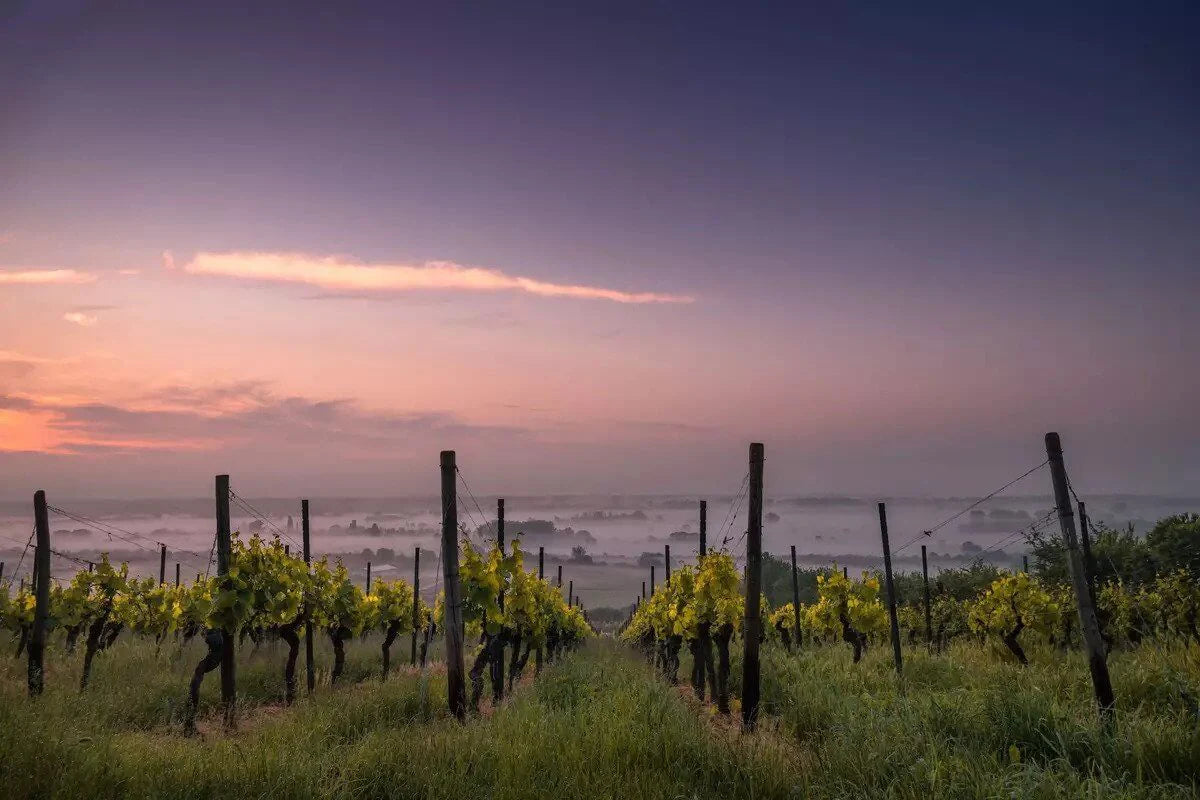
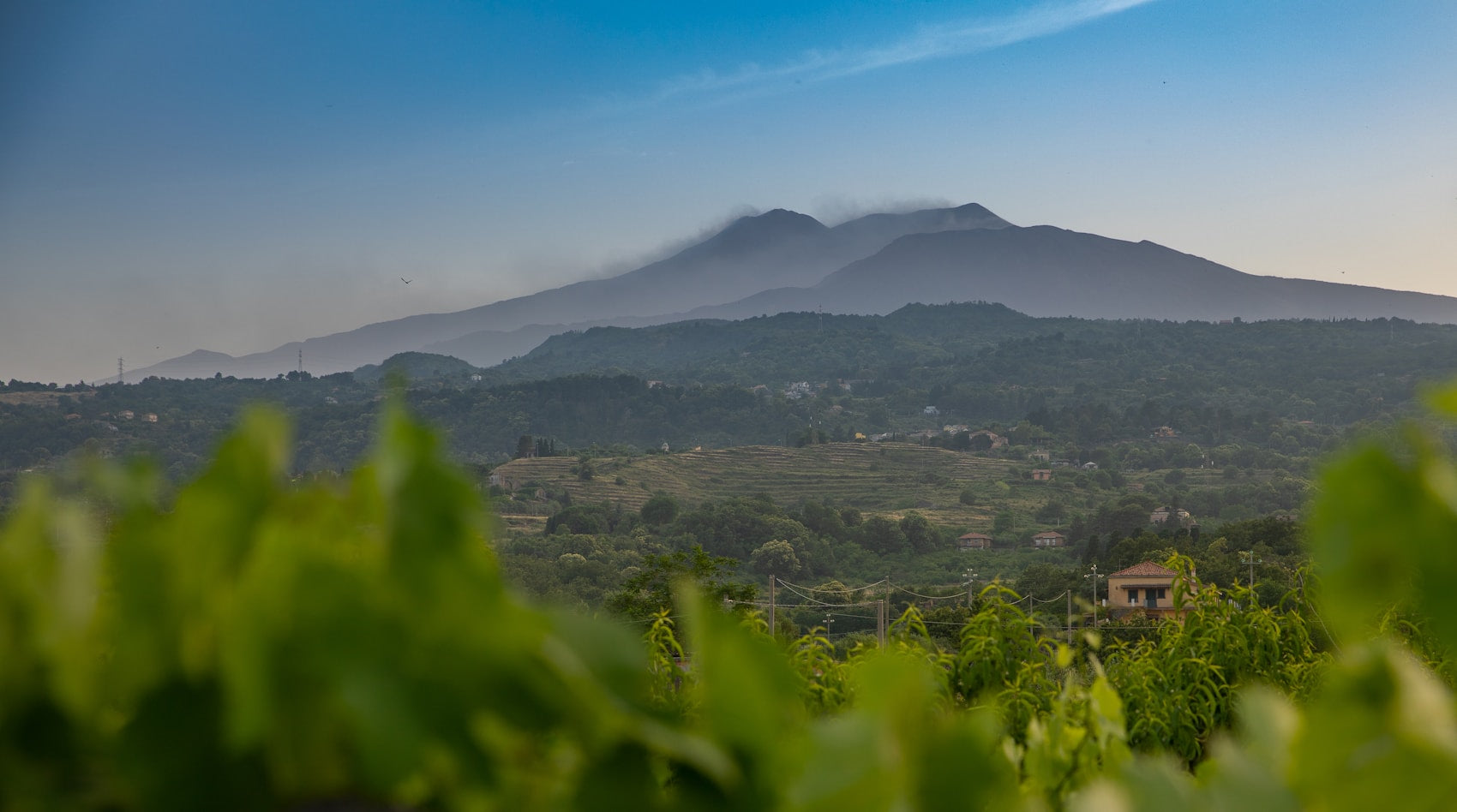
Mount Etna is the most active volcano in Europe, and people grow wine on it — not despite the eruptions but because of them.
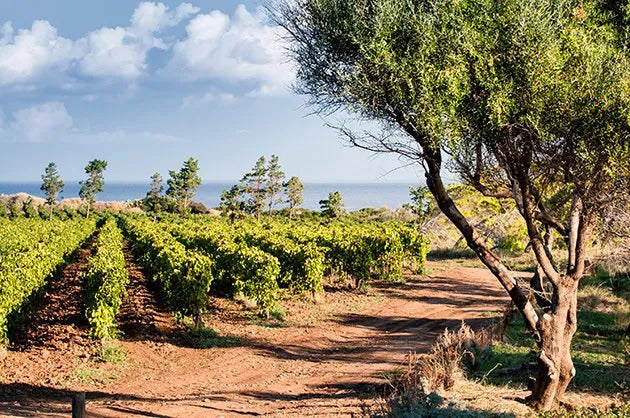
The mountain has been laying down lava, ash and pumice for half a million years, building a patchwork of soils that changes every few hundred meters and behaves nothing like the rest of Sicily. Vineyards climb past 1,000 meters on terraces of black rock, some planted with ungrafted vines over a century old.
The wines they make are pale, high-acid, mineral and startlingly Burgundian. Twenty years ago almost nobody outside Sicily had tasted them. Today Etna is one of the most closely watched vineyard areas in the world — and it's only part of what this island does.

Etna: Italy's Volcanic Cru System
Etna works like a mountain version of Burgundy. Vineyards are mapped into contrade — named parcels, now printed on labels — and the mountain's three viable faces behave very differently.
The north slope is the classic zone for perfumed, structured reds. The east catches more moisture off the Ionian. The southeast runs warmer and broader.
Altitude gives huge day-night temperature swings. The black volcanic sand drains ferociously and, being sandy, also spared the vines from phylloxera — which is why pre-phylloxera plantings are still standing here.
The grapes are local. Nerello Mascalese makes the reds: pale ruby, red cherry, dried herbs, ash and iron, with firm acidity and fine tannin that genuinely recalls Pinot Noir or Nebbiolo — often with a little Nerello Cappuccio blended in for flesh. Carricante is the white, taut and saline and smoky, and capable of aging a decade or more.
The modern revival is usually credited to Belgian-born Frank Cornelissen, Andrea Franchetti at Passopisciaro and Marc de Grazia at Tenuta delle Terre Nere in the late 1990s and 2000s, joined by long-established local houses like Benanti.
The Rest of the Island
Sicily is bigger than any other Italian region and has vineyard land to match.
In the west around Marsala, Grillo and Catarratto make crisp, citrus-and-herb whites — and Marsala itself, the fortified wine invented by English merchant John Woodhouse in 1773, still exists in serious dry versions that deserve rediscovery.
Across the center and south, Nero d'Avola is the workhorse red: dark, plummy, warm and generous, and superb value in the hands of a good producer. Frappato is its light, floral, chillable counterpart, and the two are blended at Cerasuolo di Vittoria, Sicily's only DOCG.
Offshore, the volcanic island of Pantelleria — closer to Tunisia than to Palermo — grows Zibibbo (Muscat of Alexandria) in wind-carved hollows for Passito di Pantelleria, a sun-dried sweet wine of apricot and honey that's one of Italy's great dessert rarities. The bush-vine method used there is UNESCO-listed as intangible cultural heritage.
From Bulk to Benchmark
For most of the twentieth century Sicily produced enormous volumes of anonymous bulk wine, much of it shipped north to add color and alcohol to weaker blends.
The turnaround since the 1990s has been one of the most dramatic in European wine: yields cut, indigenous grapes replanted instead of international ones, and a wave of estates — Planeta, Donnafugata, COS, Arianna Occhipinti, Benanti — proving the island could compete on quality rather than price.
Sicily also farms more organic vineyard than any other Italian region, helped enormously by dry, windy summers that keep disease pressure low.
Buying and Drinking Sicily
Etna Rosso is the connoisseur's buy. Order it if you like Burgundy or Barolo, serve it around 61°F (16°C), and expect it to age ten years or more. The contrada bottlings are worth the step up.
Etna Bianco from Carricante is one of Italy's most underrated serious whites.
For everyday drinking, good Nero d'Avola in the $15-to-$25 range is among the best value red wine in Europe, and Frappato served slightly chilled is a revelation with grilled vegetables and fish.
Keep a half-bottle of Passito di Pantelleria for dessert. And if you ever meet a genuinely dry, aged Marsala, drink it — the category is overdue a comeback.
Quick Answers: Sicilian Wine
What is Etna wine?
Wine grown on the slopes of Mount Etna, Europe's most active volcano, on black volcanic soils up to 1,000 meters. Etna Rosso is made from Nerello Mascalese — pale, high-acid and mineral, often compared to Burgundy or Barolo — and Etna Bianco from Carricante.
What is Nero d'Avola?
Sicily's most widely planted native red grape, giving dark, plummy, warm and generous wines. Grown well and at moderate yields it offers some of the best value red wine in Europe, and it's a completely different style from the cool, high-altitude wines of Etna.
What is a contrada on an Etna label?
A named single-vineyard parcel, the Etna equivalent of a Burgundian climat. Contrada bottlings identify a specific site on the volcano and typically represent a producer's most distinctive wines.
What grape is Etna Rosso and what does it taste like?
Nerello Mascalese, sometimes with a little Nerello Cappuccio. It's pale ruby with red cherry, dried herb, ash and iron notes, firm acidity and fine tannin — frequently compared to Pinot Noir or Nebbiolo, and built to age a decade or more.
Is Marsala still worth drinking?
The good versions absolutely are. Marsala is a fortified wine created in 1773 by English merchant John Woodhouse, and while cheap cooking versions damaged its name, serious dry aged Marsala is complex, nutty and remarkably underpriced.
Ready to explore? Our Sicily collection carries our current selection. And if you're hunting a specific bottle from the region, contact us for a quote — we source wine globally, with a 12-bottle minimum on special orders.



Shop Our Sicily Collection
SHOP COLLECTIONShare:
Italian Wine: Twenty Regions, 500 Grapes, One Table
Puglia: Primitivo, Negroamaro and Italy's Best-Value Reds
Comments Section