

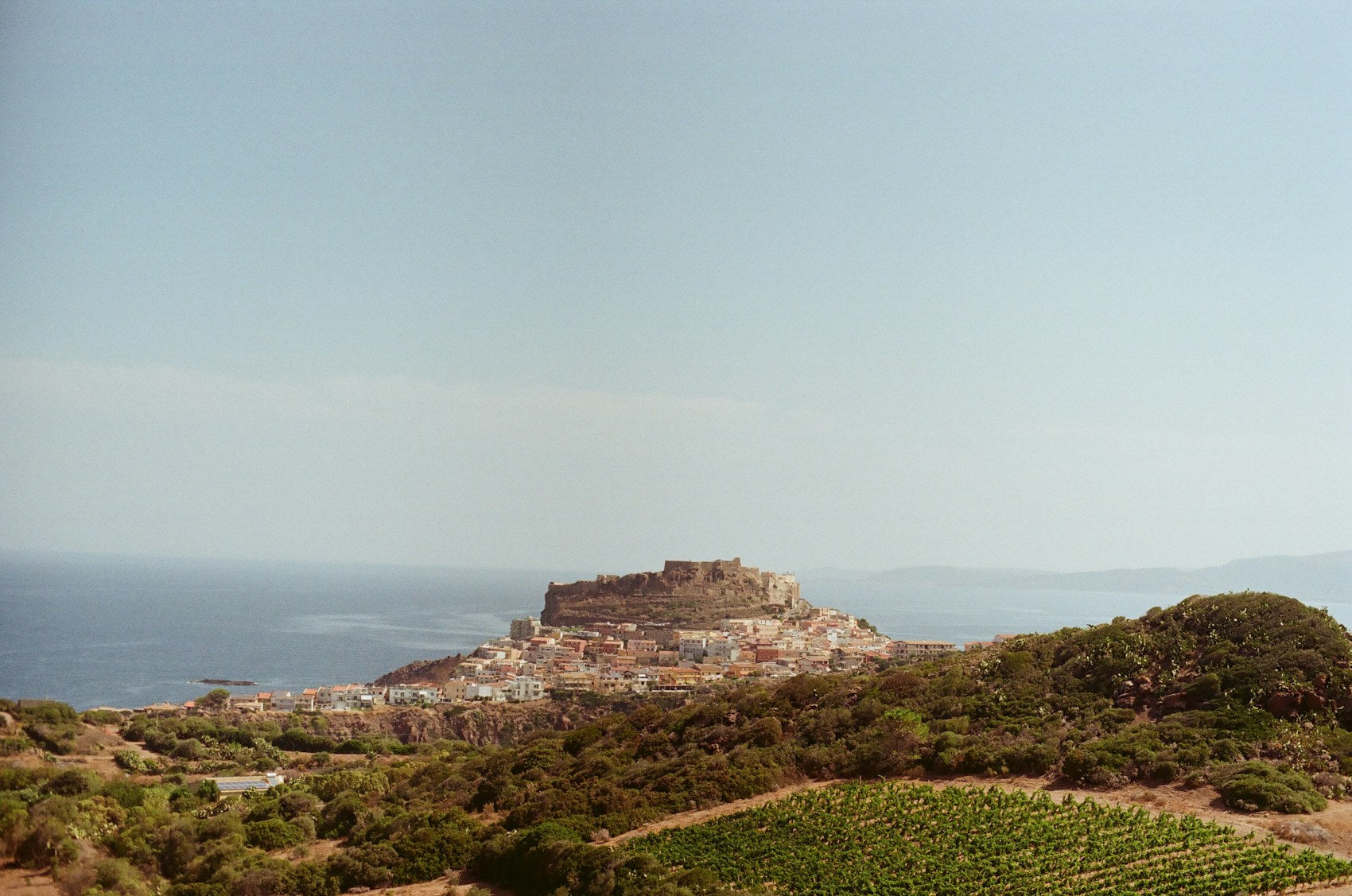
Sardinia sits closer to Tunisia than to Rome, and it has spent most of its history being ruled by someone else — Phoenicians, Romans, Byzantines, Pisans, and for four centuries the Spanish crown of Aragon.
The Spanish left the deepest mark on the wine. Cannonau is Grenache, Vermentino arrived along the same Mediterranean trade routes, and Carignano is Carignan, planted in the sandy south.
What makes the island singular isn't the grapes themselves but what isolation did with them: old bush vines, ungrafted plantings in sand dunes, and a farming culture that never industrialized because nobody was paying attention.

An Island Apart
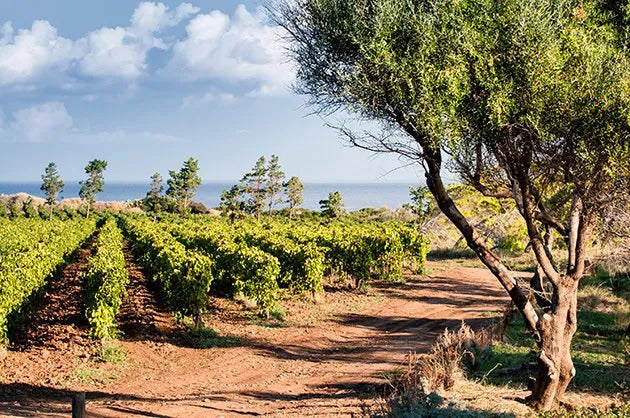
The second-largest island in the Mediterranean is mountainous, windswept and dry.
The dominant force is the maestrale, the northwest wind that blows hard and constantly — drying the vineyards, keeping fungal disease negligible, and stressing the vines into low yields.
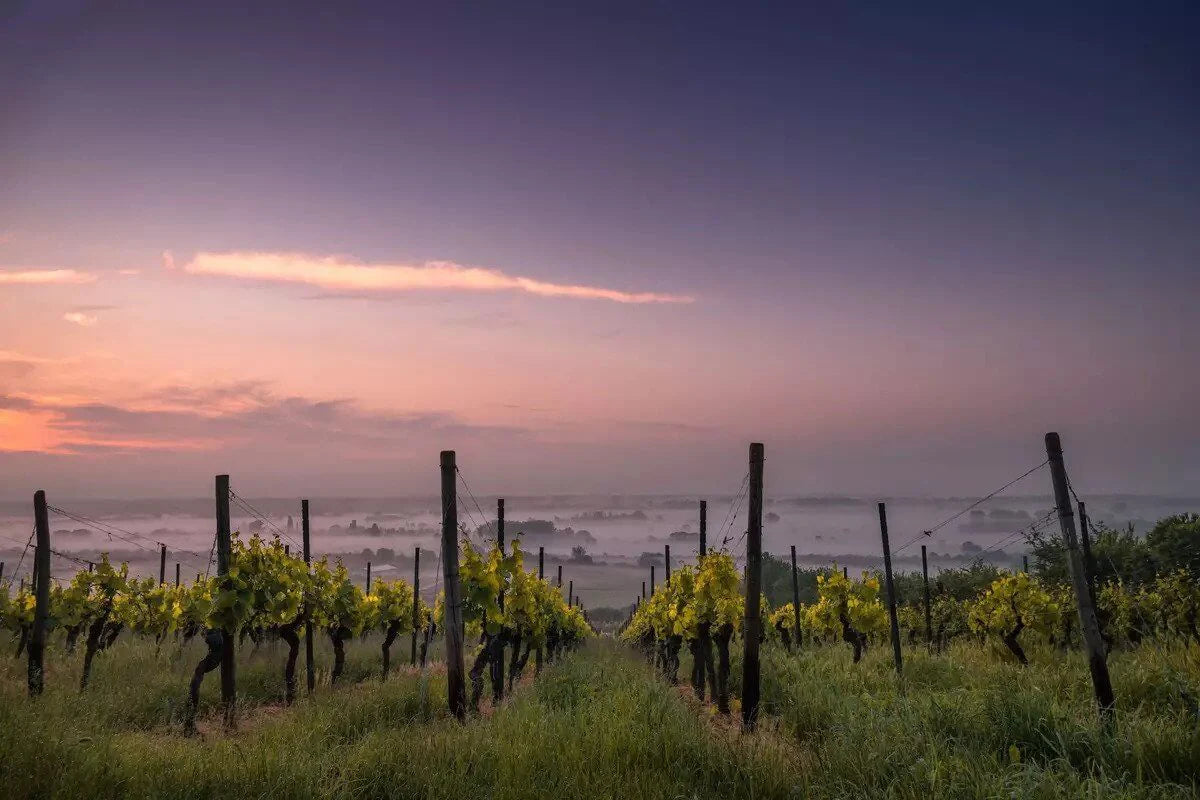
Soils range from granite in the north through limestone to the sand of the southwest coast. That sand matters: phylloxera can't establish itself in it, leaving pockets of ungrafted, century-old vines around Carbonia and Sant'Antioco.
Cannonau: Grenache With an Accent
Cannonau is Sardinia's flagship and covers roughly a third of the island's vineyards. It's Grenache, but grown here it takes on a distinct character: red cherry and dried strawberry with wild herbs, leather and a savory, mountain-scrub edge the locals attribute to the macchia that grows between the vines.
The best comes from the rugged interior around Nuoro — Oliena, Mamoiada, Jerzu — where old bush vines on granite produce wines of real depth and freshness rather than jammy warmth.
Sardinia is also one of the world's original "Blue Zones," where an unusual number of people live past 100, and Cannonau is invariably mentioned in the coverage for its polyphenol levels. Treat that as folklore rather than nutrition advice — but it's a genuinely nice story to tell over a bottle.
Vermentino, and the Island's One DOCG
Vermentino di Gallura in the granite hills of the northeast is Sardinia's only DOCG, and it's the benchmark for the grape anywhere: citrus and white peach with a salty, almost briny finish and a characteristic bitter-almond note.
Elsewhere on the island Vermentino di Sardegna is softer and more everyday, but from Gallura's decomposed granite it has genuine mineral bite. It's one of the great seafood whites of the Mediterranean and remains conspicuously underpriced.
Carignano, Vernaccia and the Curiosities
Carignano del Sulcis in the southwest is the island's sleeper: old, often ungrafted bush vines growing in coastal sand, producing dark, spicy, supple reds with none of Carignan's usual rusticity. Some of the best value serious red wine in Italy.
Vernaccia di Oristano is the connoisseur's curiosity: a wine aged oxidatively under a veil of yeast in partially filled barrels, exactly like sherry's flor, producing something nutty, saline and utterly unlike anything else in Italy. Malvasia di Bosa works in a similar register.
And the sweet Moscato and Nasco traditions round out an island that quietly does more styles than most countries.
Producers and the Co-op Story
As in Alto Adige, cooperatives lead here. Cantina Santadi in Sulcis transformed Carignano's reputation with guidance from oenologist Giacomo Tachis — the man behind Sassicaia and Tignanello — and Cantina di Mogoro and Cantina Dorgali do similar work elsewhere.
Argiolas is the best-known private estate, with Sella & Mosca a large historic presence in the northwest. And a growing wave of small growers in Mamoiada is bottling old-vine Cannonau in a lighter, more transparent style that has caught the attention of natural-wine drinkers worldwide.
Buying and Drinking Sardinia
Vermentino di Gallura is the first purchase — $18-to-$30 buys a white with real character, and it's the ideal match for shellfish, bottarga or anything grilled by the sea.
Cannonau from the interior, particularly Mamoiada or Oliena, is the red to explore. Serve it slightly cool, around 61°F (16°C), to keep the herbal lift.
Carignano del Sulcis from old vines is the value play for anyone who likes southern Rhône. And if you ever see Vernaccia di Oristano on a list, order it — it's a piece of living wine history that almost never leaves the island.
Quick Answers: Sardinia
What is Cannonau?
Sardinia's flagship red grape and the local name for Grenache. Grown on the island it shows red cherry and dried strawberry with wild herbs, leather and a savory scrub-like edge, especially from old bush vines in the mountainous interior.
What is Vermentino di Gallura?
Sardinia's only DOCG, grown on decomposed granite in the northeast. It produces citrus and white-peach whites with a saline, almost briny finish and a bitter-almond note — one of the Mediterranean's great seafood wines.
What is Carignano del Sulcis?
Red wine from old, often ungrafted Carignan bush vines growing in coastal sand in southwest Sardinia. The sand prevented phylloxera, and the wines are dark, spicy and supple — among the best value serious reds in Italy.
Why do Sardinian wines taste of herbs?
Vineyards sit among macchia, the dense Mediterranean scrub of myrtle, juniper and helichrysum. Whether the link is direct or environmental, the herbal, resinous character is a consistent marker of the island's reds.
What food pairs with Cannonau?
Its herbal, savory profile suits roast lamb, wild boar, grilled meats, hard sheep's-milk cheeses like pecorino sardo, and rich pasta. Served slightly cool it also handles vegetable and tomato dishes better than most full reds.
Ready to explore? Our Sardinia collection carries our current selection. And if you're hunting a specific bottle from the region, contact us for a quote — we source wine globally, with a 12-bottle minimum on special orders.






Shop Our Sardinia Collection
SHOP COLLECTIONShare:
Trentino-Alto Adige: Alpine Precision in Two Languages
Emilia-Romagna: Real Lambrusco and the Food Capital of Italy
Comments Section