

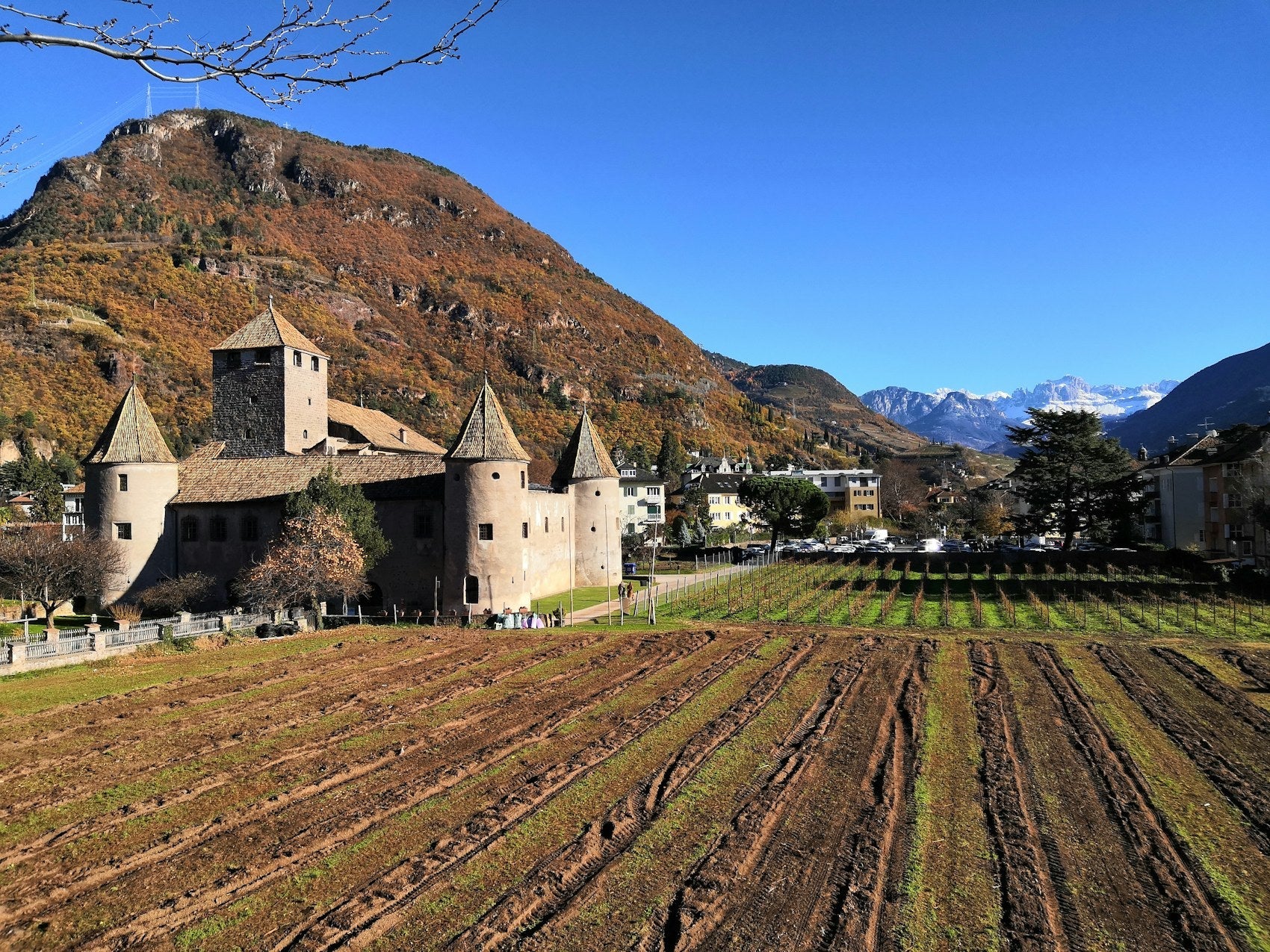
Order a glass of wine in Bolzano and the list may well be printed in German first. This is Italy's northernmost wine region, annexed from Austria after the First World War, and it has never entirely stopped being Tyrolean - villages have two official names, the food runs to speck and dumplings, and the growers' surnames are Lageder, Hofstätter and Tiefenbrunner. It is also, statistically, the most quality-obsessed wine region in the country: the smallest by volume among the significant regions, yet with by far the highest proportion of its output classified DOC. When Italians want precise, mountain-grown white wine, this is where they look.

Two Regions Wearing One Name
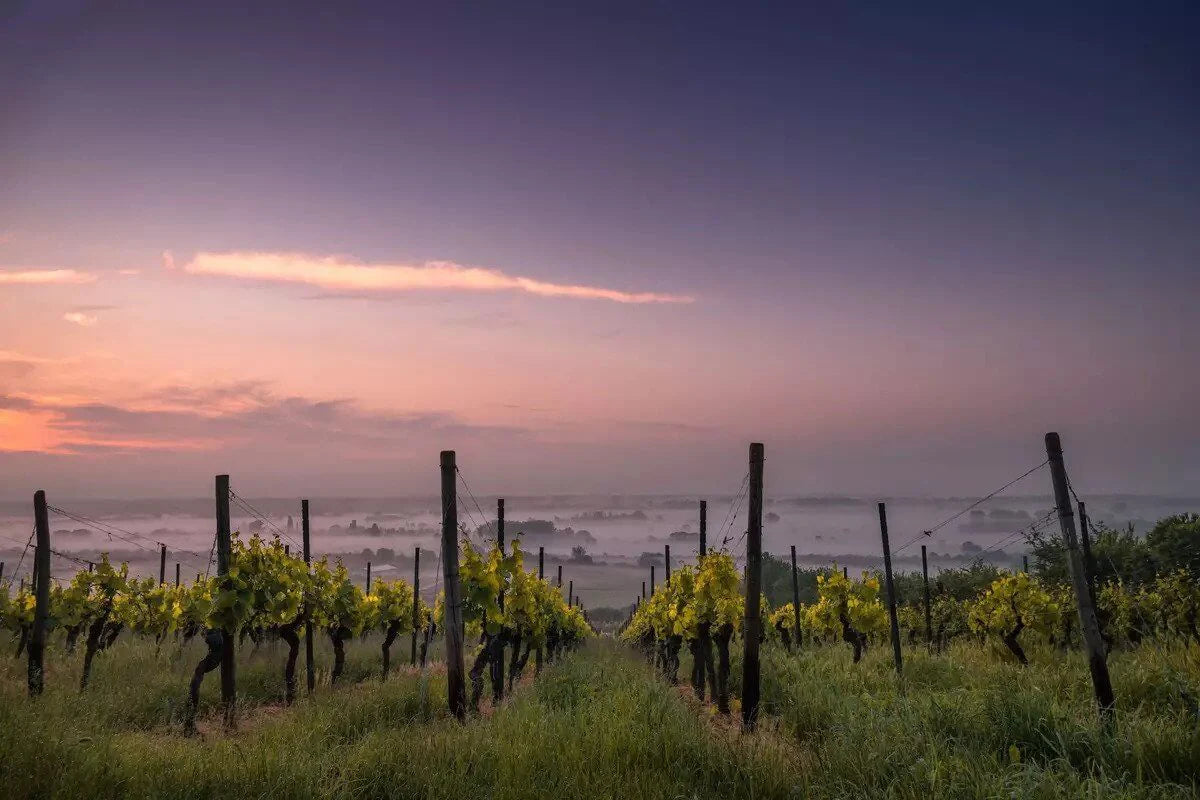
The administrative unit is a marriage of convenience between two distinct places. Alto Adige (Südtirol) in the north is higher, more Germanic, and the source of most of the fine wine: vineyards climb from 200 to over 1,000 metres on the slopes flanking the Adige river. Trentino to the south is warmer, more Italian in character, and produces both large volumes and a serious sparkling programme. Together they occupy an alpine valley system where Mediterranean air pushing up from Lake Garda meets cold air draining off the Dolomites.
That collision is the whole point. Days are sunny and warm enough to ripen fruit fully; nights are genuinely cold. The resulting wines have ripe flavour and razor acidity at the same time - and because the valley walls face every direction, growers can match each variety to its ideal exposure with unusual precision.
The Whites
Roughly two-thirds of production is white, and the quality ceiling is high. Pinot Grigio from Alto Adige bears no relation to the industrial version - it has weight, pear-and-almond depth and real acidity. Gewürztraminer has a genuine claim to origin here: the village of Tramin (Termeno) gives the grape its name, and the local style is drier and more mineral than Alsace's. Pinot Bianco is the connoisseur's pick - subtle, chalky and long-lived. Sauvignon Blanc from the high sites is among Italy's very best, and Kerner, Sylvaner and Müller-Thurgau thrive in the Valle Isarco (Eisacktal) at extreme altitude, producing some of the most electric whites in Italy.
The Reds, Including Two Locals
Schiava (Vernatsch) is the historic everyday red: pale, light, faintly bitter-almond, meant to be drunk cool and young with cured meat - a genuinely alpine style that is unfashionable and delightful. Lagrein is its opposite: deep purple, dark-fruited, firm and structured, grown chiefly around Bolzano and capable of real seriousness. Pinot Noir (Blauburgunder) does very well at altitude, particularly around Mazzon, and Teroldego in Trentino's Campo Rotaliano gravel plain gives dark, brambly, distinctly Italian reds.
Trentino's other calling card is Trentodoc - traditional-method sparkling wine from Chardonnay and Pinot Noir grown at altitude. Ferrari, founded in 1902, is the reference house and the wines compete credibly with Champagne at meaningfully lower prices.
Co-ops That Actually Lead
Something unusual happens here: the cooperatives are among the best producers. Cantina Terlano, Cantina Tramin, San Michele Appiano and Kellerei Kaltern operate at a level that shames most private estates elsewhere, with strict grower contracts, low yields and long-aged reserve bottlings - Terlano's library releases of decades-old Pinot Bianco are legendary. Alongside them, Alois Lageder pioneered biodynamics at scale, and Elena Walch, Hofstätter and Foradori (whose Teroldego work in Trentino is world-class) round out the top tier.
Buying and Drinking
This is the region to buy when you want white wine with precision - crisp, mineral, and reliably well-made at every price. Alto Adige Pinot Bianco and Valle Isarco Kerner are the insider picks; Alto Adige Sauvignon at $25-40 competes with Sancerre; Gewürztraminer from Tramin is the original. For reds, chill a Schiava lightly on a warm evening, and try Lagrein with speck or braised beef. Trentodoc deserves a place next to Champagne on any celebration list. Serve the whites at 10-12 degrees rather than ice-cold, and note that the best of them - especially Terlano's - age far longer than anyone expects.
Quick Answers: Trentino-Alto Adige
Why is Alto Adige wine labelled in German?
The region was part of Austria until it was annexed by Italy after the First World War, and it remains bilingual. Villages, producers and wine labels commonly appear in both German (Südtirol) and Italian.
What white wines does Alto Adige make?
Precise, high-acid mountain whites: Pinot Bianco, Pinot Grigio with real substance, Gewürztraminer from the village of Tramin that gave it its name, Sauvignon Blanc, and Kerner and Sylvaner at extreme altitude in the Valle Isarco.
What are Lagrein and Schiava?
The two native reds. Lagrein is deep, dark-fruited and structured, grown mainly around Bolzano. Schiava (Vernatsch) is pale, light and faintly bitter-almond, traditionally served cool with cured meats.
What is Trentodoc?
Traditional-method sparkling wine from Trentino, made mainly from Chardonnay and Pinot Noir grown at altitude. Ferrari, founded in 1902, is the benchmark house, and the wines compete with Champagne at lower prices.
Ready to explore? Our Trentino-Alto Adige collection carries our current selection. And if you are hunting a specific bottle from the region, contact us for a quote - we source wine globally, with a 12-bottle minimum on special orders.




















Share:
Friuli-Venezia Giulia: Italy's White Wine Laboratory
Friuli-Venezia Giulia: Italy's White Wine Laboratory
Comments Section