

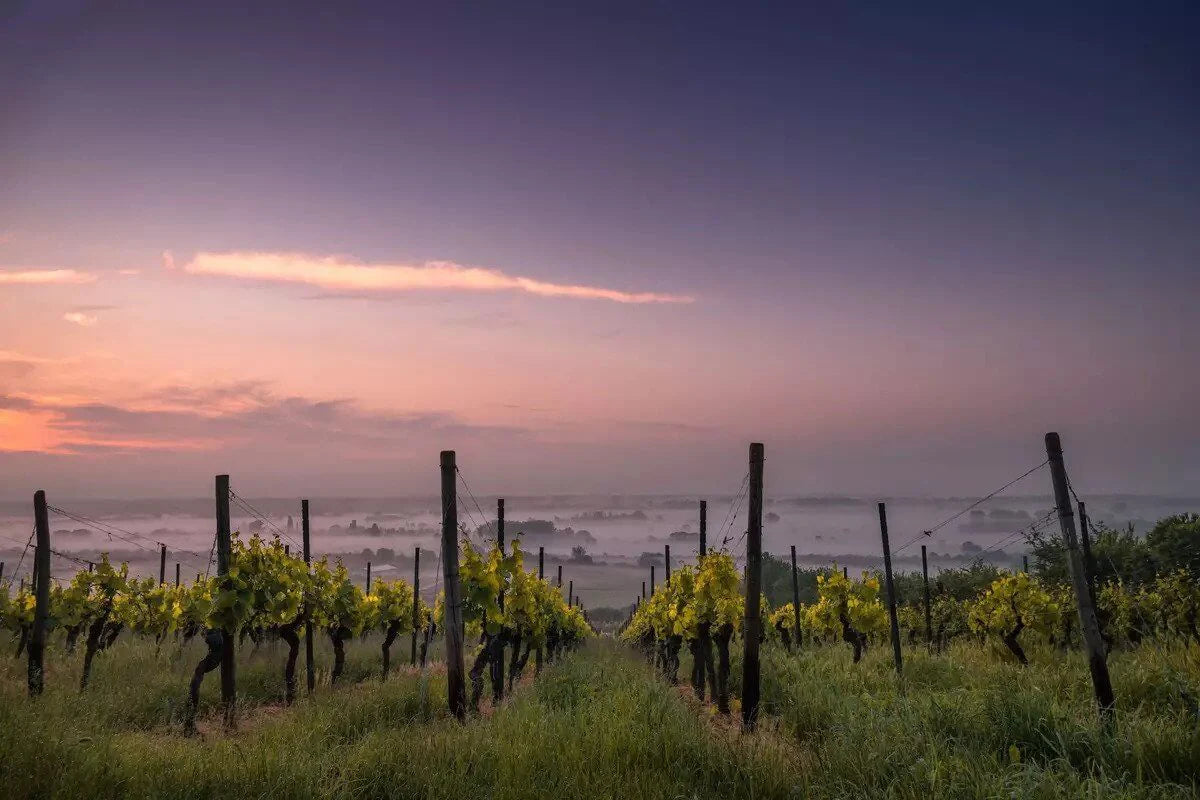
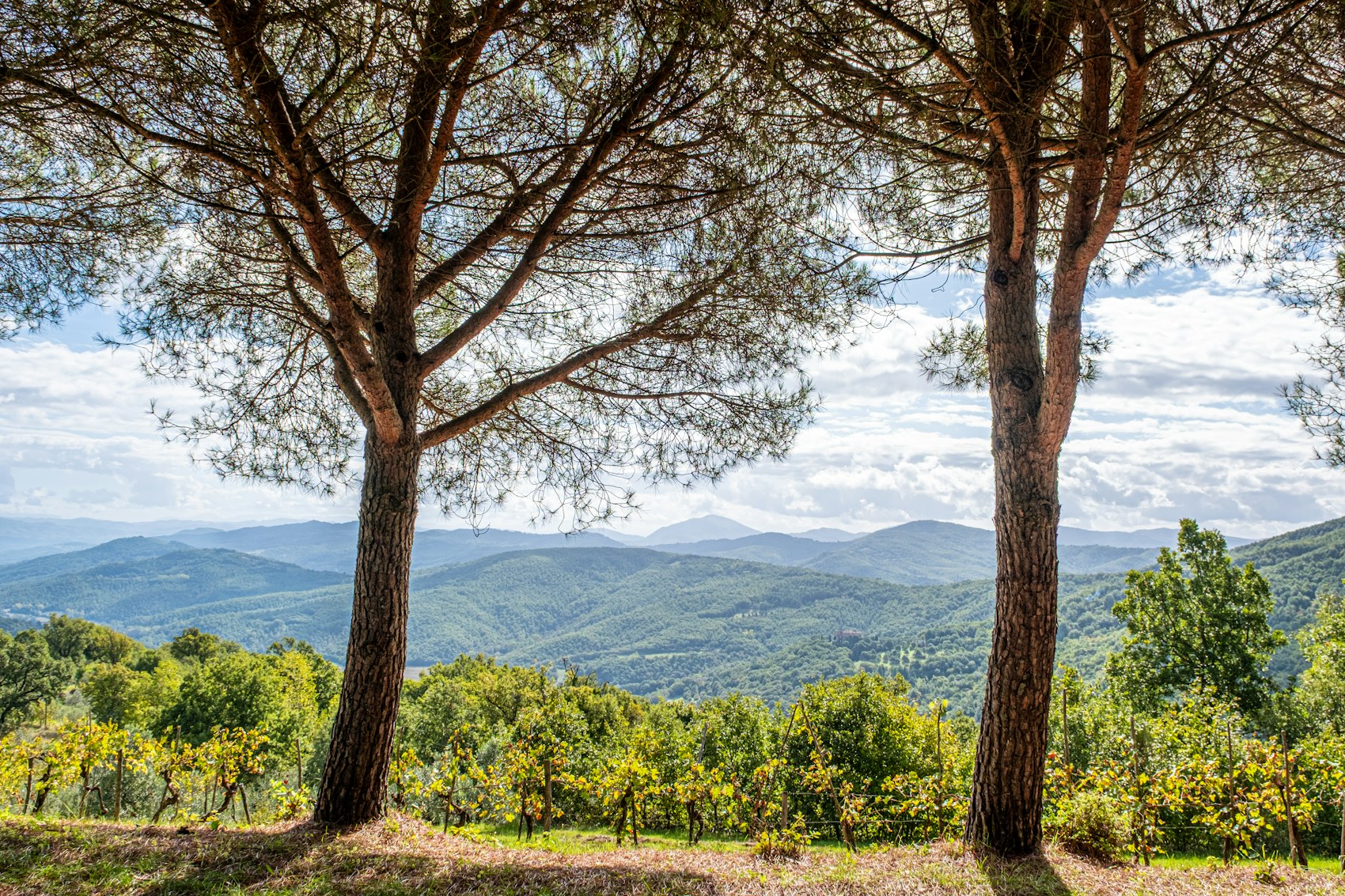
Abruzzo is the greenest region in Europe — a third of it is national park — and it's built on a simple, dramatic geography. The Apennines rise to nearly 3,000 meters at the Gran Sasso, and barely 30 miles later the land falls into the Adriatic.
Wine grows in the corridor between, cooled by mountain air pouring down at night and warmed by the sea by day.
For decades the region was known for one thing: enormous quantities of cheap, agreeable Montepulciano d'Abruzzo. It still makes that. But it also makes one of Italy's most singular wines, from a man who ploughed with oxen and refused to explain himself — and understanding both halves is the key to the place.

Montepulciano — the Grape, Not the Town
First, the confusion that trips up everyone. Montepulciano d'Abruzzo is a wine made from the Montepulciano grape in Abruzzo. Vino Nobile di Montepulciano is a wine made from Sangiovese in the Tuscan town of Montepulciano, 200 miles away. They share a name and nothing else.
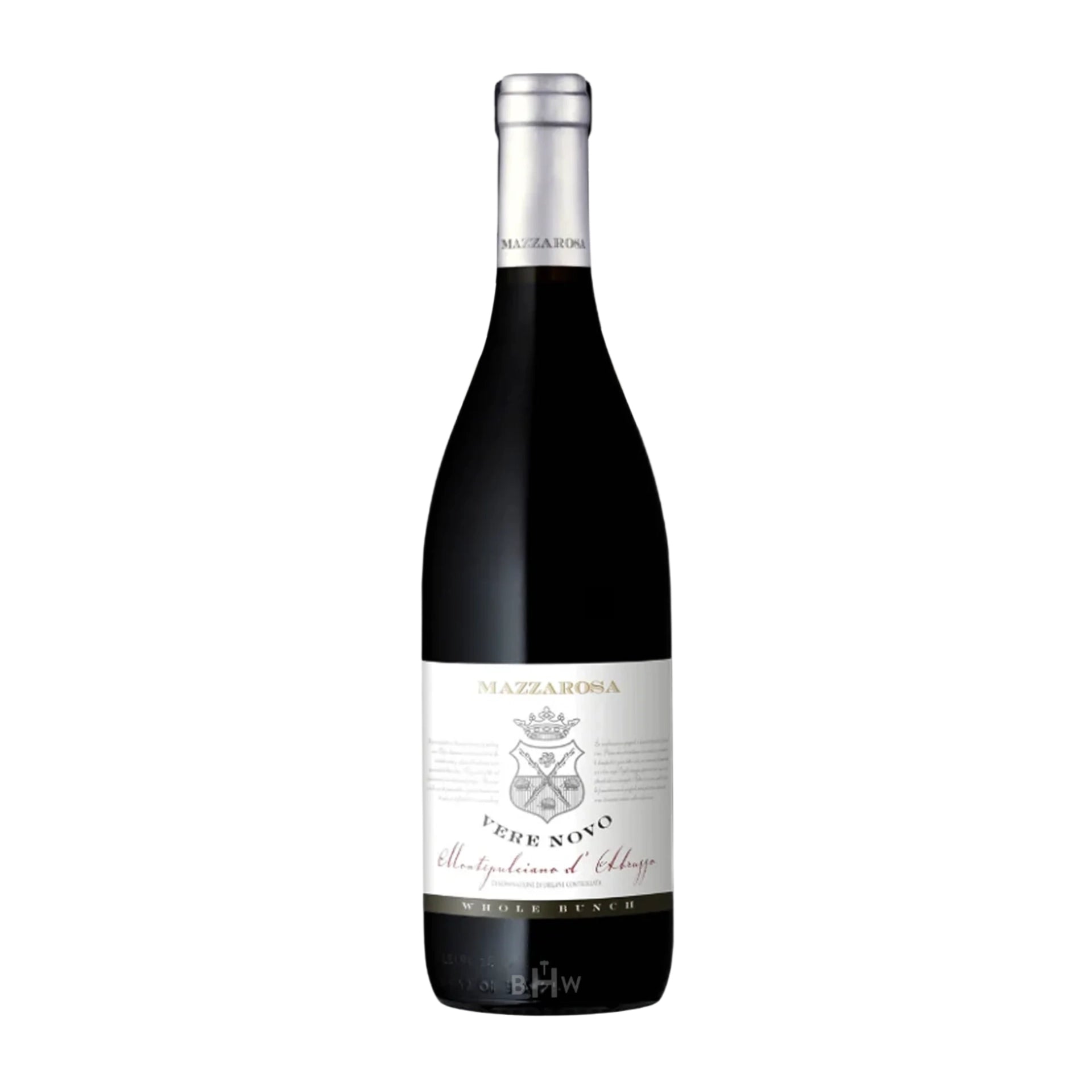
The Montepulciano grape is deeply colored, thick-skinned and late-ripening, giving reds of black cherry and plum with soft, ripe tannins, moderate acidity and a savory, slightly rustic edge.
At its most basic it's one of the great cheap reds of the world — juicy, round, made for pizza and pasta. At its most serious, from low yields and old vines, it produces dense, long-lived wine that ages for decades. The step-up appellation to know is Colline Teramane, the region's DOCG in the hills near Teramo.
The Whites, and a Genuine Curiosity
Trebbiano d'Abruzzo is usually a simple, neutral white — and then occasionally it isn't.
The late Edoardo Valentini, working near Loreto Aprutino, made a Trebbiano so concentrated and long-lived that it became one of Italy's most sought-after white wines, selling for many times the price of its neighbors. He gave almost no interviews, declassified vast quantities of his own crop, and left behind a benchmark nobody has quite matched. Proof that a grape's reputation is often just a reflection of ambition.
The other Abruzzese white to hunt is Pecorino — no relation to the cheese, though both names trace back to sheep. Nearly extinct by the 1980s, it was rescued and replanted, and it now makes structured, citrus-and-herb whites with real body and acidity. It's one of central Italy's genuine success stories.
Cerasuolo: Italy's Serious Rosé
Abruzzo's rosé isn't an afterthought. It has its own DOC, and it's deliberately dark.
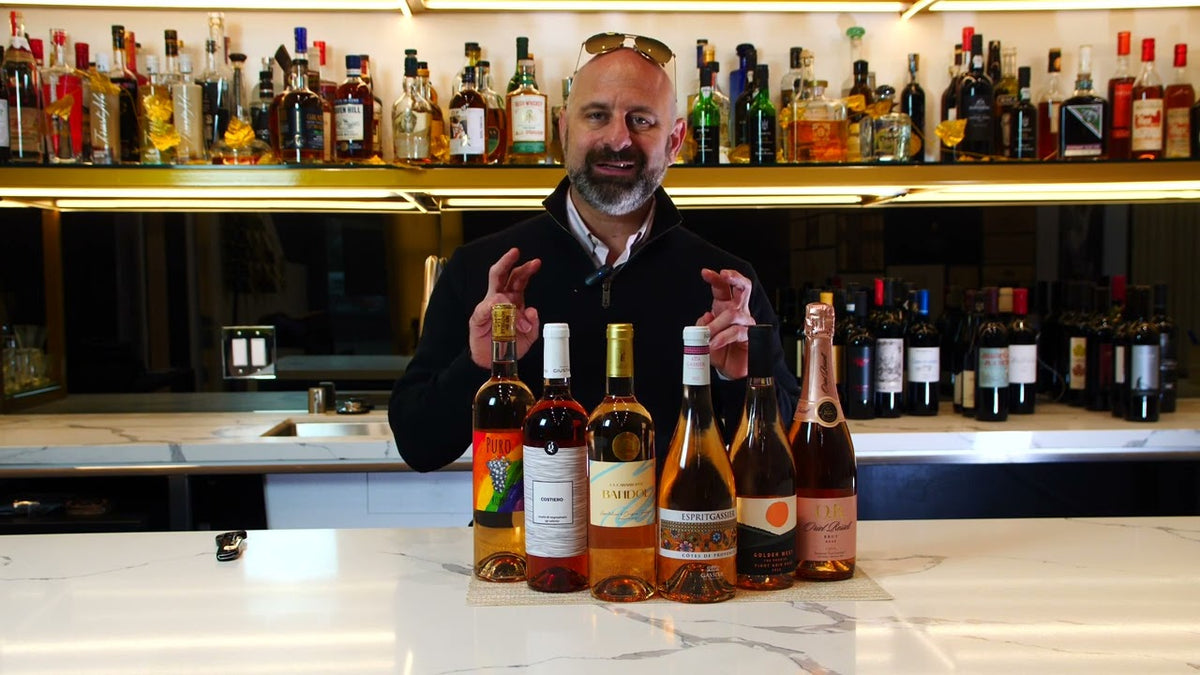
Cerasuolo d'Abruzzo takes its name from cerasa, cherry, and it's made from Montepulciano with a short maceration that produces a vivid cherry-red wine with genuine structure, red-fruit weight and a savory finish.
Serve it cool but not ice-cold and treat it as a light red rather than a summer sipper. It handles grilled meat and tomato-based dishes that would flatten a Provençal pink.
Co-ops, Character and Value
Abruzzo's wine economy still runs substantially through cooperatives — and unusually, several of them are excellent. This is one of the few regions where "co-op" and "quality" sit comfortably together.
Alongside them, estates like Valentini, Emidio Pepe (biodynamic, hand-destemmed, famous for decades-long aging), Tiberio, Torre dei Beati and Masciarelli have built a serious top tier. Farming is increasingly organic, helped by the dry mountain air.
Buying and Drinking Abruzzo
The value equation here is the best-kept secret in central Italy.
Everyday Montepulciano d'Abruzzo at $10-to-$18 outperforms almost anything at the price. Serious bottlings at $30-to-$60 offer depth and aging potential that would cost triple in Tuscany.
Pecorino is the white to try if you've never had it, and Cerasuolo is the rosé to serve people who claim not to like rosé.
Drink the reds a touch cool, around 61–64°F (16–18°C), with anything grilled, cured or tomato-rich. And if you ever see a bottle of Valentini or Emidio Pepe, buy it and give it time.
Quick Answers: Abruzzo
What is the difference between Montepulciano d'Abruzzo and Vino Nobile di Montepulciano?
They're unrelated. Montepulciano d'Abruzzo is made from the Montepulciano grape in Abruzzo. Vino Nobile di Montepulciano is made from Sangiovese in the Tuscan town of Montepulciano, about 200 miles away.
What does Montepulciano d'Abruzzo taste like?
Black cherry and plum with soft, ripe tannins, moderate acidity and a savory edge. It's one of the great value everyday reds, and from low yields and top sites it becomes dense and genuinely long-lived.
What is Cerasuolo d'Abruzzo?
Abruzzo's rosé, made from Montepulciano with short skin contact and named for cerasa, cherry. It's deliberately deep cherry-red, with real structure and savory weight — treat it as a light red rather than a summer pink.
What is Pecorino wine?
A white grape native to central Italy, nearly extinct by the 1980s and now revived. It makes structured whites with citrus, herbs, real body and firm acidity. It has no connection to the cheese beyond a shared root word for sheep.
Are Abruzzo wines good value?
Among the best in Italy. Everyday Montepulciano d'Abruzzo at $10-to-$18 punches well above its price, while serious old-vine bottlings offer aging potential that would cost far more from Tuscany or Piedmont. The region's quality reputation still lags behind what's in the bottle.
Ready to explore? Our Abruzzo collection carries our current selection. And if you're hunting a specific bottle from the region, contact us for a quote — we source wine globally, with a 12-bottle minimum on special orders.








Shop Our Abruzzo Collection
SHOP COLLECTIONShare:
Puglia: Primitivo, Negroamaro and Italy's Best-Value Reds
Puglia: Primitivo, Negroamaro and Italy's Best-Value Reds
Comments Section