

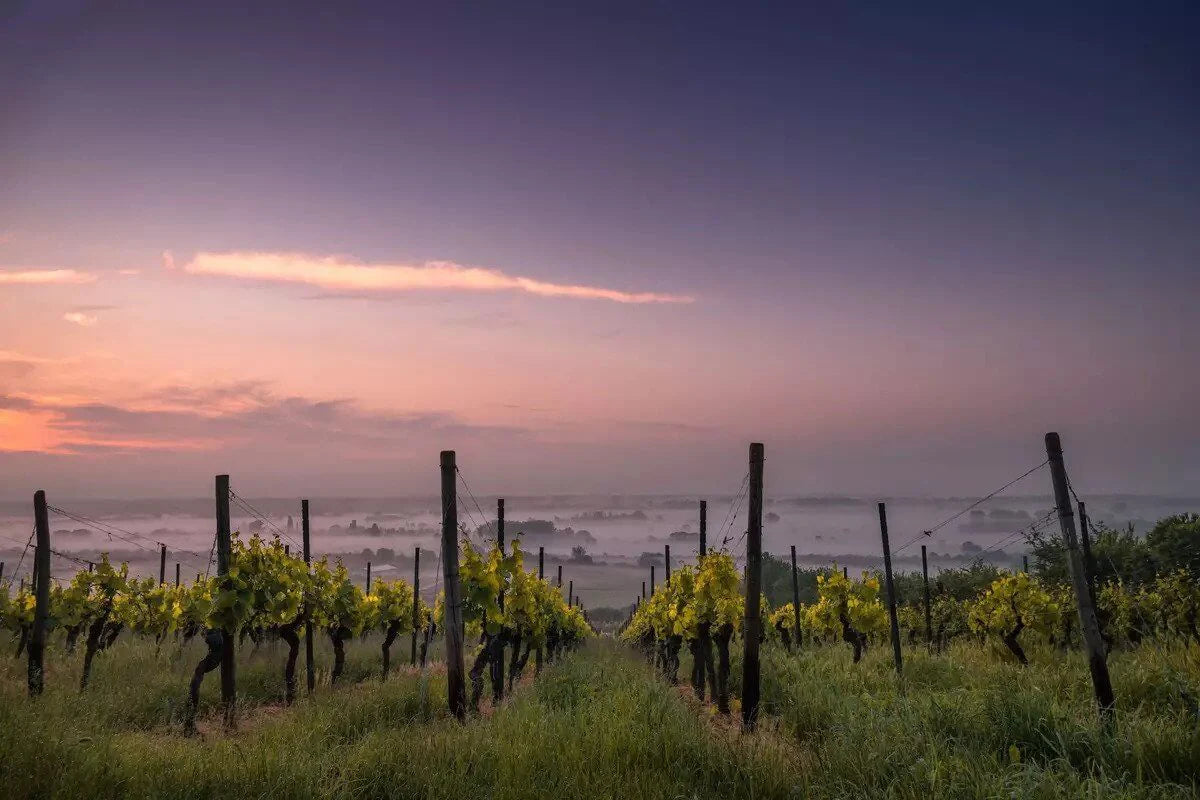
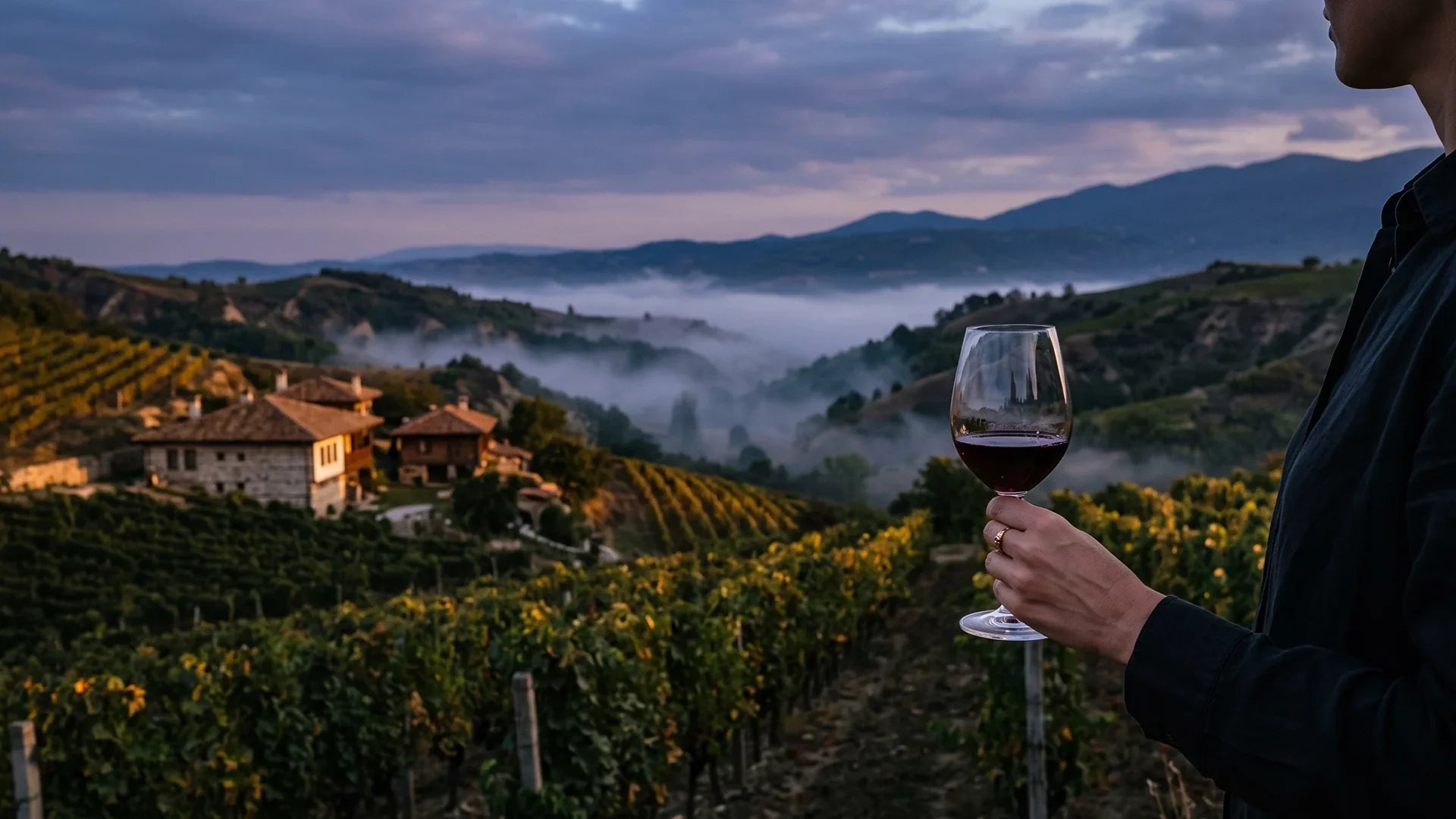
Bulgaria has been making wine for three thousand years, and it's still one of the best-value wine countries almost nobody talks about. It sits on the same latitudes as Italy, France, and Spain, with the Black Sea to the east and Mediterranean warmth pushing up from the south. The grapes have always grown well here. The wines just don't travel much, so most people have never tried one.
That's starting to change. Here's the short guide: the history, the grapes worth knowing, the regions, and what to look for.
The History of Wine in Bulgaria
Winemaking here goes back to at least the 12th century BC and the Thracians, the sophisticated civilization that developed viticulture before the Greeks and, by every ancient account, made wine worth drinking. The Romans took over, and the wine scene didn't just survive, it grew.

Silver Thracian rhyton, late 4th century BC. Luxury vessels like this were used for ceremonial wine drinking in ancient Thrace.
Fast-forward to the 20th century. Under the Soviet orbit, Bulgaria became a wine machine. By the 1980s it was one of the largest wine exporters on earth, shipping oceans of Cabernet and Merlot east to the USSR and cheap, cheerful reds west to Britain. Then communism fell, the export market and state support vanished, and the industry collapsed almost overnight.
It came back the hard way, on the backs of a new generation of growers and winemakers plus outside investment. By the turn of the century, the trajectory had flipped. Bulgaria today isn't a bulk powerhouse anymore. It's a niche source of genuinely good wine at prices that don't quite make sense yet.
Bulgarian Wine Grapes

Bulgaria has real terroir and a deep bench of native grapes you won't find anywhere else. But coming out of the Soviet era, most growers bet on international varieties for a fast return, wines a Western palate already knew.
So Merlot and Cabernet Sauvignon are the most-planted internationals, and they're reliable. The more interesting story is the locals. Pamid is the old workhorse, thin-skinned and fruity, made for everyday drinking. Gamza (also called Kadarka) makes lighter, spicy reds. But two native names are worth going out of your way for:
Mavrud is the flagship native red: dark, tannic, and built to age, grown mainly in the Thracian Lowlands around Plovdiv. If you try one Bulgarian wine, make it a Mavrud.
Melnik, from the far southwest, makes structured reds the locals have prized for centuries.
On the white side, look for Rkatsiteli, Dimyat, and Muscat Ottonel: crisp, aromatic, and easy to drink.
Bulgarian Wine Regions

Bulgaria drew up five wine regions in 1960: the Danubian Plain in the north, the Black Sea region in the east, the Rose Valley south of the Balkan mountains, the Thracian Lowlands in the south, and the Struma River Valley in the southwest. The EU formally recognizes two of them as Protected Geographical Indications, and they cover most of the country's wine.
Danubian Plain (northern Bulgaria). Home to Pamid, Kadarka, Cabernet, and Merlot for reds, with Riesling, Sauvignon Blanc, Chardonnay, and Muscat on the white side.
Thracian Lowlands (southern Bulgaria). The heartland of Mavrud and the country's most important red-wine zone, with enough micro-climates to make just about every style. This is where most of the wines worth hunting come from.
The Bottom Line

Bulgarian wine is still hard to find, and it's missing from most shelves. But the quality is the best it's ever been, and the value is hard to beat anywhere in Europe.
The best way to really get it is still to visit. Short of that, keep an eye out, because a few Bulgarian bottles are finally reaching the market. For a country with three thousand years of winemaking behind it, this is really just the beginning.
Quick Answers: Bulgaria Wine
What is Bulgaria's signature wine grape?
Mavrud, a native red grown mainly in the Thracian Lowlands around Plovdiv. It's dark, tannic, and ages well, the grape to reach for first if you want to understand Bulgarian red wine.
Is Bulgarian wine any good?
Yes. Once known for cheap bulk exports, Bulgaria now makes serious, well-priced wine, especially reds from native grapes like Mavrud and Melnik, plus solid Cabernet and Merlot. The quality-to-price ratio is one of the best in Europe.
What grapes does Bulgaria grow?
Mostly reds. The big internationals are Cabernet Sauvignon and Merlot, and the key natives are Mavrud, Melnik, Pamid, and Gamza (Kadarka). For whites, look for Rkatsiteli, Dimyat, and Muscat Ottonel.
Where is wine made in Bulgaria?
Across the country, but two EU-recognized regions dominate: the Danubian Plain in the north and the Thracian Lowlands in the south. The Thracian Lowlands, around Plovdiv, is the home of Mavrud and the most important quality zone.
We taste thousands of wines a year looking for quality and value. When a Bulgarian bottle clears our bar, it earns a spot on the shelf.




















Shop Our Bulgaria Collection
SHOP COLLECTIONShare:
High-Altitude Wines: Wines Born Under Extreme Conditions
The Sardinian Wines You Must Know
Comments Section