

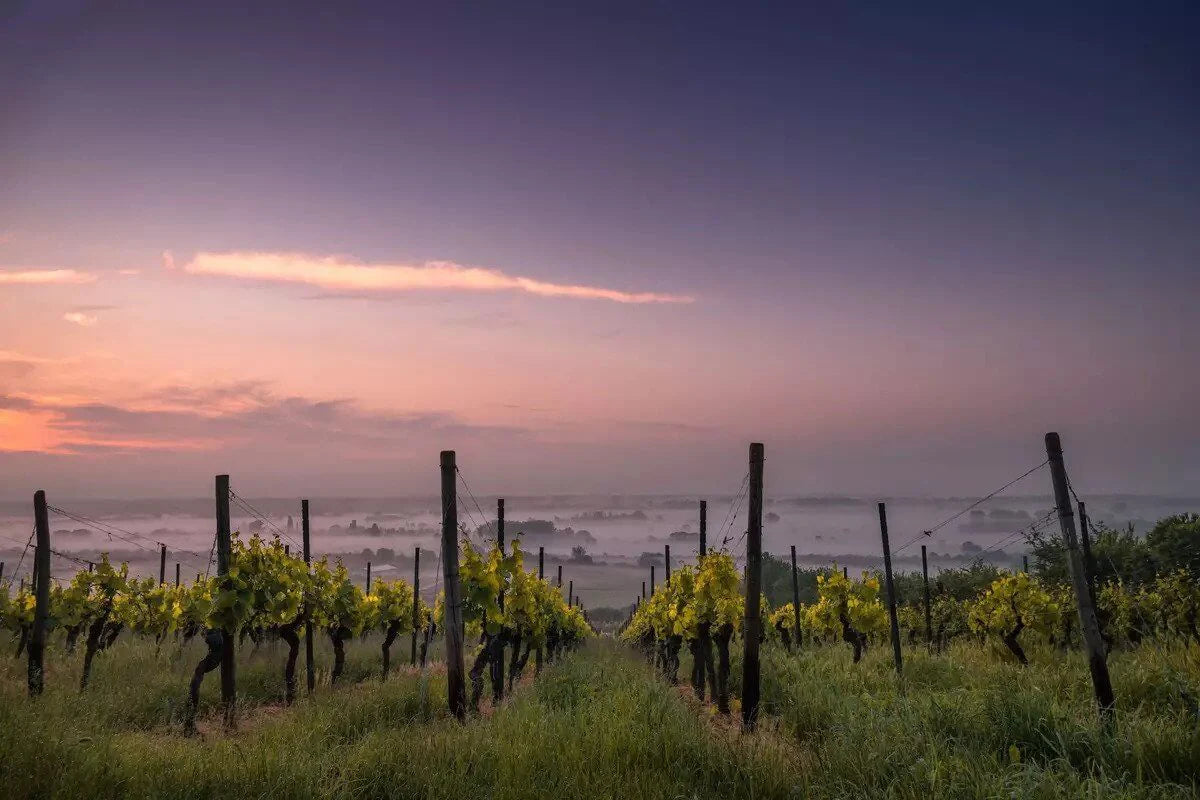
Every serious wine conversation eventually routes through France. Not because French wine is always best- it isn't- but because France wrote the reference manual. Cabernet blends are measured against Bordeaux, Pinot Noir against Burgundy, sparkling wine against Champagne, Syrah against the Rhône.
The French bet, formalized in the appellation laws of 1936, is that place outranks everything: the grape is just the instrument, and the vineyard is the composer.
Learn to read the French map, and you hold the key to almost all of wine.
Want the map turned into a shopping list? We keep a live one: The 12 Best French Wines to Try if You Usually Drink California — twelve current picks that update themselves as vintages sell through.
How to Read a French Label Without a Decoder Ring
France mostly refuses to put grape names on labels. It names the ground instead. The system is a pyramid: broad regional appellations at the base (Bourgogne, Bordeaux), villages above them (Margaux, Chambolle-Musigny), and single vineyards or classed growths at the summit.
Every step up narrows the ground and raises the stakes. The one rule that outranks the pyramid: the producer's name matters more than any classification. A great grower's village wine beats a lazy estate's grand cru, every time.
Bordeaux: A Tale of Two Banks

Bordeaux is a river system with a wine problem. The Gironde estuary splits the region into two personalities.
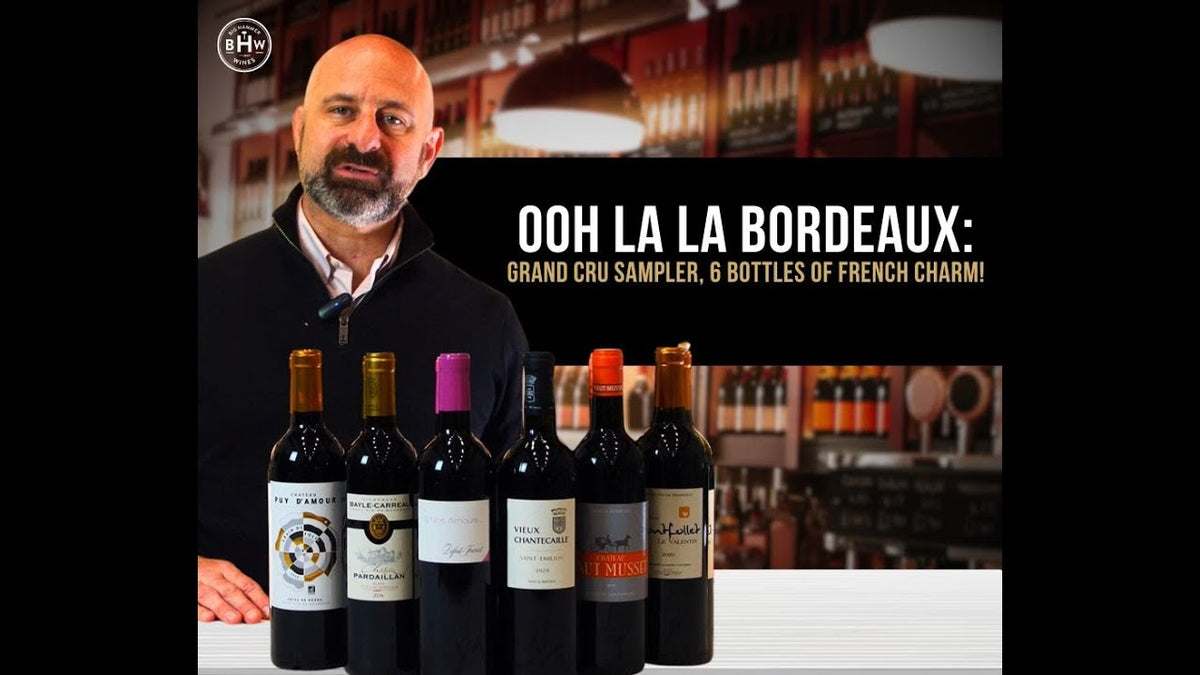
The Left Bank (Medoc, Pessac-Leognan) is deep gravel dumped by ancient rivers - poor, warm, fast-draining ground that Cabernet Sauvignon loves. Its wines are structured, cedar-scented, built for decades.
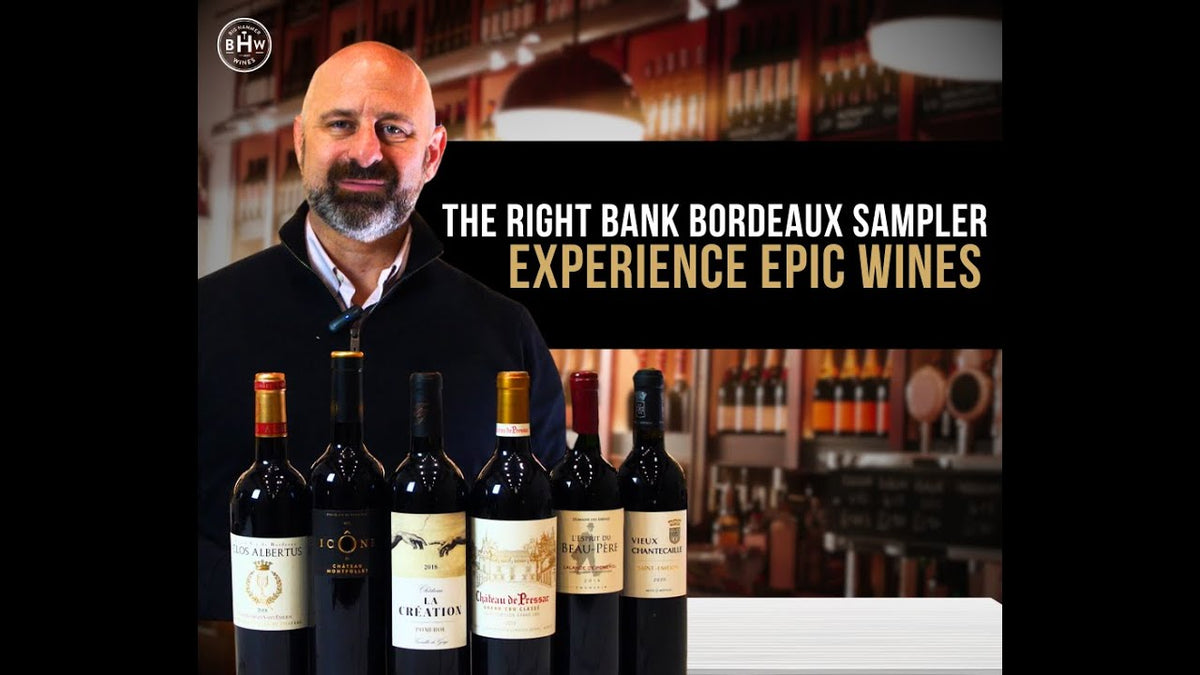
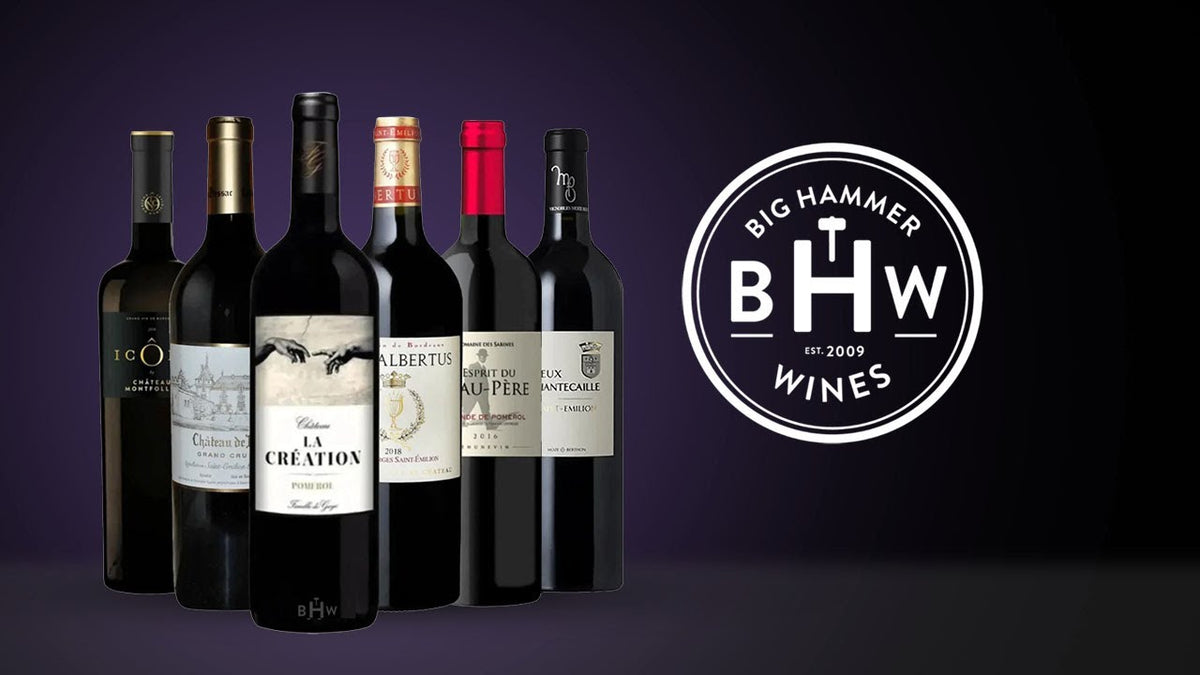
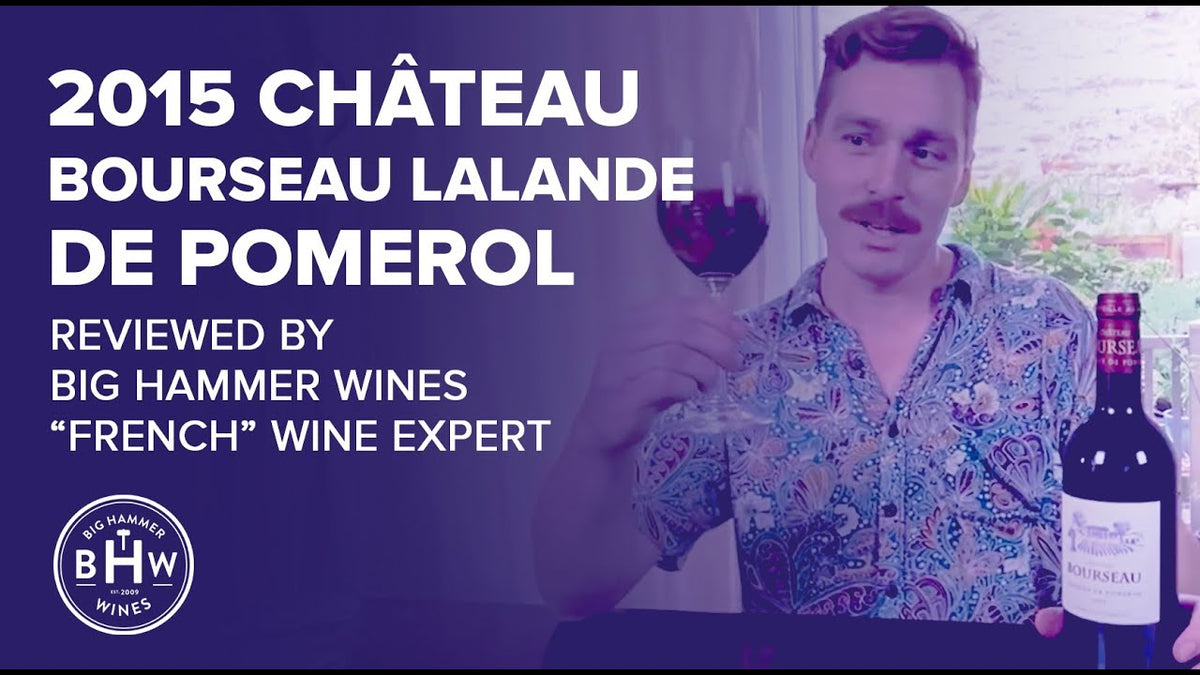
The Right Bank (Saint-Émilion, Pomerol) is cooler clay and limestone where Merlot and Cabernet Franc lead: plusher, earlier-drinking, no less profound at the top (Petrus and Cheval Blanc live here).
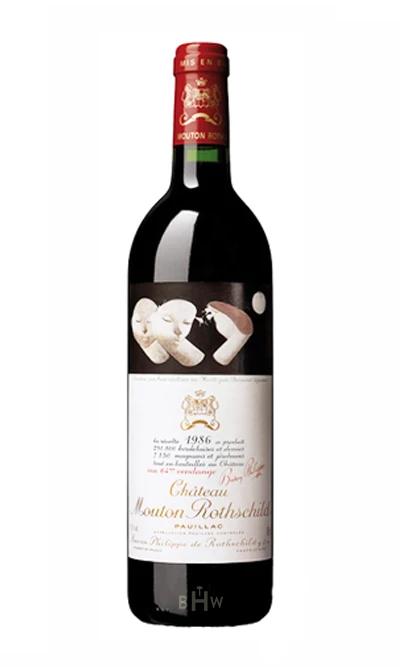
The famous 1855 classification ranked Left Bank estates into five tiers of "growths" for a Paris exposition - and has changed exactly once since (Mouton Rothschild's promotion in 1973, after decades of lobbying). That it still roughly tracks quality after 170 years tells you how durable Bordeaux's terroir logic is.
South of the city, Pessac-Leognan proves Bordeaux is a two-color region - its whites of Sauvignon Blanc and Semillon are among France's most underrated - and Sauternes turns noble rot into liquid apricot gold that outlives everyone at the table. The money move in Bordeaux: cru bourgeois estates and the satellites around Saint-Émilion, where honest claret costs a tenth of the trophies.
Burgundy: The Mosaic
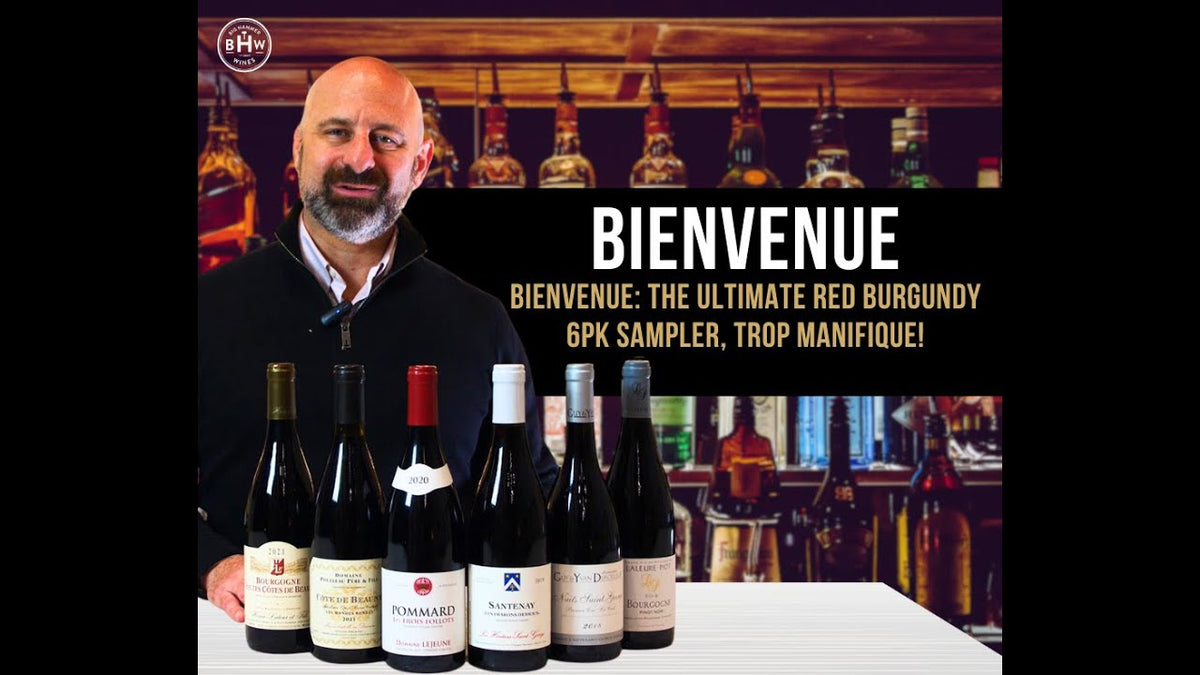
Burgundy is the opposite of Bordeaux in almost every way: tiny family domaines instead of grand châteaux, two grapes instead of blends, and an obsession with micro-parcels that borders on the monastic, literally, since Cistercian monks spent centuries tasting soil and walling off plots. The result is 1,247 named climats (now UNESCO-listed) stacked along one modest limestone slope, the Côte d'Or. Village wines, then premier crus, then the 33 grand crus at the top, Pinot Noir in the Côte de Nuits, Chardonnay's greatest expressions in the Côte de Beaune.
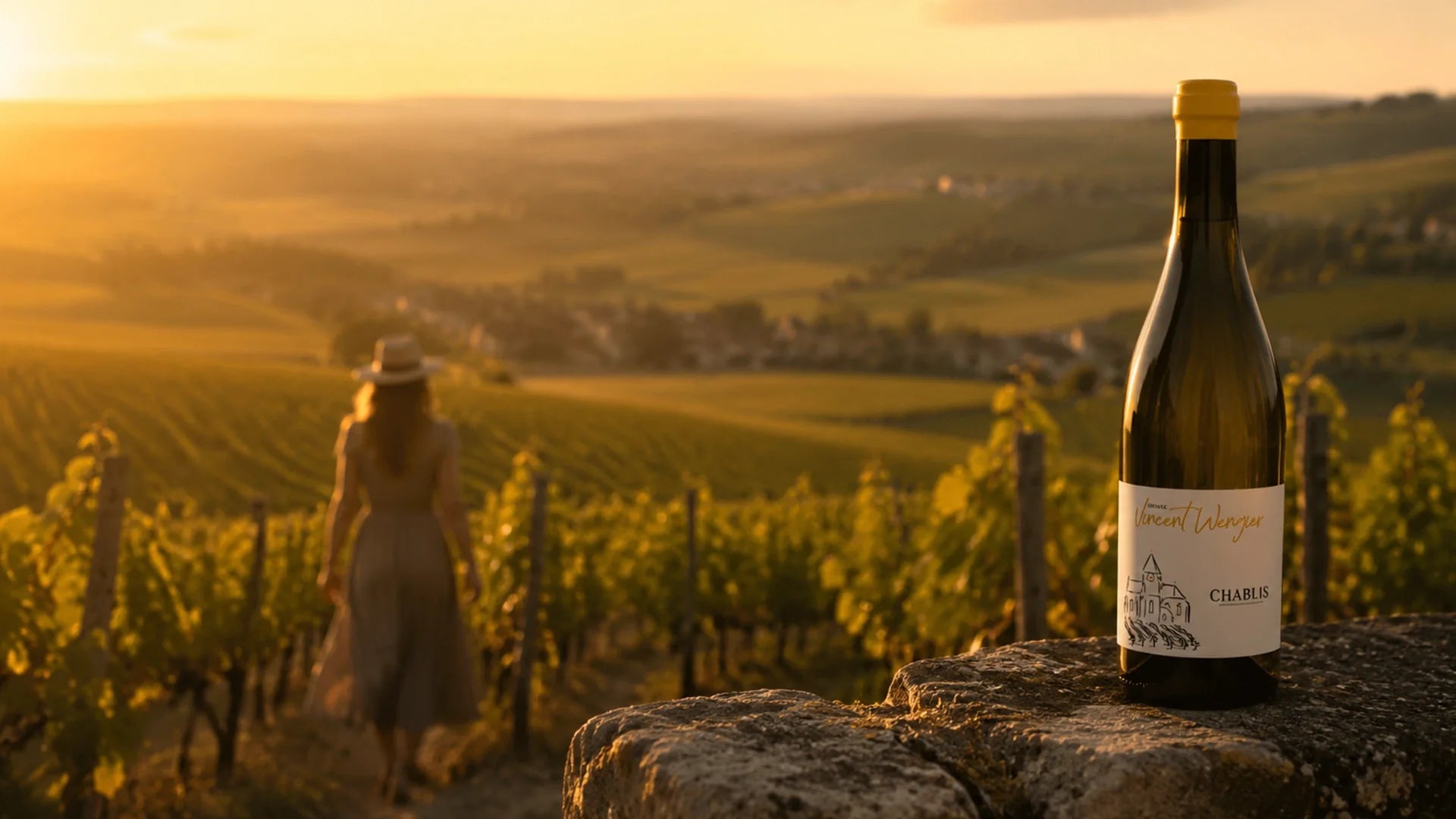
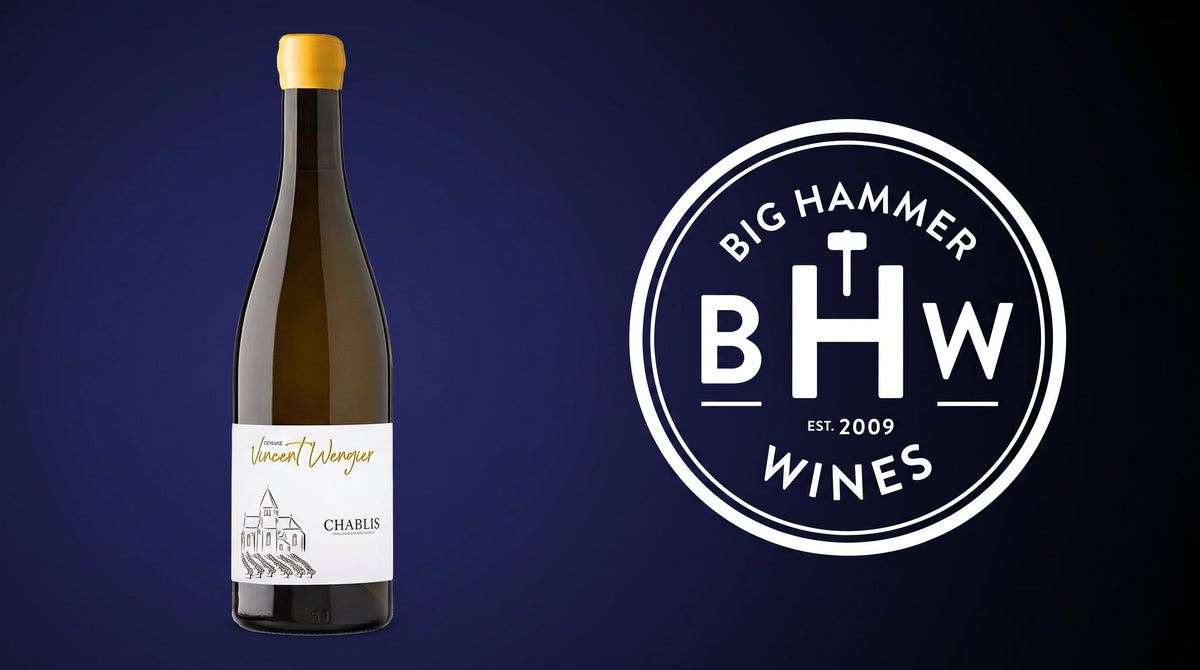
Nowhere does a hundred meters of dirt change a wine more. That granularity, plus microscopic production, is why Burgundy prices went vertical, with Domaine de la Romanée-Conti as the world's most expensive wine. You don't need to play at that table. Chablis, Burgundy's northern outpost, grows Chardonnay on Kimmeridgian chalk full of fossil oyster shells: steel, citrus, seashell salinity, and the sharpest value in fine white wine.
On the Côte, look to Marsannay, Fixin, and Savigny. In the south, the Mâconnais (Pouilly-Fuissé, Saint-Véran) delivers sunny, honest Chardonnay for weeknight money. Aligoté, the "other" white grape, has become a sommelier handshake.
Champagne: Chalk, Bubbles, and Blending Genius
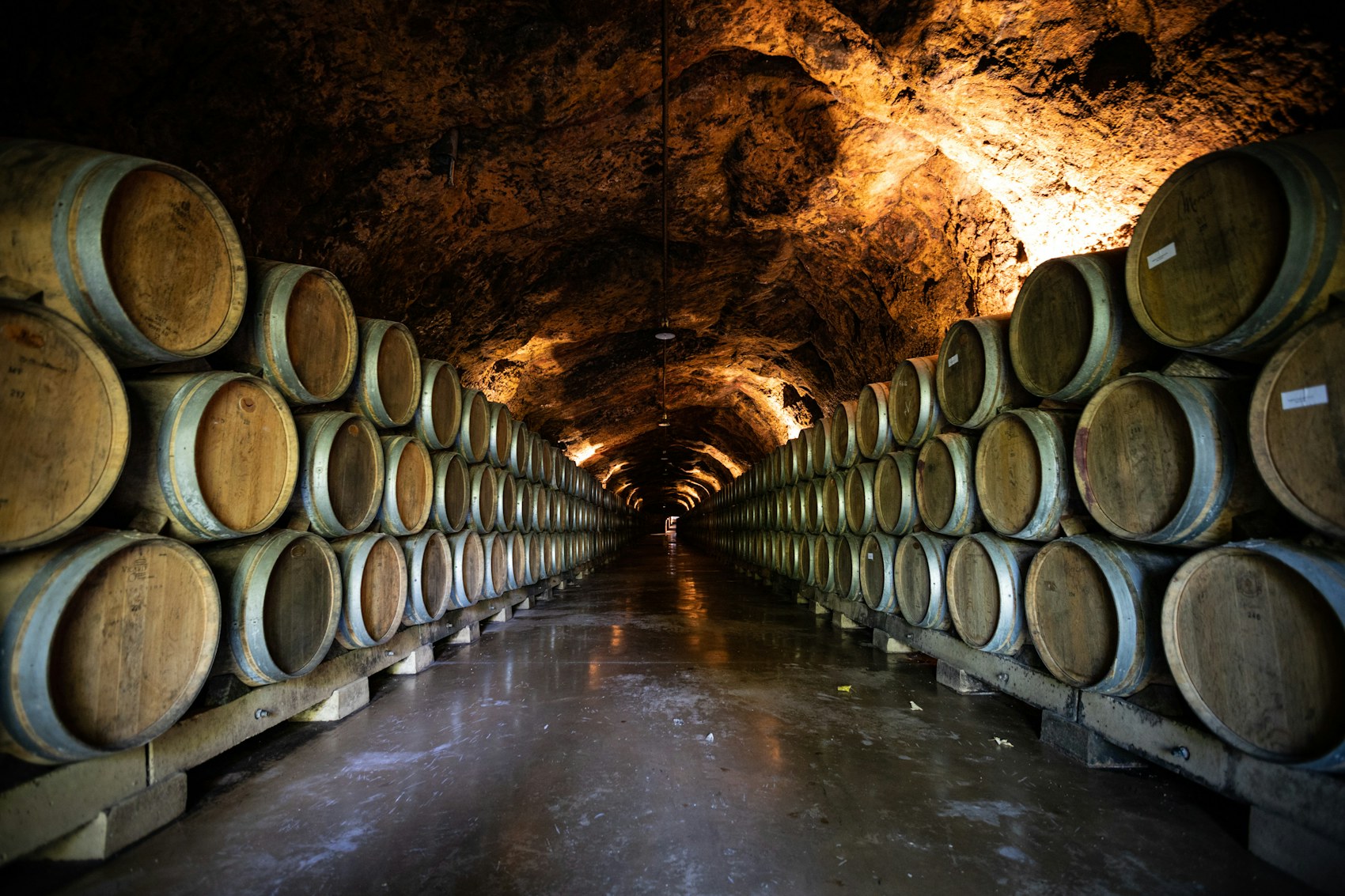
Champagne sits at the cold northern edge of French viticulture, on a seam of chalk so deep the Romans quarried it. The crayères beneath Reims now cellar millions of bottles at a constant, humid chill.
Three grapes (Chardonnay, Pinot Noir, Meunier), three heartland zones, and one defining technique: a second fermentation inside the bottle, months or years resting on spent yeast for that brioche depth, then riddling, disgorgement, and a dosage that sets the sweetness level.
The insider read is two small letters on the label: NM means a negociant house blending purchased fruit at scale (Krug, Bollinger, Billecart-Salmon); RM means a grower bottling their own vineyards - farmer fizz, terroir-first, often startling value (Selosse made this movement famous). Non-vintage blending is Champagne's quiet genius - a house taste held steady across decades - while vintage bottlings and prestige cuvees (Dom Perignon, Salon) capture single years at full stretch.
The Rhône: Granite North, Galets South
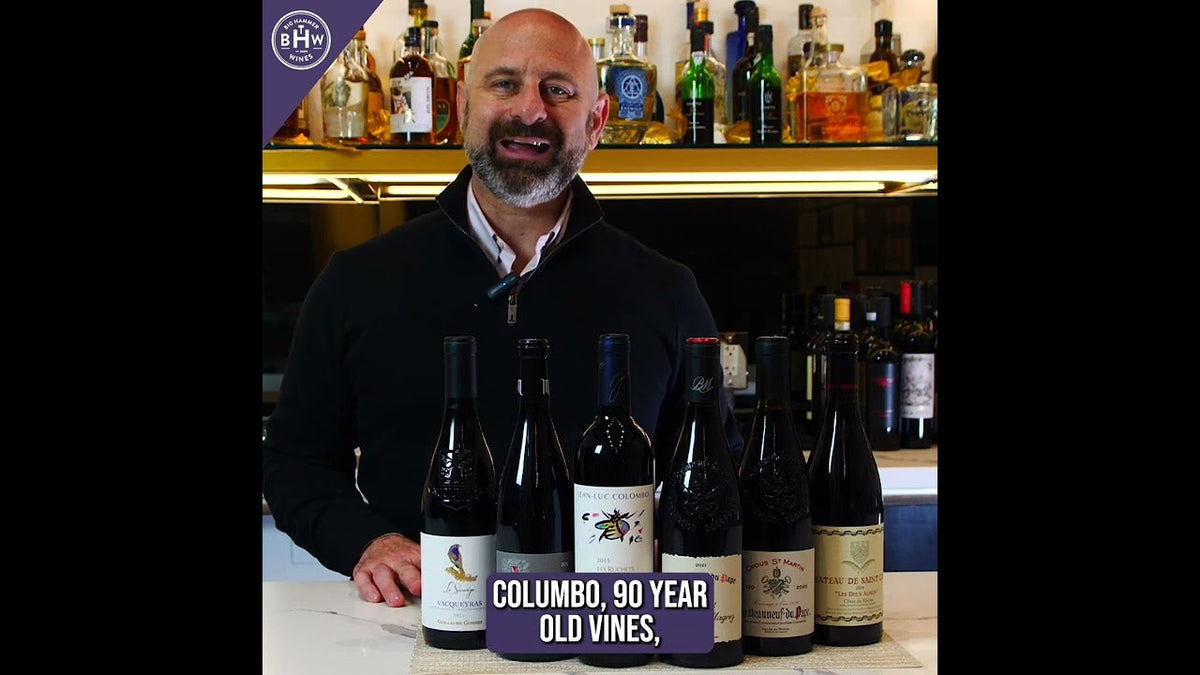
The Rhône is two regions wearing one name. The North is a narrow granite gorge where Syrah was born: Côte-Rôtie (sometimes co-fermented with a splash of white Viognier for lift), Hermitage's single hill of legend, and Cornas' black iron. Chave, Guigal, and Chapoutier are the reference names. The South opens into sun-hammered garrigue where Grenache leads blends - most famously Chateauneuf-du-Pape, which permits 13 grape varieties and carpets its vineyards in galets roules, rounded quartzite stones that store afternoon heat and radiate it into the night. Chateauneuf was also the proving ground for the entire appellation system - its 1936 rules came first. Rayas and Beaucastel are the icons; Gigondas, Vacqueyras, and Cairanne deliver 80 percent of the experience for 40 percent of the price, and Cotes-du-Rhone from a good producer is France's house red.
The Loire: France's Longest Wine List
One river, six hundred miles, and nearly every style of wine can take. At the Atlantic mouth, Muscadet raised sur lie is the oyster wine of record. Mid-river is Chenin Blanc country, Vouvray and Savennières, where one grape shape-shifts from bone dry to honeyed sweet to sparkling, with acidity that lets it age half a century (Huet is the benchmark).
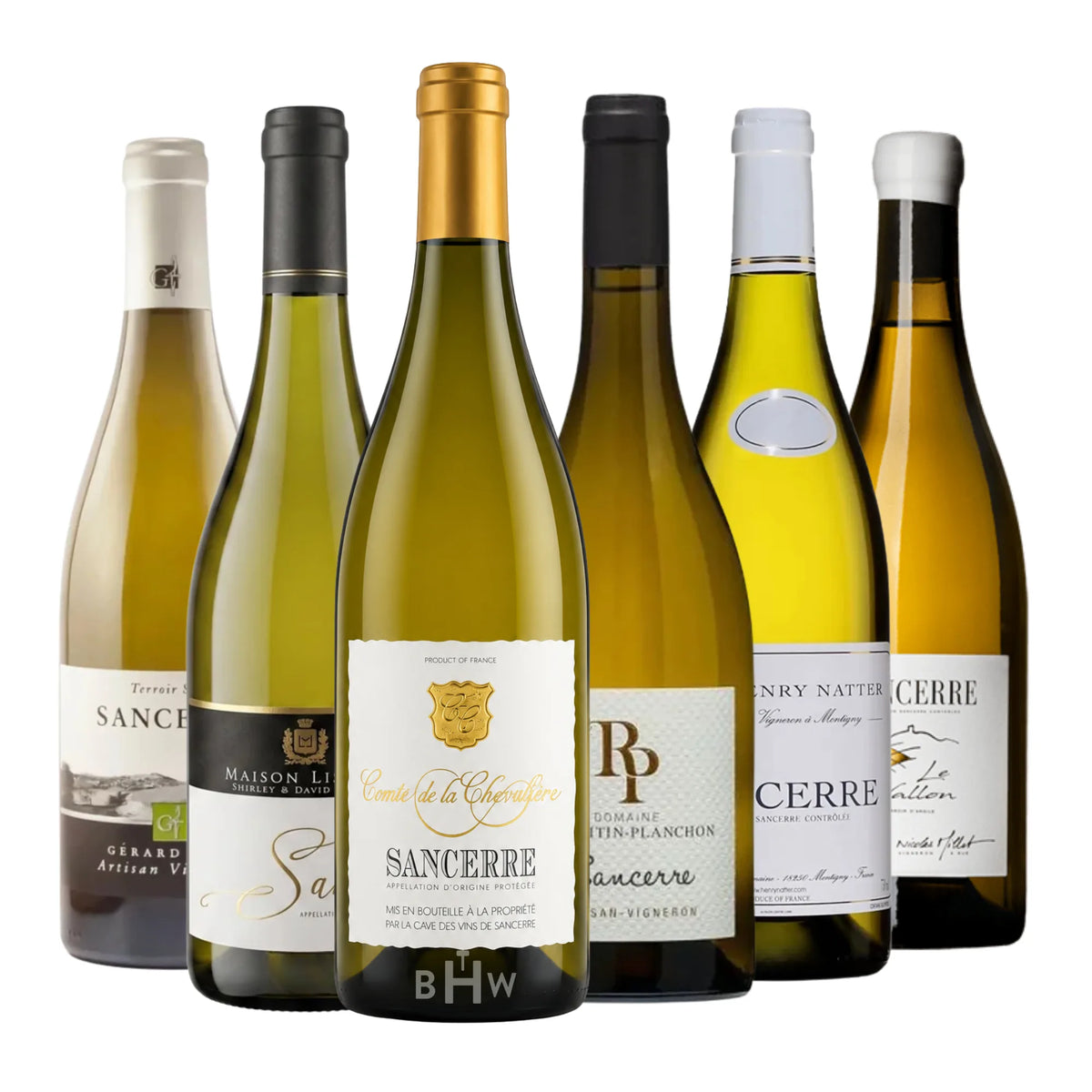
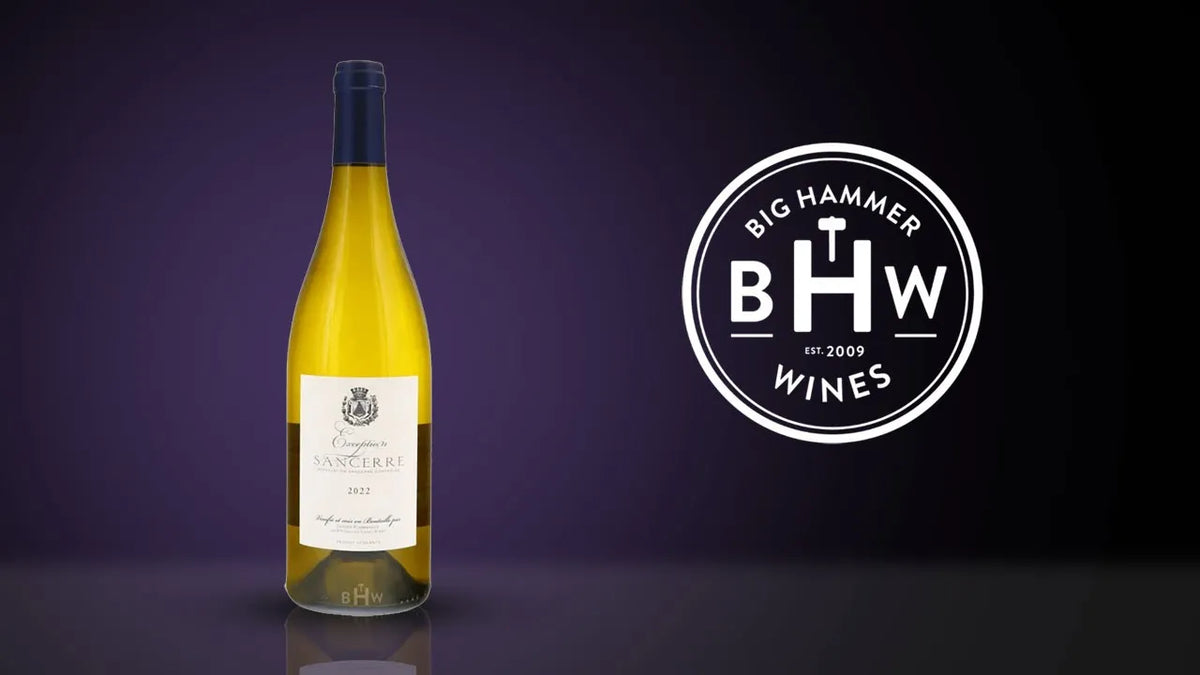
Upstream, Sancerre and Pouilly-Fumé grow Sauvignon Blanc on flint and chalk: smoke, gooseberry, and the template every New World Sauvignon chases. The reds, Chinon, Bourgueil, Saumur-Champigny, are Cabernet Franc at its most fragrant: raspberry, pencil shavings, violets (Clos Rougeard turned them into collectibles). Pound for pound, the Loire is the best white-wine value in France.
Alsace and the Rest of the Map
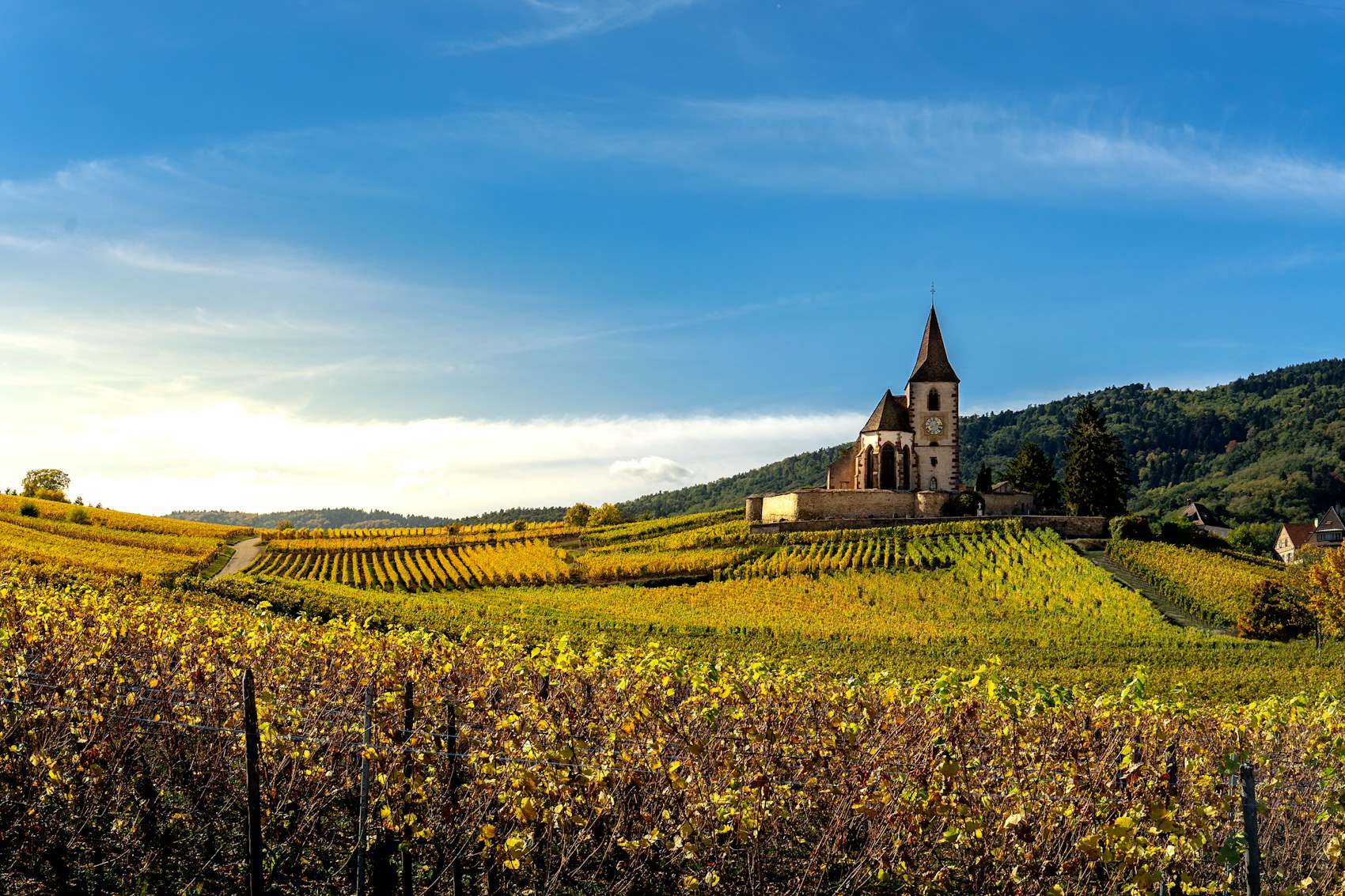
Alsace, in the Vosges rain shadow on the German border, is France's sunniest secret: tall green bottles, grape names actually printed on labels, and dry, stony Riesling and Gewurztraminer from 51 grand cru sites (Trimbach's Clos Ste Hune is the cult flagpole).
Provence turned pale pink into a global economy, but its serious face is Bandol - structured Mourvèdre reds from seaside terraces (Domaine Tempier).
The Languedoc, once Europe's bulk-wine ocean, now hides some of France's best value and a few genuine icons (Mas de Daumas Gassac, Grange des Peres).
And the Jura ferments Savagnin under a flor-like yeast veil into vin jaune - France's answer to sherry, and a rabbit hole worth falling.
How to Drink France Without Selling a Car
Climb down the ladder, not up: the village next door to the famous one (Marsannay beside Gevrey, Saint-Joseph beside Hermitage, Montagne-Saint-Émilion beside Saint-Émilion) shares soil and weather at a civilian price. Back growers over brands in Champagne.
Trust Chablis, Beaujolais crus, Loire Chenin, and Languedoc reds to over-deliver. And when a producer earns your trust, follow them across appellations. In France, the name in small print is the whole game.
Quick Answers: France Wine
Why do French wine labels name places instead of grapes?
French appellation law is built on the idea that place outranks grape - Chablis means Chardonnay from specific limestone hills, Sancerre means Sauvignon from flint and chalk. Learn a dozen place-grape pairs and most French labels decode themselves.
What is the difference between Left Bank and Right Bank Bordeaux?
The Left Bank (Medoc, Pessac-Leognan) is gravel soil where Cabernet Sauvignon leads - structured, cedar-scented, built to age. The Right Bank (Saint-Emilion, Pomerol) is clay-limestone where Merlot and Cabernet Franc lead - plusher and earlier-drinking.
What does grower Champagne (RM) mean?
RM on the label means recoltant-manipulant: the farmer who grew the grapes also made the wine, versus NM houses that blend purchased fruit. Grower Champagnes offer terroir character and value; the great houses offer consistency and scale. Both can be superb.
How can I drink great French wine without overspending?
Buy the neighbor: Marsannay beside Gevrey-Chambertin, Saint-Joseph beside Hermitage, Montagne-Saint-Emilion beside Saint-Emilion, Menetou-Salon beside Sancerre. Same soils and weather, civilian prices - and back growers rather than famous labels.
Ready to explore? Our France collection carries our current selection. And if you are hunting a specific bottle from the region, contact us for a quote - we source wine globally, with a 12-bottle minimum on special orders.

Shop Our France Collection
SHOP COLLECTIONShare:
Canadian Icewine: Winter's Greatest Trick (and the Wines Beyond It)
Argentine Wine: Malbec, Altitude, and the Andes Effect
Comments Section