

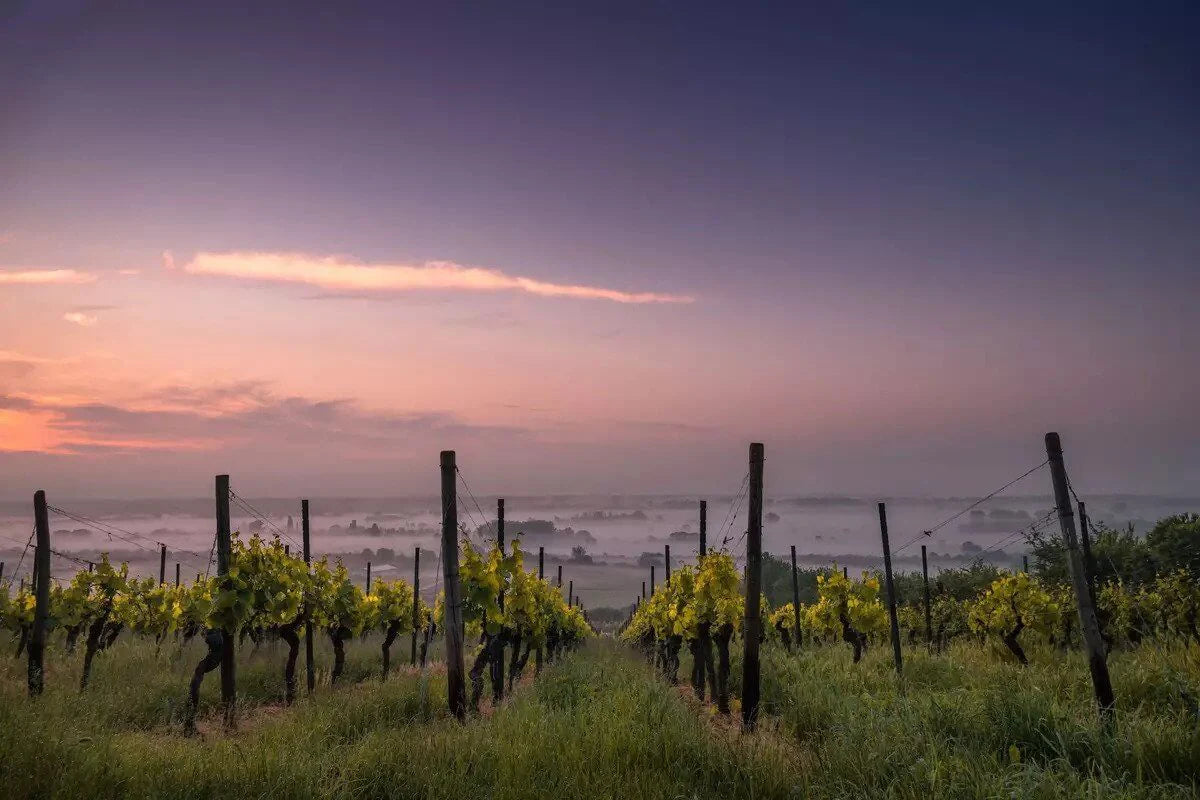
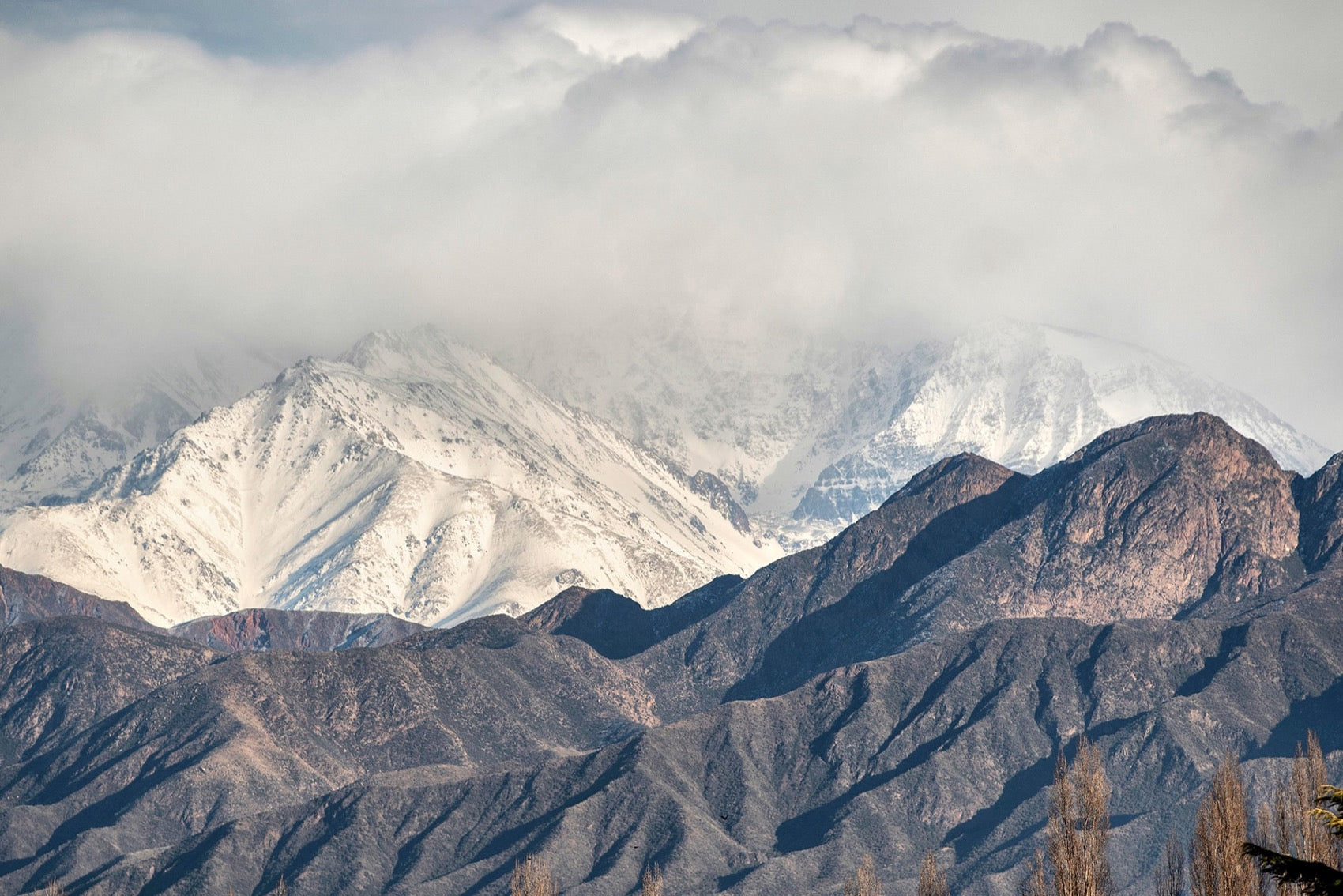
Every wine region tells you about its soil. Argentina asks you to look up. The vineyards of Mendoza sit between 2,500 and 5,000 feet above sea level - and in Salta, in the country's far north, vines climb past 10,000 feet, higher than most ski resorts. This is farming on the shoulder of the Andes, in what is technically a desert: eight inches of rain a year, irrigated by snowmelt running down from peaks four miles high, under sunlight so intense the grapes grow thicker skins in self-defense. Those thick skins are the secret to everything - the color, the velvet tannin, the violet perfume that made Malbec a household name. France gave Argentina the grape. The Andes made it famous.
The Andes Run the Show
Argentine wine is a rain-shadow story. Pacific storms drop everything they have on the Chilean side of the cordillera; what crosses into Argentina is dry, clean mountain air. No rain at harvest, almost no rot or mildew, and a grower's dream: water arrives not from the sky but from the Andes themselves, snowmelt channeled through irrigation canals the Huarpe people engineered before the Spanish arrived. The desert gives with the other hand too - altitude. Every thousand feet of elevation trades heat for light: cooler nights, fiercer UV. Days ripen sugar and flavor; nights near 50 degrees lock in acidity. The result is wine that is simultaneously ripe and fresh - the high-wire act every warm region chases and few pull off.
The mountains keep growers honest, too. The zonda - a hot, dry foehn wind that screams down the slopes in spring - can strip flowers off vines, and summer hailstorms are feared enough that top vineyards string netting over entire blocks like circus tents. High farming has real stakes.

Malbec: The Immigrant That Made It
Malbec is French - a blending grape from Cahors and Bordeaux that phylloxera and frost slowly pushed to the margins at home. In 1853, a French agronomist named Michel Aime Pouget brought cuttings to Mendoza as part of a government project to modernize Argentine farming. The timing was perfect: pre-phylloxera vine stock, planted in sandy desert soils the louse never conquered, in a climate that suited the grape better than France ever had. While Cahors fought weather for ripeness, Mendoza got it every single year - and a century and a half later, Argentina farms more Malbec than the rest of the world combined, much of it from old, gnarled, own-rooted vines.
What does great Malbec taste like? Blackberry and plum with a violet lift, a plush middle, and - this is the tell of high-altitude fruit - a firm, fresh spine that keeps all that generosity standing upright. At the entry level it is the best red-wine value on the planet. At the top - single parcels from the Uco Valley - it stands comparison with serious Bordeaux at a third of the money.
Mendoza's Map, From Classic to Cutting Edge
Lujan de Cuyo, the historic heartland just south of Mendoza city, is old-vine country - plush, generous, cocoa-dusted Malbec from districts like Vistalba and Las Compuertas, some on vines over a century old. The revolution lives higher up. The Uco Valley, an hour south and up to 5,000 feet, is where modern Argentina staked its claim: districts like Gualtallary and Paraje Altamira sit on alluvial fans studded with limestone - calcareous soils that give the wines a chalky, saline grip Argentines call "mineralidad." Nicolas Catena planted Gualtallary's Adrianna Vineyard in 1992 when consultants said grapes would never ripen there; it is now called the grand cru of South America, and its parcel bottlings sparked the terroir movement that defines the country's top end. Uco Malbec trades plush for tension: crunchier fruit, wild herbs, stony finish.

Beyond Malbec
Cabernet Franc is Argentina's rising star - peppery, floral, structured, arguably the country's next great red. Torrontes, the white, is Argentina's own invention: a natural crossing found nowhere else, at its best in the extreme-altitude vineyards of Salta and Cafayate, where it smells like a rose garden and drinks bone dry and cool. Up there, at Colome, vines grow above 10,000 feet - among the highest commercial vineyards on Earth, with UV so strong the wines carry an almost electric intensity. South in Patagonia (Rio Negro, Neuquen), old orchard country grows nervy Pinot Noir and Riesling in the teeth of constant wind. And a quiet revival is underway for Criolla - the pale, old mission-era grapes once dismissed as jug wine, now re-farmed by young winemakers into light, chillable, utterly Argentine reds.
The Names That Built It
Catena Zapata is the reference - the family that bet on altitude and won, whose Malbec Argentino and Adrianna bottlings carry the flag at the top of world lists. Zuccardi followed the limestone to Altamira and built a winery of raw concrete to match the wines' austerity - its Finca Piedra Infinita is a benchmark of the stony style. Achaval-Ferrer proved single-vineyard old-vine Malbec could stun critics; Cheval des Andes - a joint venture with Bordeaux's Cheval Blanc - put a first-growth signature on Mendoza fruit; and Colome holds the altitude record with pre-phylloxera vines from 1831. These are the canon. Around them orbits a generation of parcel-obsessed winemakers treating the Uco like Burgundy.
At the Table, and at the Register
Argentine wine grew up beside the asado, and it shows: Malbec's plush fruit and firm spine are engineered for grilled beef, chimichurri, and anything touched by smoke. Torrontes handles empanadas and ceviche. The buying math is the best in the Southern Hemisphere: $15 to $30 delivers serious, honest Malbec; $40 to $60 buys single-parcel Uco wines that would cost triple from California; and the icons - Adrianna, Piedra Infinita, Cheval des Andes - still undercut their Napa and Bordeaux peers. Drink the value while the world is still learning the words "Gualtallary" and "Altamira."
Quick Answers: Argentina Wine
Why is Argentine Malbec so good?
Altitude. Mendoza's vineyards sit 2,500-5,000 feet up in a desert rain shadow, where fierce sun ripens thick-skinned grapes and cold mountain nights preserve acidity - giving Malbec its signature combination of plush dark fruit, violet perfume and freshness.
What is the Uco Valley?
Mendoza's high-altitude frontier - limestone-studded districts like Gualtallary and Paraje Altamira at up to 5,000 feet, producing Argentina's most prized modern wines: tenser, stonier, more mineral Malbec that has redefined the country's top end since the 1990s.
What white wine is Argentina known for?
Torrontes - a floral, rose-scented but bone-dry white unique to Argentina, at its best from the extreme-altitude vineyards of Salta and Cafayate, some above 10,000 feet - among the highest commercial vineyards on earth.
Is expensive Argentine wine worth it over entry-level Malbec?
The $15-30 tier is the best red-wine value on the planet, but single-parcel Uco Valley bottlings at $40-60 genuinely compete with wines costing triple from California or Bordeaux - the quality ceiling is far higher than most drinkers realize.
Ready to explore? Our Argentina collection carries our current selection. And if you are hunting a specific bottle from the region, contact us for a quote - we source wine globally, with a 12-bottle minimum on special orders.





























Share:
French Wine: The Grand Tour, Region by Region
Chilean Wine: The Longest Vineyard on Earth
Comments Section