

Greece has been making wine for four thousand years, and for most of the last century the world barely noticed. That was the world's mistake.
The modern Greek wine scene, built on more than 300 native grapes that grow nowhere else, is one of the most exciting in Europe right now, and the best bottles still cost a fraction of what their quality commands. Here's our guide to the country, the grapes, and the wines worth hunting.
A Very Old Story, Suddenly New

Wine ran through ancient Greek life. The symposium was literally a drinking party with rules, and Greek colonists carried vines across the Mediterranean, from Sicily to southern France.
The modern chapter is much younger. For decades, Greek wine meant one thing abroad: retsina, the pine-resined white poured in tavernas. Fair or not, it buried the country's reputation.
Then, starting in the 1980s and picking up speed in the 2000s, a generation of winemakers, many of them trained in Bordeaux and Burgundy, came home and bet everything on Greece's native grapes instead of chasing Cabernet. That bet is paying off.
The Grapes That Matter
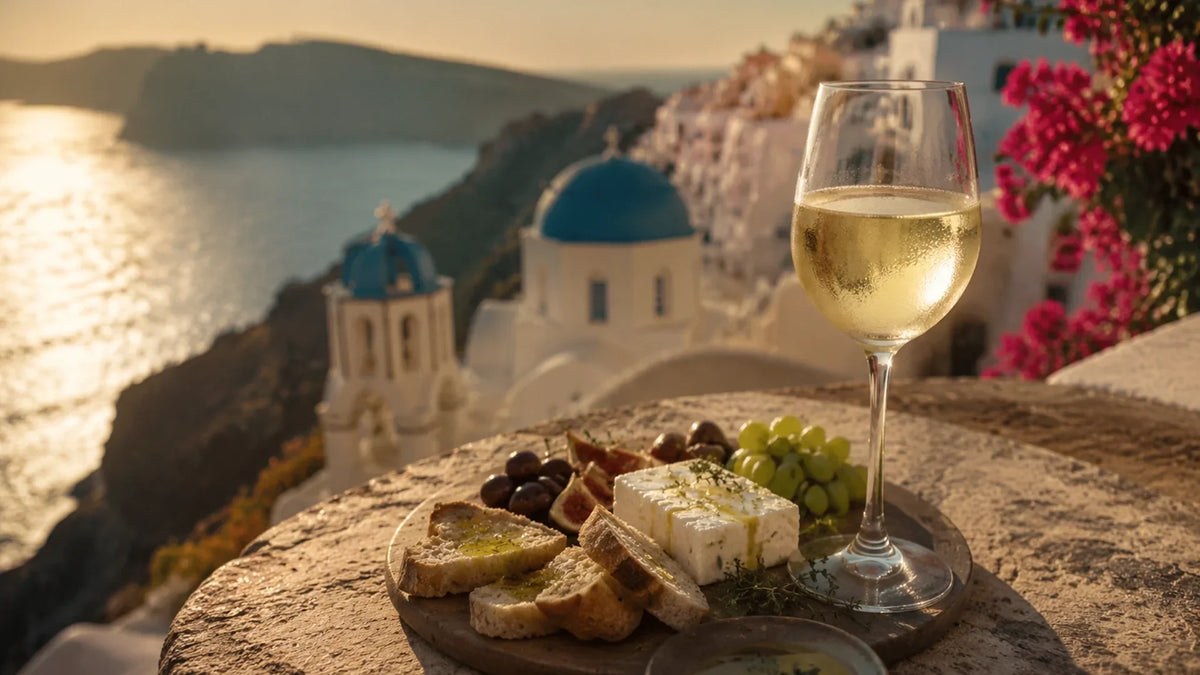
Assyrtiko is the headline: a white grape from the volcanic island of Santorini with acidity like a blade and a saline, mineral core. On Santorini the vines are trained into low woven baskets - koulara - to survive the island's wind, and some root systems are centuries old. Great Assyrtiko drinks like Chablis that went to the beach: bone-dry, electric, built for grilled fish.
Agiorgitiko - St. George's grape - is the deep, plush red of Nemea in the Peloponnese: dark cherry, spice, velvet texture. It's the friendliest introduction to Greek reds.
Xinomavro is the connoisseur's pick. The name means "acid-black," and in Naoussa and the hills of Macedonia it makes structured, tannic, tomato-leaf-and-dried-cherry reds that age like fine Nebbiolo - the comparison every critic reaches for, because it's earned. It also makes one of Europe's most underrated roses.
Malagouzia is the comeback story: an aromatic white grape rescued from near-extinction a generation ago, now one of Greece's most loved plantings - peachy, floral, and gorgeous with meze. And on the Ionian island of Cephalonia, Robola grows in raw limestone and makes taut, citrusy whites the locals have prized for centuries.
The Regions to Know
Santorini: volcanic ash soils, no phylloxera ever, ancient vines, and the world's most dramatic vineyard views.

Nemea: the Peloponnese stronghold of Agiorgitiko, from easy village wines to serious hillside bottlings.

Naoussa and Macedonia: Xinomavro country in the cooler north - Greece's answer to Barolo. And scattered across the islands and mainland hills, hundreds of small appellations are reviving grapes most of the wine world has never tasted.

What We've Poured
Greek wine moves through Big Hammer Wines in small, fast allocations, and the hit rate has been remarkable: Kaldera Assyrtiko from Santorini, Sofos Agiorgitiko from Nemea, a Xinomavro rosé from the mountain town of Siatista, Antonopoulos Malagouzia from Achaia, Argatia's Haroula white from Macedonia, and Robola of Cephalonia. Every one earned its place the same way everything here does: we tasted it first, and it overdelivered.
When the next Greek allocation clears our bar, it lands on our Greece collection page.
If you're hunting a specific Greek wine - or any wine - contact us today and we'll provide a quote. Special-order wines have a 12-bottle minimum.
Quick Answers: Greece Wine
What Greek wines should a beginner try?
Start with Assyrtiko from Santorini - a bone-dry, saline white grown on volcanic ash - then Xinomavro, the tannic, tomato-leaf red often compared to Barolo, and Agiorgitiko from Nemea for plusher, friendlier reds.
What makes Santorini Assyrtiko special?
Vines grow in woven basket shapes on volcanic ash with no phylloxera, little rain and constant wind - some root systems are centuries old. The wine is electric: citrus, flint and sea salt with Chablis-level acidity despite the Mediterranean sun.
Is retsina still a thing?
Yes, and modern versions deserve a fresh look: made carefully with quality grapes and a measured touch of pine resin, today's best retsina is a crisp, herbal curiosity a world away from the rough taverna pours of the 1970s.
Why is Xinomavro compared to Barolo?
Both are pale, high-acid, firmly tannic reds that smell of red fruit, dried herbs and - distinctively in Xinomavro's case - sun-dried tomato, and both age for decades into leather and truffle. Naoussa is its Barolo-equivalent home zone.














Shop Our Greece Collection
SHOP COLLECTIONShare:
Israeli Wine: The Ancient Land Making Thoroughly Modern Wine
Israeli Wine: The Ancient Land Making Thoroughly Modern Wine
Comments Section