

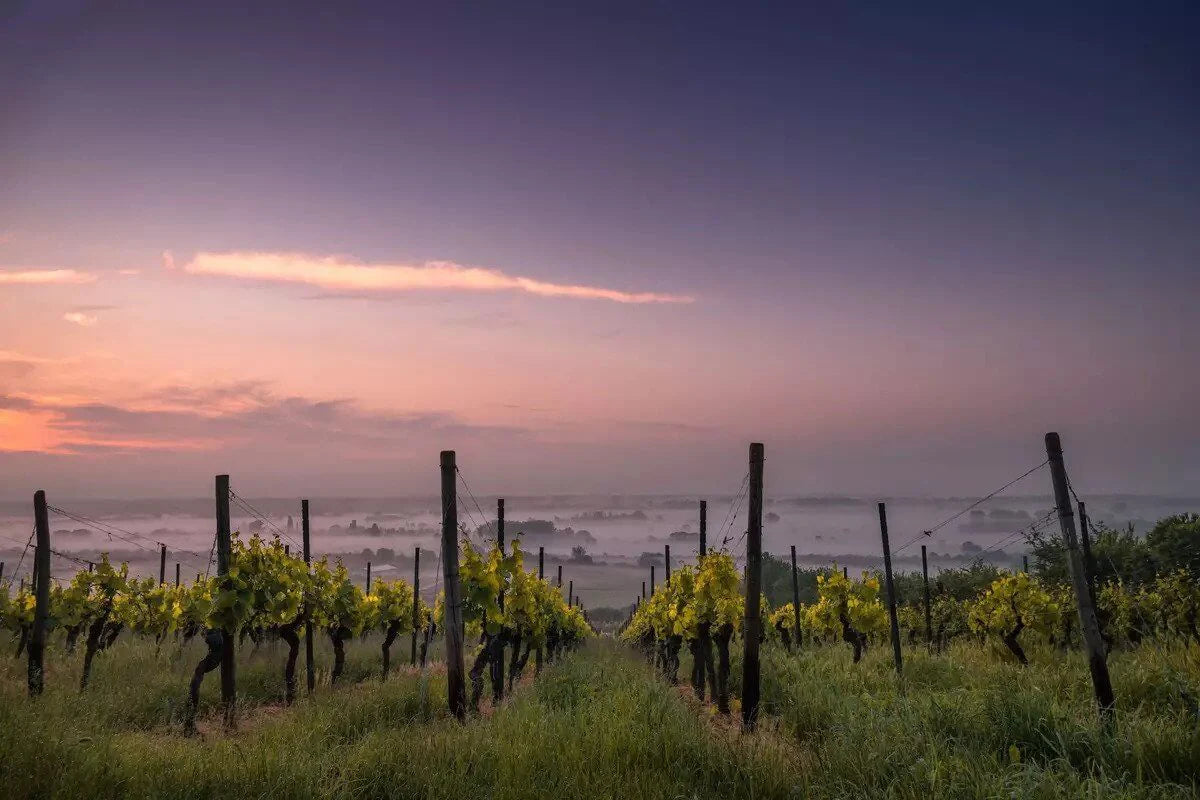

In 1756, a full century before Bordeaux got around to classifying its châteaux, the Marquis of Pombal drew a boundary around the Douro Valley, marked it with 335 stone pillars, and declared that only wine from inside the line could call itself Port.
It was the world's first legally demarcated wine region, and it tells you everything about Portugal: this small country on Europe's western edge has been taking wine seriously longer than almost anyone, while asking less money for it than practically everyone.
Portugal never chased international grapes or fashion. It kept farming its own, more than 250 native varieties, most grown nowhere else on earth, on soils from granite to schist to volcanic ash. The result is the deepest value seam in European wine, hiding in plain sight.
The Douro: A River Canyon Carved Into Wine

Start where Portugal's fame started. The Douro is less a vineyard region than a piece of land art: a river gorge of crumbling blue-grey schist, terraced by hand over three centuries into contour lines that hold a few rows of vines each. Summer temperatures pass 100 degrees, the schist stores the heat, and roots drive thirty feet down through rock seams hunting water.
Everything here is earned - which is why the wines, fortified or not, carry such concentration. The terraces are a UNESCO World Heritage site and, by any honest reckoning, one of the most beautiful places wine is grown anywhere.
Port, Properly Explained
Port is red wine whose fermentation is stopped halfway by a dose of clear grape spirit. The yeast dies, the natural sweetness survives, and the result carries about 20 percent alcohol and decades of stamina.
The grapes are Douro natives (Touriga Nacional for perfume and grip, Touriga Franca for elegance, Tinta Roriz, Spain's Tempranillo, for backbone), and at the best quintas they're still crushed by foot in granite troughs called lagares, because feet break skins without crushing the bitter seeds.
The label ladder is simpler than it looks. Ruby is young, dark, and simple. Late Bottled Vintage (LBV) is a single year given extra barrel time - the weeknight vintage port. Vintage Port - declared only in exceptional years, maybe three per decade - is bottled young and unfiltered, then asks twenty years of your patience and repays fifty; it is one of the longest-lived wines on the planet.

And tawny takes the opposite road: decades in barrel, oxidizing slowly into amber silk - caramel, walnut, dried orange - sold with age statements of 10, 20, 30, and 40 years. A 20-year tawny, served lightly chilled beside almond cake or alone as dessert, may be the single best value in fine wine.
The historic shippers cluster across the river from Porto in Vila Nova de Gaia: Taylor, Graham, Fonseca, Niepoort, Quinta do Noval - whose tiny, ungrafted Nacional vineyard makes the rarest Port of all - and Ramos Pinto.
The Douro's Second Act: Table Wine
In 1952, the house of Ferreira quietly made a dry red from Port grapes called Barca Velha, released only in great years, aged like a first growth, and eventually recognized as Portugal's most legendary table wine.
It proved what the schist could do without fortification, and since the 1990s a generation of Douro reds has followed: dark, floral, mineral wines of real seriousness that still undercut comparable Bordeaux by half. When you see "Douro DOC" on a red label, think of it as unfortified Port terroir, same grapes, same terraces, same intensity.
Vinho Verde: The Green North

Up in the rain-soaked, granite-hilled Minho on the Spanish border, "green wine" refers to youth, not color - and the old cliché (cheap, spritzy, slightly sweet) is twenty years out of date. The serious face of Vinho Verde is Alvarinho from the inland hills of Moncao and Melgaco: bone-dry, peach-and-sea-salt whites with the cut of great Riesling, plus a new wave of pet-nat sparklers from growers like Soalheiro - the pioneer that planted Melgaco's first dedicated Alvarinho vineyard in 1974.
Loureiro and Trajadura fill out lighter, flower-scented blends. With 11% alcohol and electric acidity, this is the definitive summer-table white - and even the top single-parcel bottlings rarely cross thirty dollars.
The Rest of the Map, Region by Region
Dao, ringed by granite mountains that block Atlantic storms, is Portugal's Burgundy claim: elegant, pine-scented Touriga and Jaen reds and the country's noblest white grape, Encruzado - creamy, mineral, age-worthy, absurdly underpriced.
Bairrada, near the coast, grows the tannic, dark Baga grape on clay - long-lived reds with claret bones - and quietly makes much of Portugal's traditional-method sparkling.
Alentejo, the vast golden south of cork-oak savannas, delivers plush, sun-filled reds that are Portugal's crowd-pleasers - and keeps alive the Roman tradition of fermenting in clay amphorae (talha), now the country's hippest old idea.
And out in the Atlantic, Madeira makes the immortal wine: deliberately heated and oxidized until nothing can kill it, from dry Sercial to rich Malmsey. Bottles from the 1800s still drink brilliantly; once opened, it keeps for a year. No cellar is complete without one.
Two footnotes worth knowing at a dinner party: Portugal's cork-oak forests supply roughly half the world's wine corks - the bottle in your hand is probably wearing Alentejo bark - and the Setubal peninsula south of Lisbon makes a honeyed fortified Moscatel that locals have treated as their house dessert wine for four centuries.
Buying Portugal Smart
The play is simple: Portugal delivers each style one to two price tiers below its rivals. Alvarinho instead of premier-cru-priced whites. Douro reds instead of midrange Bordeaux.
Dão Encruzado instead of village Burgundy. A 10- or 20-year tawny instead of dessert wines at twice the money. And vintage Port for birth years and anniversaries; it will outlive the occasion. The rest of the world is slowly catching on. The prices have not. That's the window.

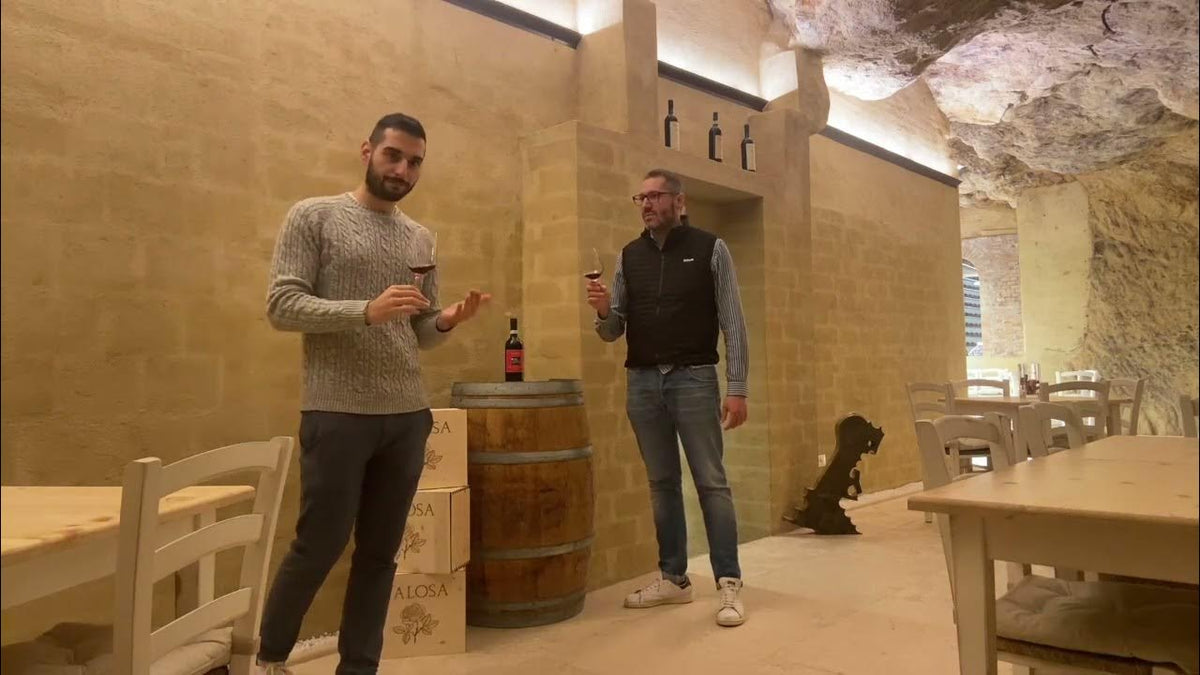
Inside the sourcing ritual: Greg Martellotto tasting with Portugal’s leading winemakers and estate owners during Essência do Vinho in Porto.
Quick Answers: Portugal Wine
What is the difference between vintage and tawny Port?
Vintage Port is bottled young from a single declared year and ages in your cellar for decades - powerful and dark. Tawny ages in barrel at the lodge, oxidizing into amber silk with caramel and walnut notes, sold ready to drink with 10, 20, 30 or 40-year age statements.
Is Vinho Verde supposed to be fizzy and sweet?
Not anymore. The serious modern face is bone-dry Alvarinho from Moncao and Melgaco - peach, sea salt and Riesling-like cut, no spritz, rarely over thirty dollars. The lightly fizzy supermarket style still exists, but it is the entry point, not the ceiling.
What made the Douro Valley famous?
It is the world's first legally demarcated wine region (1756), a UNESCO-listed canyon of hand-built schist terraces that produces Port - and, since the 1990s, dark, mineral dry reds from the same grapes and slopes at half the price of comparable Bordeaux.
What is Madeira and why does it last forever?
A fortified island wine deliberately heated and oxidized during aging, making it nearly indestructible: bottles from the 1800s still drink well, and an open bottle keeps for a year. Styles run dry (Sercial) to rich (Malmsey) - all with searing acidity.
Ready to explore? Our Portugal collection carries our current selection. And if you are hunting a specific bottle from the region, contact us for a quote - we source wine globally, with a 12-bottle minimum on special orders.



Shop Our Portugal Collection
SHOP COLLECTIONShare:
Sonoma Wine: Where California Wine Was Born
Piemonte Wine: Fog, Nebbiolo, and Italy's Quietest Grand Cru Country
Comments Section