

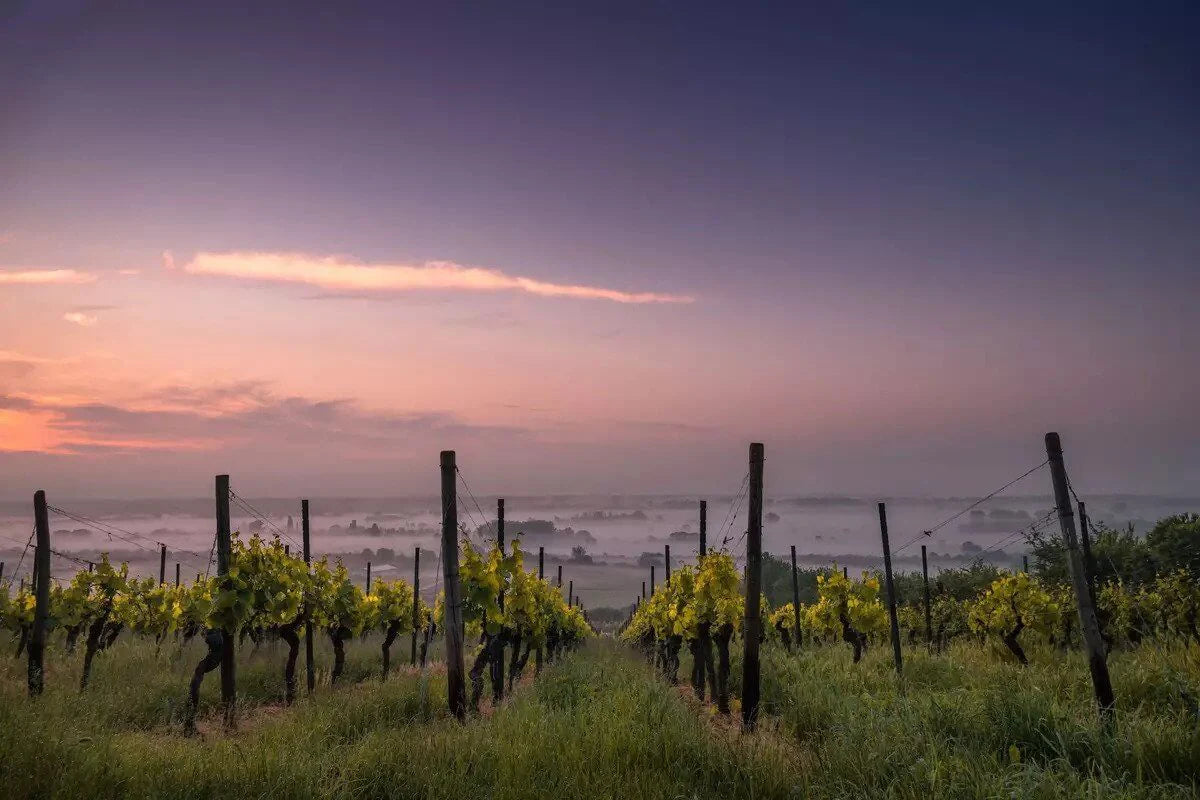
Every morning in summer, a wall of fog stacks up against the California coast like a tide that forgot to go out. It's the exhaust of a cold ocean: the California Current pulls near-Arctic water down the coast, chilling the air above it, and where that refrigerated air finds a gap in the mountains, it pours inland at cocktail hour and switches entire valleys from hot to cool in twenty minutes.
That daily collision between a cold sea and a sun-hammered interior is the whole secret of California wine.
Where the fog reaches, you get Pinot Noir, Chardonnay, and sparkling wine with real nerve. Where it can't, you get Cabernet, Zinfandel, and sunshine in a glass.
One state, producing more wine than all but three countries on earth, organized by a single question: how far can the ocean reach?
How to Read the Golden State
California's appellation map, 150-plus AVAs and counting, looks impenetrable until you apply the fog rule. Coastal and gap-cooled AVAs (anything named Coast, River, or Hills within the marine reach) lean fresh and aromatic. Interior and rain-shadowed AVAs lean rich and powerful.
Beyond that, remember the American rule from our national guide: an AVA certifies geography, not quality - the producer's name on the label always outranks the place name. California's greatest estates and its most cynical labels can share the same appellation; learn the growers and the rest is scenery.

The North Coast: Napa, Sonoma, Mendocino
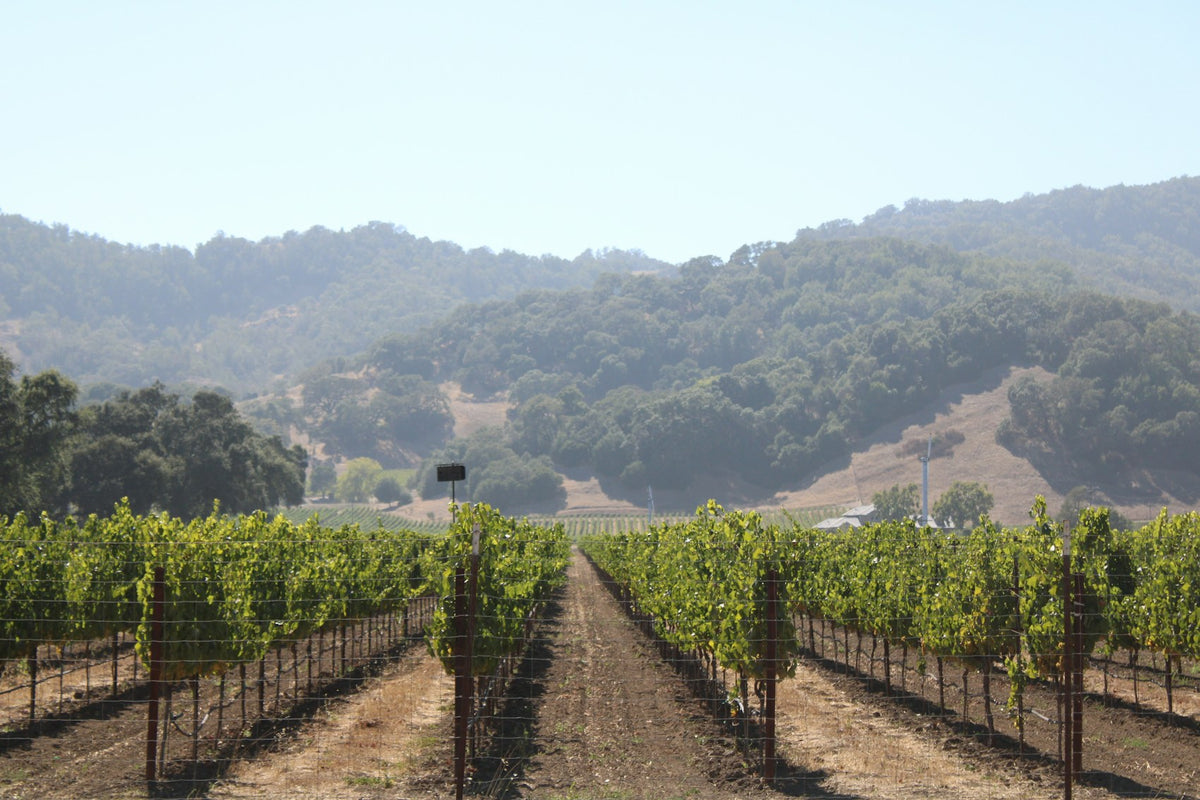
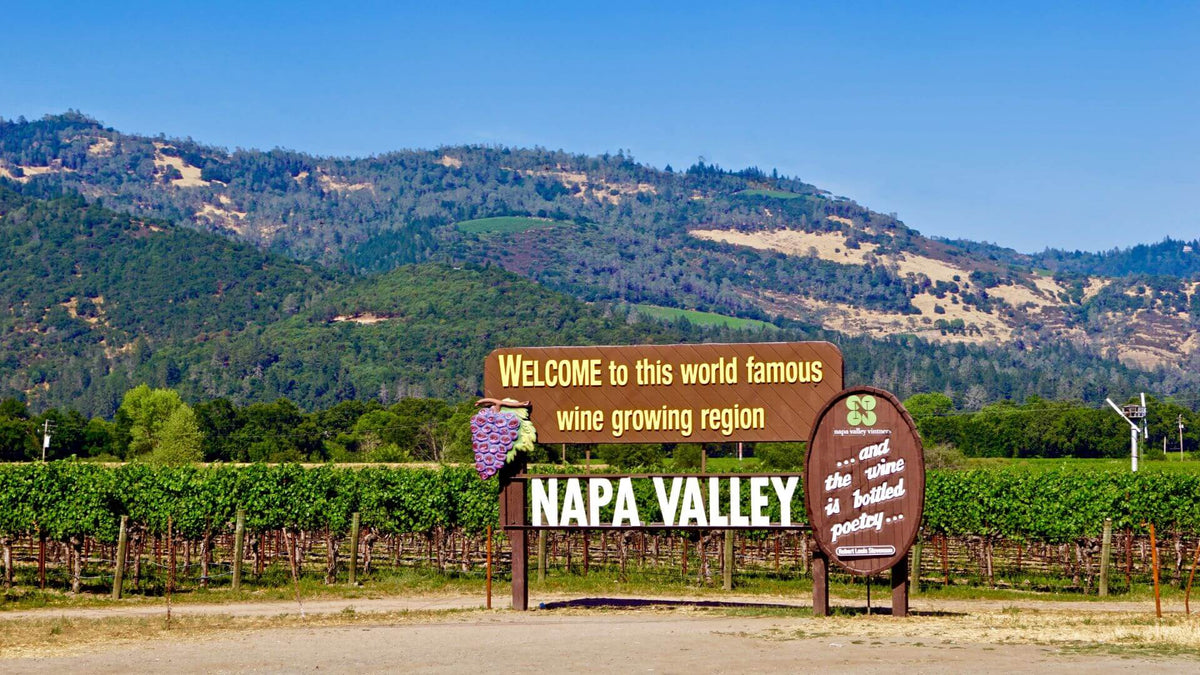
Napa is thirty miles of geological chaos, dozens of soil series wedged between two mountain ranges, with a nightly bay-fog air conditioner at its southern door. Its internal logic runs two ways: south-to-north the valley warms (cool Carneros to hot Calistoga), and floor-to-ridge the wines change texture, plush opulence from benchland icons like Oakville and Rutherford, tight-grained mountain grip from Howell Mountain, Spring Mountain, and Mount Veeder. Cabernet is the kingdom. The cult-wine economy born here in the 1990s (Screaming Eagle and its heirs) turned allocation lists into status symbols, but the enduring lesson of Napa is older: the 1966 Heitz Martha's Vineyard bottling proved single vineyards mattered in America, and the valley has been mapping itself ever since.
Sonoma, one ridge west, is the bigger, more diverse original. California wine was born there, and it deserves its own deep-dive: read our Sonoma guide.
Farther north, Mendocino's Anderson Valley is the connoisseur's cool-climate secret: a foggy redwood corridor where Champagne's Roederer chose to plant its American outpost, and where Pinot Noir carries alpine purity at two-thirds of Russian River prices.
The Central Coast: Where the Ocean Runs the Show
South of San Francisco, the coastal mountains splinter, and every gap becomes a wind tunnel. In the Santa Cruz Mountains, Ridge's Monte Bello vineyard makes America's most Bordeaux-like Cabernet on limestone at 2,600 feet - the quiet first growth of the state.
The Santa Lucia Highlands hang above the Salinas Valley wind machine, growing Pinot and Chardonnay with cool-climate cut on a bench that sees gale-force afternoons.
Paso Robles, tucked behind the coastal range with 40-degree day-night swings, is the Rhône capital of America - a movement blessed when Chateauneuf-du-Pape's Perrin family planted Tablas Creek from imported French cuttings - and its Cabernet program delivers Napa richness at half the tariff.
Then comes Santa Barbara County, the geographic freak that ends the state in style: its valleys run east-west - almost unique on the Pacific coast - so ocean air pours forty miles inland unobstructed.
The result is California's most compressed climate gradient: salty, electric Pinot Noir and Chardonnay in the Sta. Rita Hills at the cold ocean end, warm Bordeaux grapes in Happy Canyon at the inland end, an hour apart. Sideways made this Pinot country famous in 2004; the wines have long since outgrown the joke.

Old Vines and Gold Country
California's deepest heritage is not Cabernet - it is Zinfandel, planted by Gold Rush-era immigrants in gnarled, head-trained field blends that still stand in Lodi and the Sierra Foothills.
Some blocks predate 1900; a few predate 1880. These are among the oldest productive vineyards on Earth, farming history you can drink for $25-40, brambly and peppery and unmistakably Californian.
Ridge's Geyserville and Lytton Springs bottlings made the category serious; Lodi's growers are its living archive. If you want to taste what California drank before it went international, start here - and hurry, because old vines make small crops and land developers make offers.
What to Drink, Honestly
Cabernet Sauvignon remains the flagship - benchland Napa for opulence, mountain fruit and Santa Cruz for structure, Paso and Alexander Valley for value.
Chardonnay spans the whole personality range from tropical to chablis-lean; the coastal versions are the renaissance.
Pinot Noir is the modern success story - Anderson Valley, Sonoma Coast, Santa Lucia, Sta. Rita.
Rhone varieties (Syrah, Grenache, Mourvèdre, Viognier) are the insider's church, with Paso and Santa Barbara as cathedrals.
And California sparkling - Schramsberg's methode traditionnelle proved it decades ago - still flies under the radar at half of Champagne's price. The through-line: the fog giveth freshness, the sun giveth generosity, and the best bottles hold both.
Buying California Smart
Skip the label-prestige tax and buy the climate: coastal-AVA Pinot and Chardonnay from honest producers routinely beat famous names at twice the price. Mountain-fruit Napa from families that don't advertise is the valley's best-kept economics. Old-vine Zin is a category California owns alone and still underprices.
Paso Rhônes and Santa Barbara Pinot are the state's value frontier. And when you do splurge on the icons, do it in the great structured vintages and give them a decade. California's best age far longer than its sunshine reputation suggests.
Quick Answers: California Wine
Why is fog so important to California wine?
The cold Pacific generates daily fog and sea breezes that pour through gaps in the coastal mountains, cooling nearby valleys by dozens of degrees. Where that marine air reaches, elegant Pinot, Chardonnay and sparkling wine thrive; where it cannot, Cabernet and Zinfandel ripen richly.
What is the best value region in California?
Paso Robles for Rhône blends and Cabernet, Lodi for old-vine Zinfandel, Santa Barbara for Pinot Noir, and Alexander Valley for Cabernet - all deliver a comparable-quality bottle one to two price tiers below Napa's equivalent.
Why is Napa Cabernet so expensive?
Short answer: land. Long answer's in here.
What is old-vine Zinfandel and why does it matter?
Vineyards planted by Gold Rush-era immigrants - some blocks predate 1900 - still produce small crops of intensely brambly, peppery Zinfandel in Lodi, Sonoma and the Sierra Foothills. They are among the oldest working vineyards on earth, and drinking them is drinking California history.
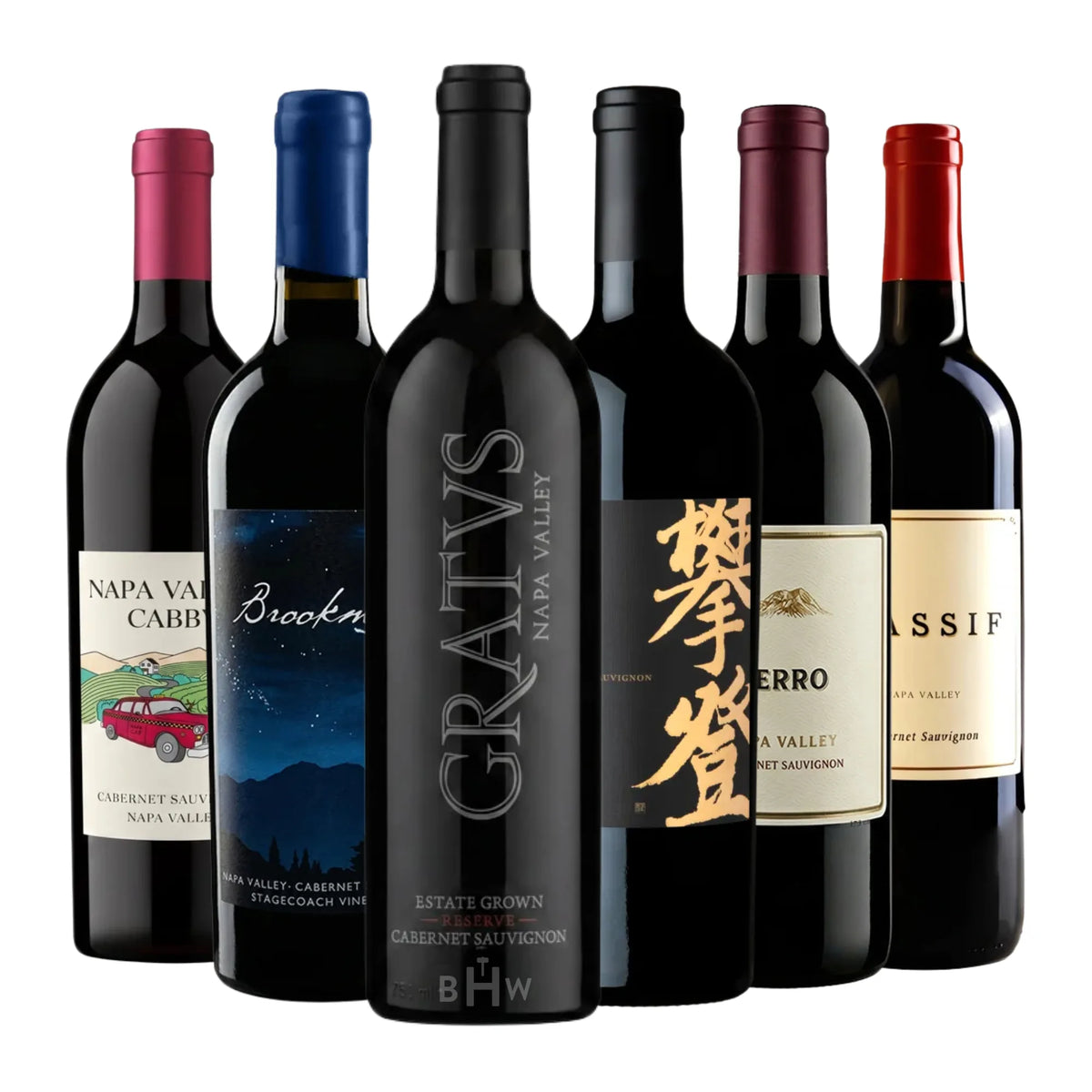
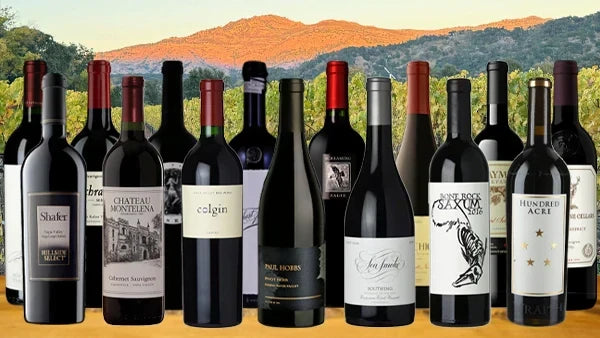
Ready to explore? Our California collection carries our current selection. And if you are hunting a specific bottle from the region, contact us for a quote - we source wine globally, with a 12-bottle minimum on special orders.



Shop Our California Collection
SHOP COLLECTIONShare:
German Wine: Riesling, Slate, and the Most Misread Labels in Wine
New York Wine: Glacial Lakes, Riesling Nerve, and the Doctor Who Proved Everyone Wrong
Comments Section