

I've spent years chasing down wine from the world's lesser-known regions, and Slovenia caught me off guard. I went in expecting a footnote and came out a convert. It's a small country with a wine history going back to Roman times, and the bottles are only now reaching the US. Here's what I found.
A Small Country at a Big Crossroads

Slovenia is about the size of Massachusetts, sitting below Austria, east of Italy, north of Croatia, and west of Hungary, with a sliver of coastline just 29 miles long.
For such a small place, it has mattered out of all proportion to its size. These crossroads changed hands over the centuries from the Romans to the Austro-Hungarian Empire, and in the twentieth century as part of Yugoslavia.
If you've spent time in Austria, a lot of Slovenia will feel familiar. Its modern chapter began in 1991, when it declared independence, and it has moved fast since.
Why Slovenian Wine Is Worth Seeking Out
The wine was one of the biggest surprises of the trip. Slovenian bottles are only starting to trickle into the US, but they're well worth seeking out.
Between the pull of the Julian Alps and a cool continental climate, the wines have a real tension to them: crisp, mineral, and alive. (Slovenian oak, for what it's worth, is prized by cellars across Europe.) The country has three main wine regions, each with its own terroir.
Primorska
In the west near the Italian border, Primorska's Mediterranean climate suits both international grapes, Chardonnay, Sauvignon Blanc, and Pinot Noir, and locals like the red Teran. The wines are bright and mineral, with real aromatic complexity. The star is Rebula (known in Italy as Ribolla Gialla), a native white with green apple, citrus, and herbs. Aged in oak, it turns rich and creamy, and it pairs beautifully with seafood, white meats, and soft cheeses.

Podravje
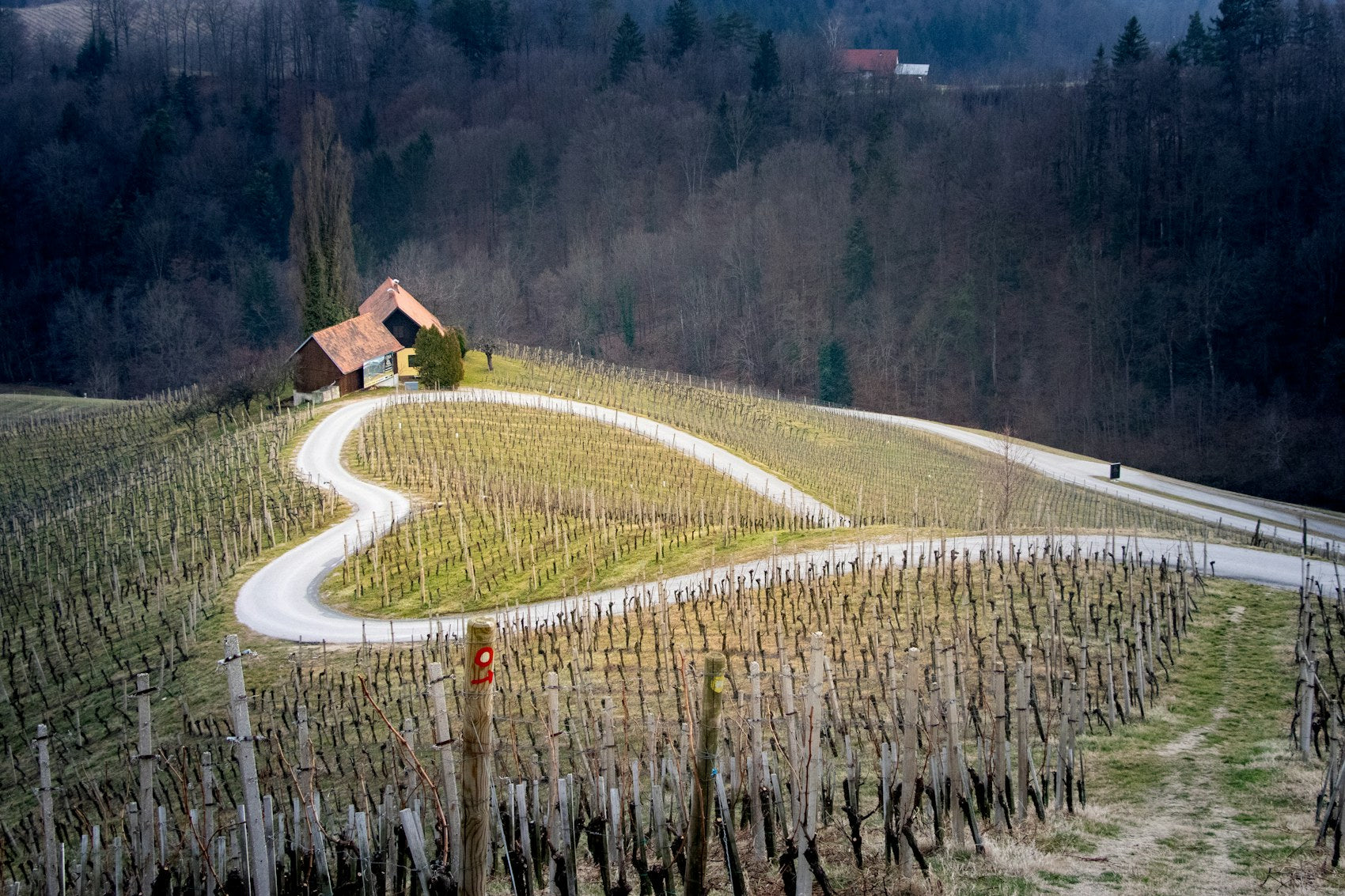
Head east and you reach Podravje, cooler and hillier, and home to the oldest producing grapevine in the world, over 400 years old and still bearing fruit, in the city of Maribor. The grapes here are mostly indigenous, and the wines have real character and depth. The signature is Laški Rizling, and here's a myth worth busting: despite the name, it is not true Riesling. Laški Rizling is Welschriesling, a different grape entirely. It makes bright, high-acid whites with green apple, lemon, and a touch of honey, good with spicy Asian food, roast pork, and poultry.

Posavje
In the southeast near the Croatian border, Posavje leans to reds like Blaufränkisch (locally modra frankinja) and Zweigelt, with ripe fruit, fuller body, and firm tannins, and a lot of Austrian character in the wines and styles. Its calling card is Cviček, a light, low-alcohol blend of red and white grapes, tart with sour cherry, red currant, and wild strawberry. It's made for traditional Slovenian food: sausage, roast meat, and sauerkraut.

The Smaller Regions Worth Knowing
Beyond the big three, a couple of smaller regions are worth your attention. The Vipava Valley makes crisp whites from the native Zelen and Pinela. And Goriška Brda, right on the Italian border, with some vineyards straddling both countries, turns out rich, complex whites from Rebula, Sauvignonasse (also called Sauvignon Vert or Friulano), and Chardonnay.
How Slovenia Makes Its Wine
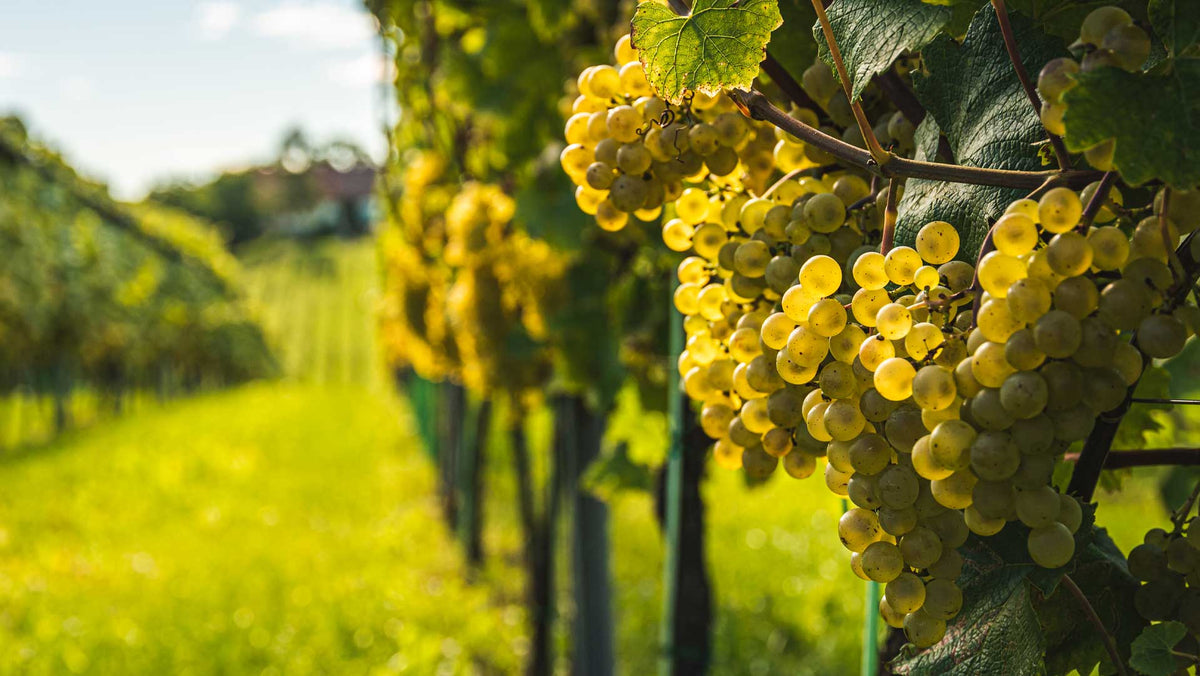
Slovenian winemaking sits comfortably between tradition and innovation. Many growers farm organically or biodynamically for the best possible fruit, then use stainless steel and temperature control to keep the wines fresh and precise.
The Bottom Line
Slovenia rewards a little curiosity. The terroir is distinctive, the native grapes are unlike anything else, and the wines are only starting to reach US shelves. If you like getting ahead of the curve, this is a good place to start.
We taste thousands of wines a year looking for quality and value. When a Slovenian bottle clears our bar, it earns a spot on the shelf.
Quick Answers: Slovenia Wine
Is Slovenian wine any good?
Yes, and it's one of Europe's better-kept secrets. Slovenia makes crisp, mineral whites and structured, savory reds with real character, and only a small amount reaches the US, so the good bottles are worth seeking out.
What are Slovenia's main wine regions?
Three: Primorska in the west (Mediterranean climate, home to Rebula and Teran), Podravje in the east (cooler whites, including Laški Rizling), and Posavje in the southeast (lighter reds and Cviček). Smaller regions like the Vipava Valley and Goriška Brda are worth knowing too.
Is Laški Rizling the same as Riesling?
No. Despite the name, Laški Rizling is not true Riesling; it's Welschriesling, a different grape. It makes bright, high-acid whites with green apple, lemon, and a touch of honey.
What is Cviček?
Cviček is a light, low-alcohol wine from Slovenia's Posavje region, made from a blend of red and white grapes. It's tart and refreshing, with sour cherry and red currant flavors, and it's a classic match for hearty local food.







Shop Our Slovenia Collection
SHOP COLLECTIONShare:
PIWI Wines: The Future of Wine?
A Guide to Age-Worthy Italian Wines
Comments Section