

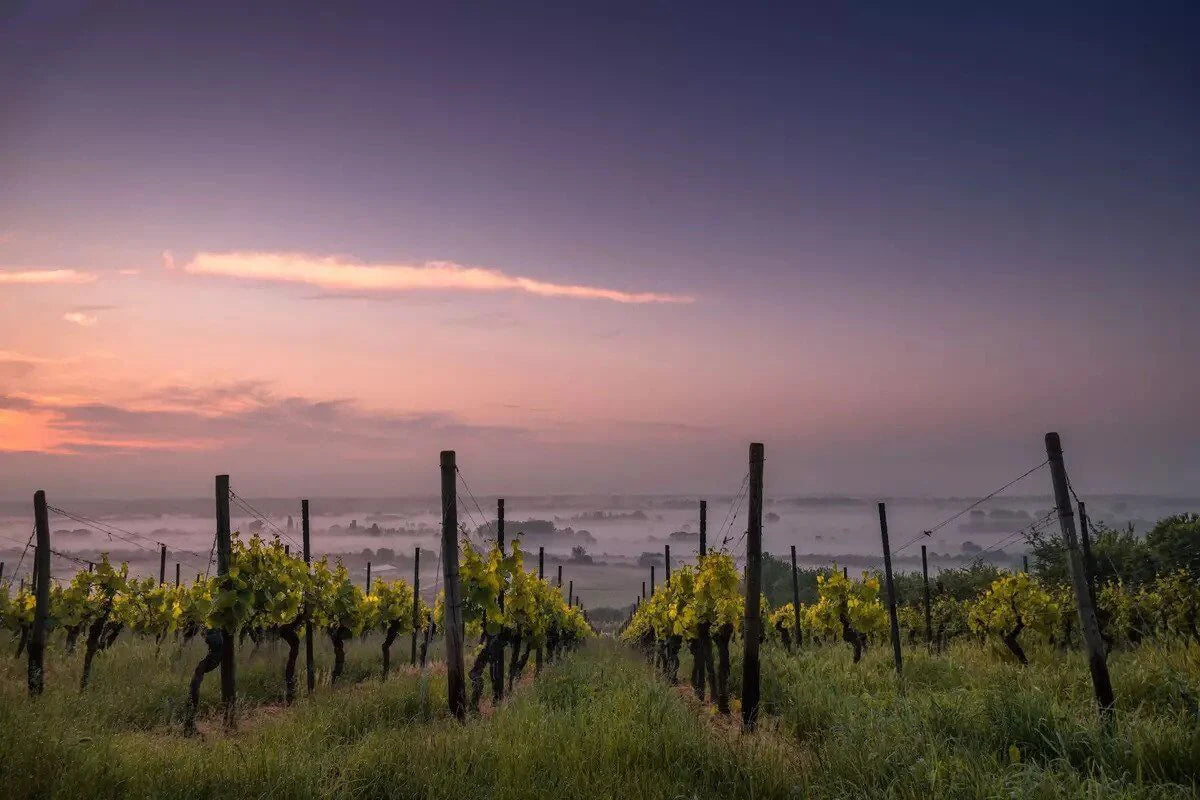
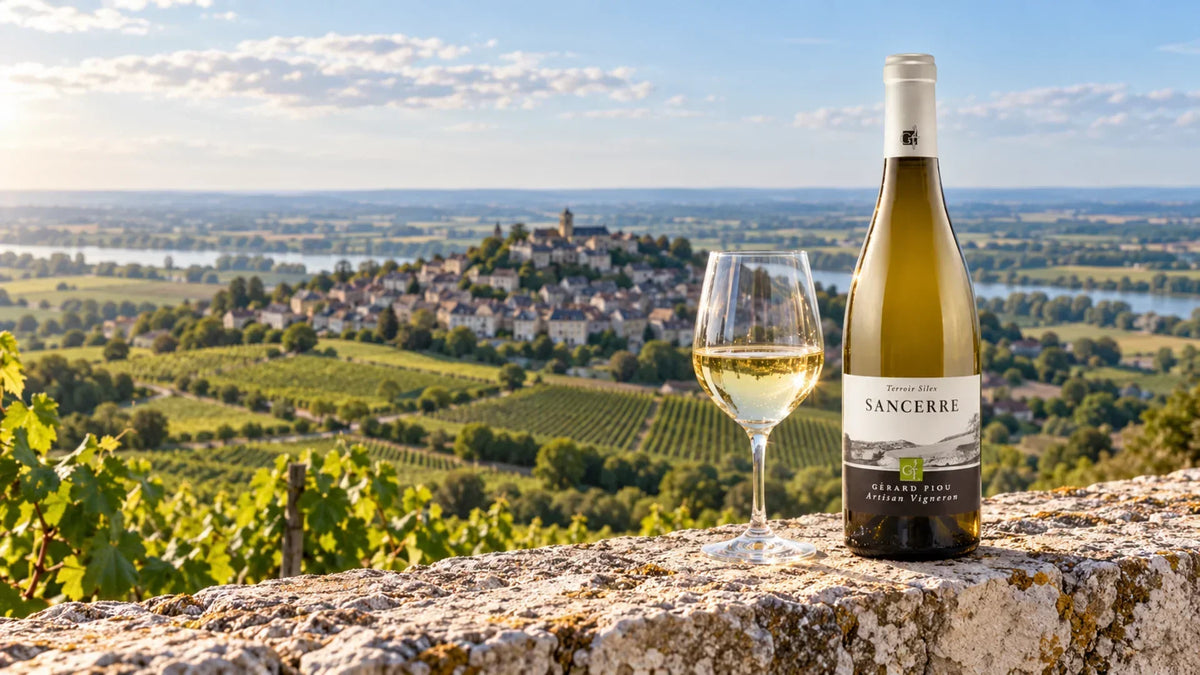
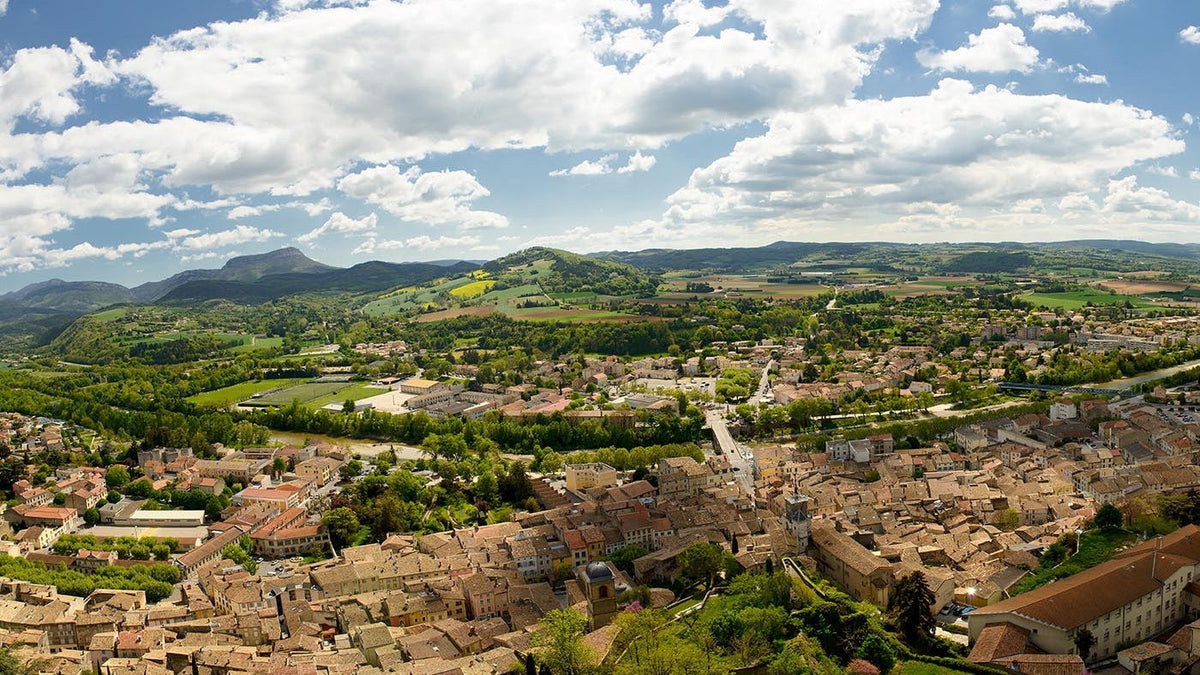
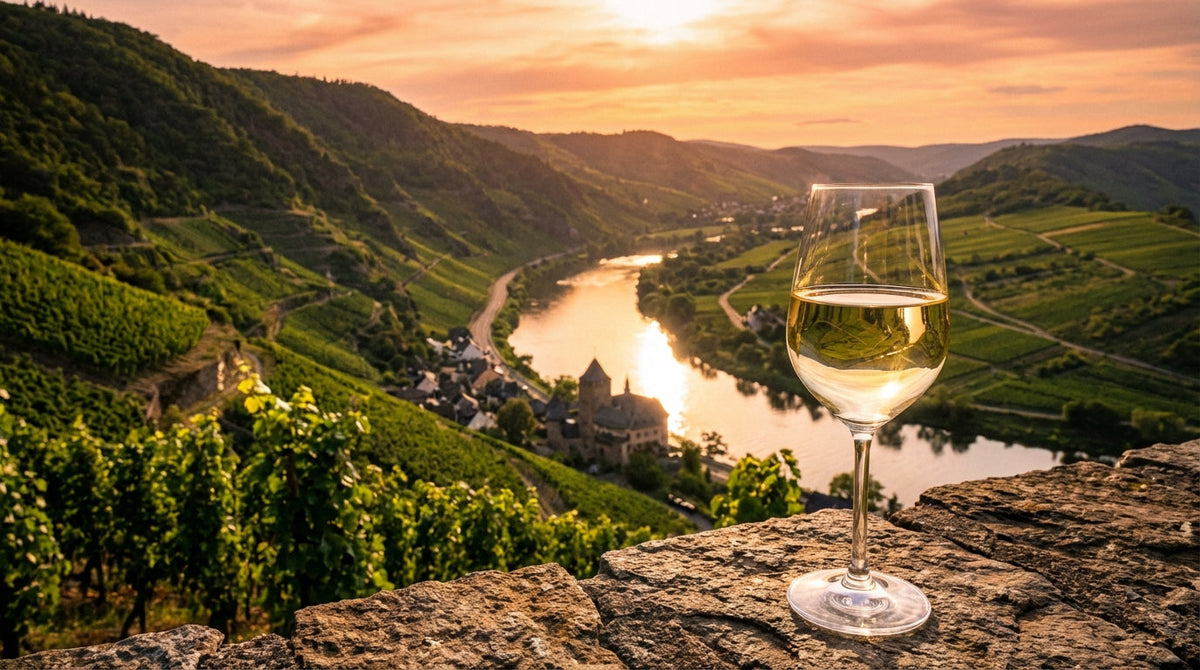
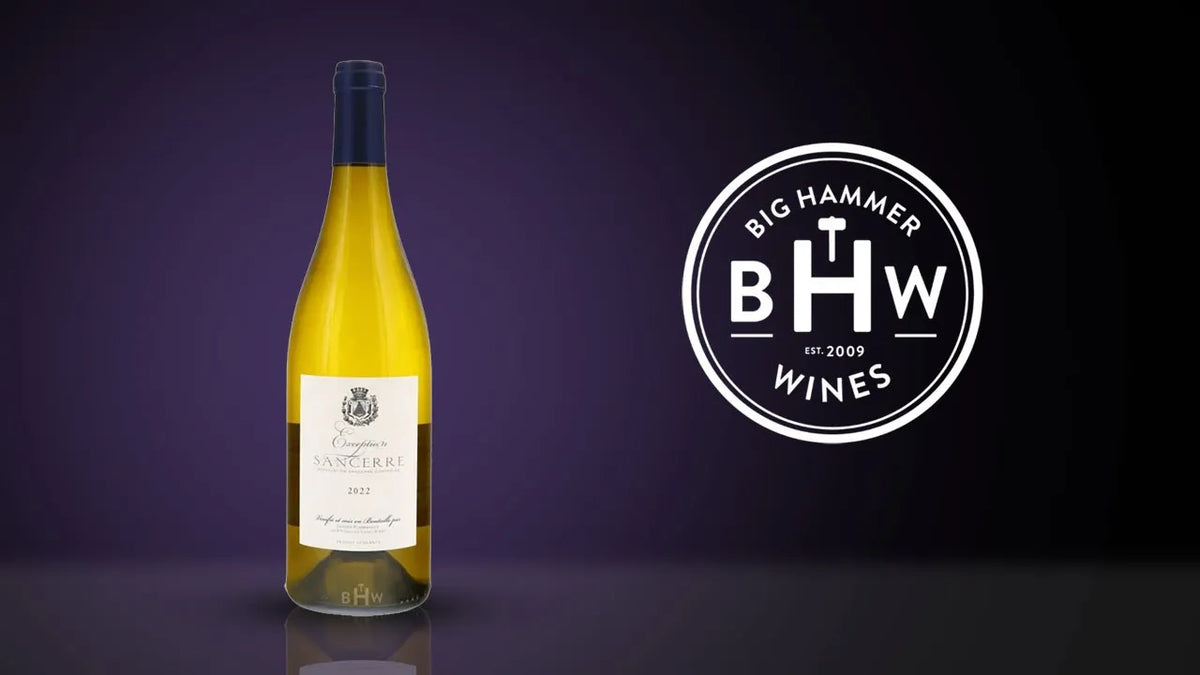
Sancerre is a French white wine made entirely from Sauvignon Blanc, grown on limestone and flint hillsides above the Loire River in eastern France. It is always dry, high in acid, and built around a stony, citrus-driven core rather than tropical fruit. Sancerre also produces red and rosé from Pinot Noir. Expect to pay $35–$50 a bottle.
Pronounce it: sahn-SEHR. Two syllables, stress on the second, and the final "re" is barely there. Nobody in the Loire says "san-CARE-ay."
You had a glass somewhere good. It was crisp without being sour, it smelled like a wet stone and a grapefruit had an argument, and it made the food taste better. Then you saw the price on the list and wondered what you were actually paying for.
Here's the honest version — what Sancerre is, why it costs what it costs, and which bottles I'd hand you.
Key Takeaways
- Sancerre is a place, not a grape. White Sancerre is always 100% Sauvignon Blanc; the name refers to the appellation in France's Loire Valley.
- It is always dry. There is no sweet Sancerre. Dryness is written into the appellation rules.
- Red and rosé Sancerre exist and are made from Pinot Noir. White is 82% of production, red 11%, rosé 7%.
- Three soil types define the style: Terres Blanches, Caillottes and Silex — and you can taste the difference between them.
- Roughly 3,000 hectares and 330 producers make Sancerre — small enough that demand, not marketing, sets the price.
Is Sancerre a Sauvignon Blanc?

Yes — and this is the single most common point of confusion, so let's kill it cleanly.
Sauvignon Blanc is the grape. Sancerre is the place. Every bottle of white Sancerre is made from 100% Sauvignon Blanc, but not every Sauvignon Blanc is Sancerre. Only wine grown inside the appellation's boundaries in the Cher department, on the left-bank hillsides above the Loire, can use the name.
That's why the label says "Sancerre" in large type and often doesn't say "Sauvignon Blanc" at all. In France, the place is the promise.
Sancerre vs. Sauvignon Blanc: What actually changes

If New Zealand Sauvignon Blanc is a shout, Sancerre is a sentence delivered quietly by someone who knows they're right. Same grape. Completely different argument.
Coming from Marlborough? Read our New Zealand Sauvignon Blanc guide for the other side of the comparison.
Why Sancerre is On Every Wine List
Ask a sommelier for a white that works with almost anything on the menu and you will get Sancerre more often than any other answer. There's a practical reason for that.
High acidity is a restaurant's best friend. It resets the palate between bites, it stands up to salt and fat, and it doesn't fight the kitchen. Sancerre also carries a name diners recognise, which means it sells — and a wine that sells stays on the list.
The result is a feedback loop: Sancerre gets poured, people like it, people ask for it by name, and the appellation's roughly 3,000 hectares can't grow to meet the demand. Small supply, wide recognition. That is most of your answer on price.
What Does Sancerre Taste Like?
Bone dry. High acid. Medium-light body. But the useful answer is more specific than that.
Expect grapefruit and lemon zest first, then white flowers, then something harder underneath — chalk, gunflint, wet river stone. Good Sancerre finishes long and clean rather than fruity, and the texture is taut, like a wire pulled straight. It should never feel heavy, sweet, or oaky.
Young Sancerre (1–3 years) drinks bright and nervy. Give a serious bottle 4–6 years and the citrus softens into something closer to honeyed lemon while the mineral spine stays put.
The Three Soils — and How to Taste Them
This is where Sancerre stops being a generic white wine and starts being interesting. The appellation officially recognises three soil types, and each one leaves a fingerprint.
- Terres Blanches ("white earth") — Kimmeridgian clay-limestone marl on the western slopes, the same fossil-rich seam that runs up to Chablis. Gives the broadest, most textural Sancerre. Needs the most time.
- Caillottes — shallow, stony limestone gravel around Bué and Verdigny. Gives the most immediately charming style: floral, fast, drink-it-now.
- Silex (flint) — siliceous soils on the eastern side, toward Saint-Satur and the river. Gives the tightest, smokiest, most age-worthy wine. This is where the "gunflint" cliché comes from, and for once the cliché is earned.
Try this: buy one bottle from each soil, open all three on the same night, same glass, same temperature. It is the single fastest way to understand terroir without getting on a plane — and it's the reason we stock across all three rather than picking one house style.

Wait — there's Red Sancerre?
Yes, and it's the best-kept secret on this list.
Sancerre isn't only white. The appellation also makes red and rosé, both from Pinot Noir — the same grape as Burgundy, grown on the same limestone, an hour's drive west. By the appellation's own figures, production breaks down as 82% white, 11% red, 7% rosé.
Red Sancerre is light, bright and red-fruited, closer to a cool-climate Burgundy than to anything Californian. Serve it with a 20-minute chill. Most Americans have never had one, mostly because so little of it leaves France — the whites pay the bills, so the whites get exported.
If you already like village Burgundy, this is your next rabbit hole.

Is Sancerre Dry?
Always. Every white Sancerre is a dry wine — fermented to dryness, with the perception of crispness coming from acidity, not sugar. If a wine tastes sweet and says Sancerre on the label, what you're reading is ripe fruit character, not residual sugar.
What to Pair with Sancerre
- Goat cheese — the regional classic. Chavignol, a village inside the appellation, gives its name to Crottin de Chavignol. Local wine, local cheese, several centuries of practice.
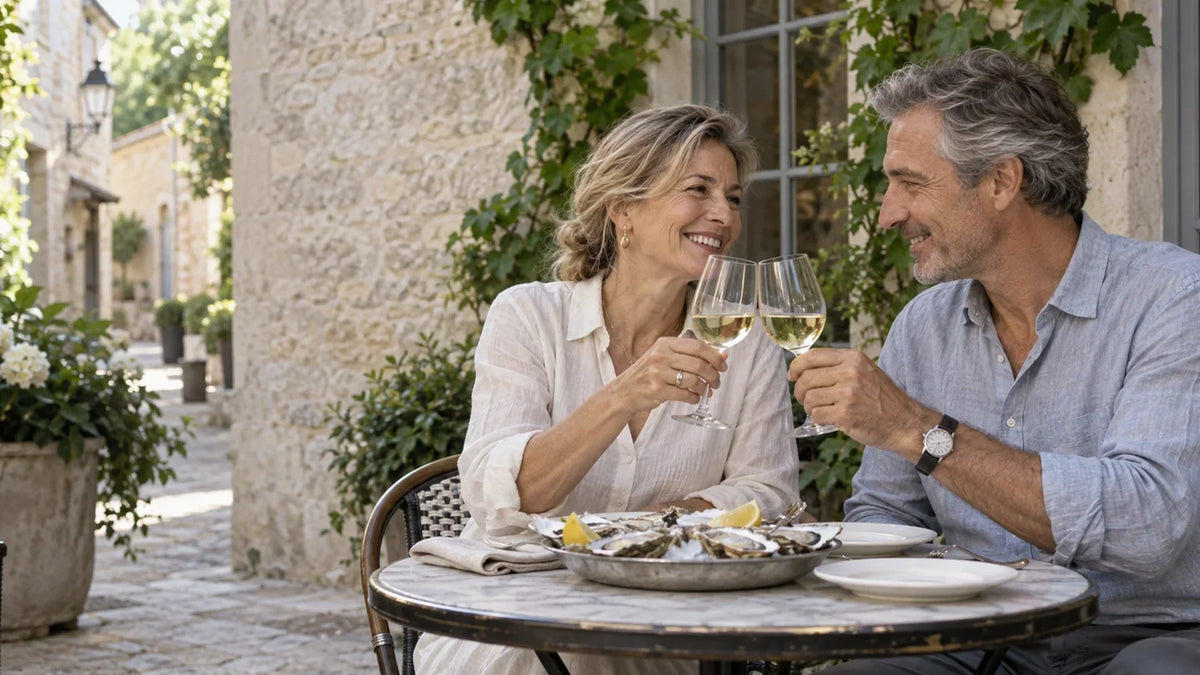
- Oysters and raw shellfish — the acid does the work a lemon wedge does, only better.
- Herb-forward dishes — anything with dill, tarragon, chives, or a green sauce.
- Fried food — fish and chips with Sancerre. I'd put it up against any Champagne pairing, and nobody talks about it.
- Sushi and ceviche — clean, cold, high-acid.
Serve at 45–50°F. Too cold and you mute the minerality; too warm and the acid turns sharp.

Which Sancerre Should You Buy?
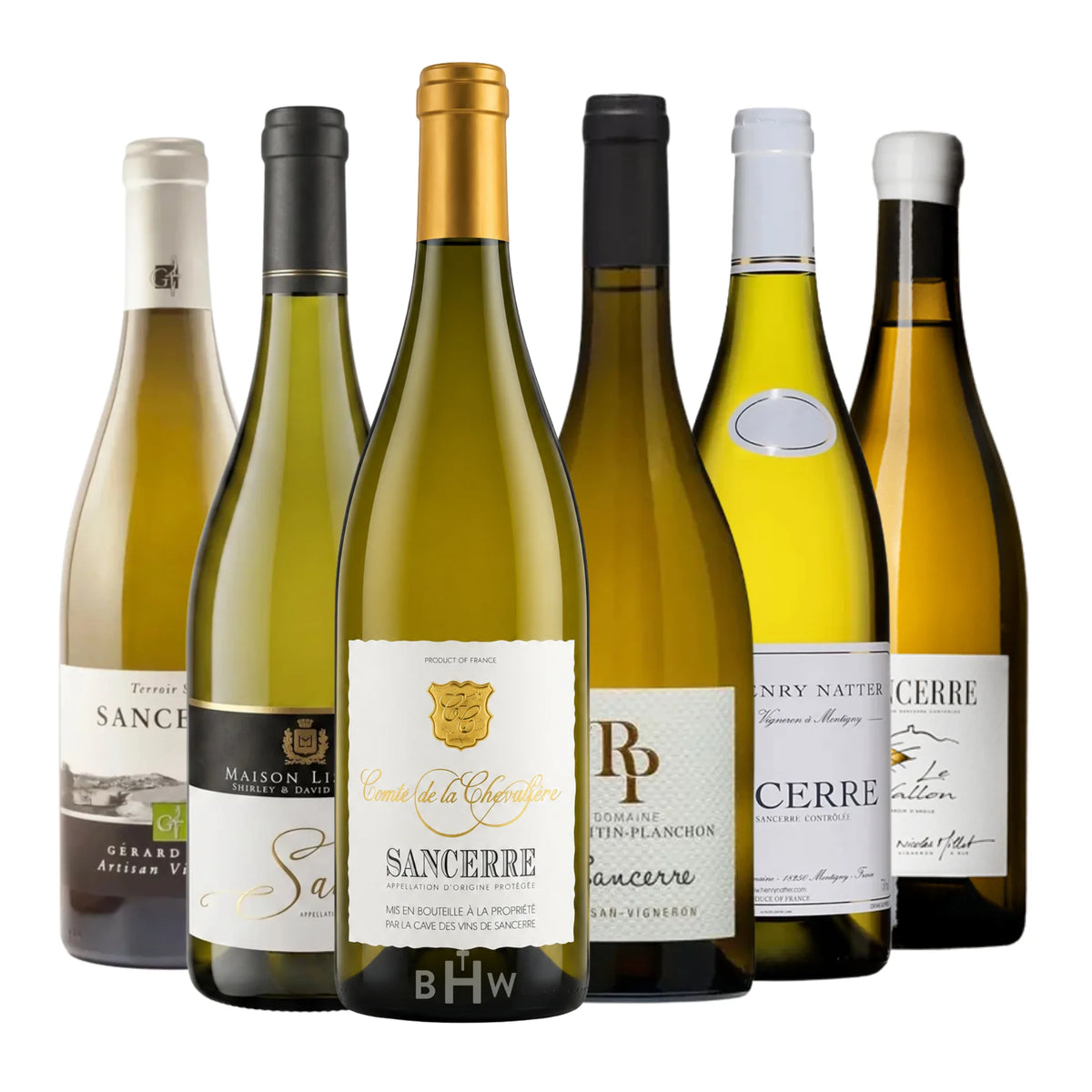
One bottle per soil, plus the red. That's the whole framework — everything else we stock is on the Sancerre collection page.
2025 Domaine Gerard Fiou Sancerre 'Terroir Silex' — $36.99
Old Sauvignon vines on the flint hills of Saint-Satur, from a family domaine working under 10 hectares. The winemaker trained at Vérité, Zuccardi and Clos Henri. If you want to understand what "silex" means in a glass, this is the shortest route.
2025 Famille Natter Les Terres Blanches Sancerre — $39.99
The only estate in the village of Montigny, family-run since 1974. Fermented in foudre and held six months in big old casks, which gives it a breadth most Sancerre doesn't have.
2025 Nicolas Millet Sancerre Les Garennes — $39.99
Ninth-generation grower on vineyards documented back to 1700, certified organic and biodynamic, 100% Sauvignon Blanc on caillottes limestone. Three centuries on the same hill is the credential.
Buy all three, and you have the terroir experiment. Same grape, same appellation, three different wines. Under $120 for the set.
2023 Henri Bourgeois Sancerre Rouge Pinot Noir, 6-pack — $249.00
Ten generations and 330 years of family winegrowing in Sancerre, certified organic, farming 70 hectares across Sancerre and Pouilly-Fumé. James Suckling gave the 2023 red 91 points and called it "juicy and vivid, elegant with a refreshing finish." Serve it cool. Watch your Burgundy-drinking friends go quiet.

I taste a lot of Sancerre, and the thing I keep coming back to is that it's one of the few wines where the price actually maps to something real — a small appellation, steep slopes, and 330 growers who can't make more of it. If you only ever buy one, make it the Fiou Silex; if you want to understand the region, buy three and line them up. And if someone tells you Sancerre and Sauvignon Blanc are the same wine, pour them the red.
Browse every Sancerre we're pouring →
New to the Loire? The Loire Valley wine guide covers the whole river, from Muscadet to Chinon.
Glossary
Sancerre — A French wine appellation in the eastern Loire Valley. Whites are 100% Sauvignon Blanc; reds and rosés are Pinot Noir.
Terres Blanches — "White earth." Kimmeridgian clay-limestone marl on the western slopes. Broader, more textural, slower to develop.
Caillottes — Shallow stony limestone around Bué and Verdigny. Floral, forward, drinks well young.
Silex — Flint. Siliceous soils on the eastern side toward the Loire. Tightest, smokiest, longest-lived.
Kimmeridgian — A fossil-rich clay-limestone seam running from the Loire through Chablis to the English coast. Linked to high-acid, mineral whites.
Pouilly-Fumé — Sancerre's neighbour on the opposite bank. Also 100% Sauvignon Blanc, typically a touch smokier and rounder.
FAQ
1. What is Sancerre wine?
A French appellation in the eastern Loire Valley. White Sancerre is 100% Sauvignon Blanc — always dry, high-acid, mineral-driven. Red and rosé are made from Pinot Noir.
2. Is Sancerre a Sauvignon Blanc?
Yes. Sancerre is the place; Sauvignon Blanc is the grape grown there.
3. How do you pronounce Sancerre?
Sahn-SEHR — stress on the second syllable, final "e" nearly silent.
4. Is Sancerre dry or sweet?
Always dry. Its crispness comes from acidity, not residual sugar.
5. What is the difference between Sancerre and Sauvignon Blanc?
Sancerre is one French appellation; Sauvignon Blanc is a grape grown worldwide. Sancerre runs restrained and mineral where New Zealand runs tropical and aromatic.
6. Is there red Sancerre?
Yes — Pinot Noir, about 11% of production, with rosé at 7% and white at 82%.
7. Why is Sancerre expensive?
Roughly 3,000 hectares, about 330 producers, and every restaurant list in the world wants it. Small supply, wide recognition — $35–$50 a bottle.
8. What food goes with Sancerre?
Goat cheese first, especially Crottin de Chavignol. Then oysters, raw shellfish, sushi, ceviche, herb-driven dishes, and fried fish.












Share:
Love Caymus? 12 Napa Cabernets That Deliver the Same Lush Style for Less
The 10 Best Italian Red Wines to Buy Right Now, Picked by an Italian Wine Ambassador
Comments Section