

No. Wine is shrinking, not dying. U.S. wine sales slipped about 2% by volume and 1.6% by value in 2025, to roughly 329 million cases and $74.3 billion, according to Silicon Valley Bank's annual industry report. Most of the loss sits in wines under about $12. Off-premise sales of bottles at $15 and up fell only about 1% in volume, per NielsenIQ data analyzed by Terrain.
The "wine is dead" story comes around every few months, and the numbers under it are real. The conclusion people draw from them is where it goes wrong. I made a video about exactly that.
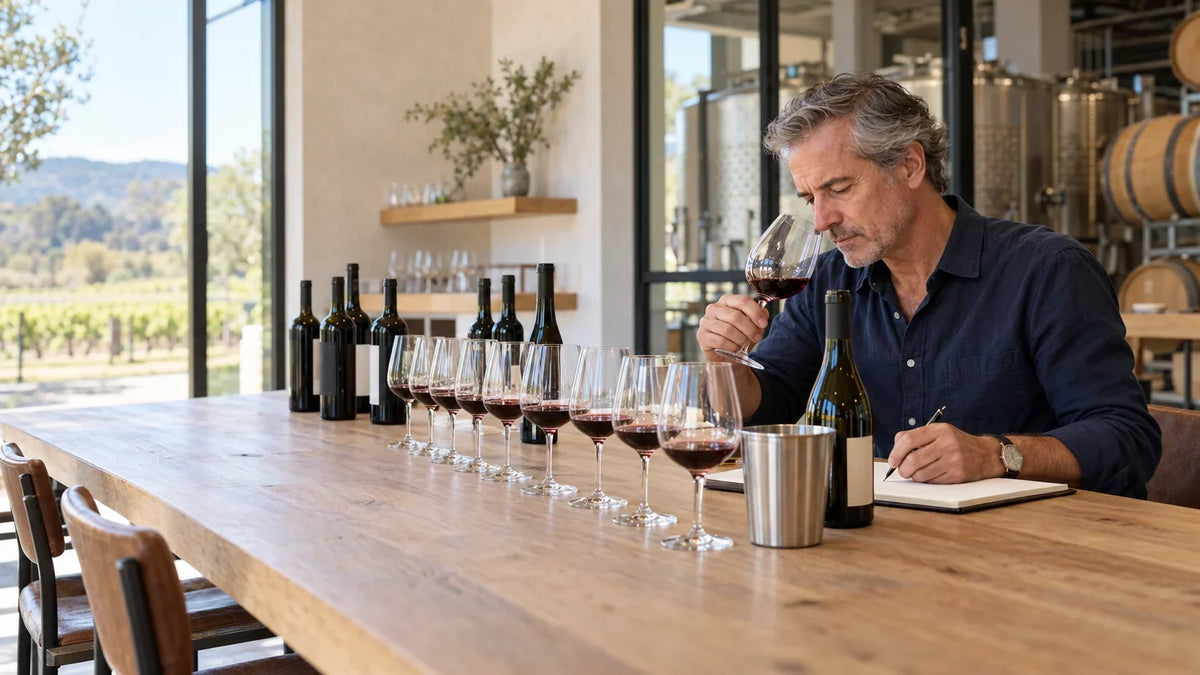
I taste about 5,000 wines a year and buy roughly 4% of them, so I read this market from the buying side. Read that way, the data tells a very different story from the headlines.
What the Headlines Get Right
Americans are drinking less. Gallup has asked the same question since 1939, and in both 2025 and 2026 just 54% of U.S. adults said they drink alcohol. That is the lowest reading in the survey's history.
Attitudes moved with it. In 2026, 51% of Americans told Gallup that one or two drinks a day is bad for your health. In 2001 that figure was 27%. The health messaging changed, and the surveys show people heard it.
Wine felt all of this. Silicon Valley Bank estimates the U.S. sold about 329 million cases of wine in 2025, down from 410 million in 2019. Worldwide, the International Organisation of Vine and Wine puts 2025 consumption at 208 million hectoliters, about 14% below 2018. Alcohol-free drinks are growing from a small base, too: NielsenIQ put U.S. non-alcoholic sales at $823 million in 2024, up 27%. I took on that category in Is Alcohol-Free Wine Actually Wine?
I'm not going to argue with any of that. The question is what it means.
Where the Decline Actually Lives
"People are drinking less" and "wine is dying" are different claims, and the sales data separates them cleanly.
Silicon Valley Bank's 2026 report calls the downturn a multi-year correction driven largely by value wines under about $12. NielsenIQ data analyzed by Terrain shows the same split from the retail side. In 2025, off-premise wine sales fell 6% in volume across all prices, while bottles at $15 and over slipped by about one percentage point.
NielsenIQ's analysts point to wines between $15 and $30 as outperforming the category, and they describe the $20 bottle as the price retailers now treat as the sweet spot. Among wineries the gap is just as wide. SVB found its top-quartile wineries still growing through the contraction while the bottom quartiles struggled.

Put those lines next to each other and the shape is obvious. The market is not shrinking evenly. The bottom of the shelf is losing ground fast, while the middle and upper tiers are holding close to level. A dying product doesn't behave like that. A product whose customers got pickier does.
Drinking Less, Choosing More Carefully

My read is simple. When people drink less, each bottle has to earn its place, so the money moves up the shelf. Someone opening wine twice a week instead of five times is going to care more about what's in the glass.
Gallup's numbers point the same way. A record-low 13% of Americans now say they sometimes drink more than they should. That is a more deliberate drinker, and the price-tier data suggests that drinker is trading up rather than walking away.
What the Glut Means for Your Next Bottle
The headlines rarely get to the buyer's side of this. When demand falls faster than vineyards can be pulled out, good fruit and finished wine go looking for buyers.
SVB says the U.S. is still overplanted in most regions and expects more uncontracted fruit and lower spot-market grape prices in 2026. Terrain reported that the 2025 harvest was expected to come in under 2.5 million tons, which would be the smallest of this century, and even that light crop was more than the market could absorb.
For a merchant, that changes every negotiation. Producers who held firm on price a few years ago are open to a conversation now, and a good buyer can pass that on. From where I sit, a glut is the best news a wine drinker can get. If you want to see how a bottle's price gets built in the first place, I broke down the math in Why Wine Costs What It Does.
How to Read the Next "Wine Is Dead" Headline
- Volume or value? Case counts fall faster than dollars when people trade up. SVB had 2025 volume down 2% and value down 1.6%.
- Which price tier? A story about the whole category is usually a story about the bottom of it.
- Survey or sales data? Gallup measures what people say they do. NielsenIQ and SipSource track what moved through stores and distributors. Both are useful, and they answer different questions.
- Which market? Global totals swing on a few big countries. The OIV named China, France and the U.S. as the largest drags on 2025 consumption.
FAQ
Is wine dying?
No. U.S. wine sales fell about 2% by volume in 2025, and the losses are concentrated in bottles under about $12. Wines at $15 and above held close to flat, and Silicon Valley Bank expects the market to bottom out around 2027 to 2028 before modest growth returns.
Why are Americans drinking less wine?
Gallup ties the drop to changing views on health: a majority of U.S. adults now say moderate drinking is bad for you. The OIV and SVB also point to higher prices and generational shifts in how people drink.
Are younger people drinking wine?
Less than earlier generations did at the same age. Gallup reports that adults 18 to 34 are less likely to drink than young adults were in prior decades, and SVB's 2026 report urges wineries to rethink how they reach younger buyers.
Why is there a California wine surplus?
Americans are buying less wine, and vineyards can't be pulled out as fast as demand falls. California grows most of America's wine, so that is where the extra grapes and unsold wine pile up. SVB says the U.S. is still overplanted in most regions and expects more uncontracted fruit in 2026, and Terrain reported that even the light 2025 harvest was more than the market could absorb. For a buyer, a surplus means room to negotiate on serious wine. The bottles where we got that room show up in our BHW Deals collection.
Will wine get cheaper?
Grape prices are under pressure. SVB expects more unsold fruit and lower spot-market prices in 2026. How much of that reaches the shelf depends on who is doing the buying, but it gives retailers more room to negotiate.
Is expensive wine still selling?
Better than cheap wine. In NielsenIQ data for 2025, off-premise sales of bottles at $15 and up fell about 1% in volume, against a 6% drop for wine overall.
Fewer Bottles, Better Bottles
I've been in this trade for more than 25 years, and I don't read these numbers as an obituary. I read them as a market sorting itself out. The person opening fewer bottles wants each one to be worth it, and that is exactly the customer a good merchant wants.
If you're drinking less, make the bottles count. Shop our 90+ rated wines.






































Share:
7 Grape Varieties to Try If You Love Cabernet Sauvignon
The Rhone in 6 Bottles: Chateauneuf-du-Pape and Its Neighbors
Comments Section