


By Greg Martellotto, Big Hammer Wines
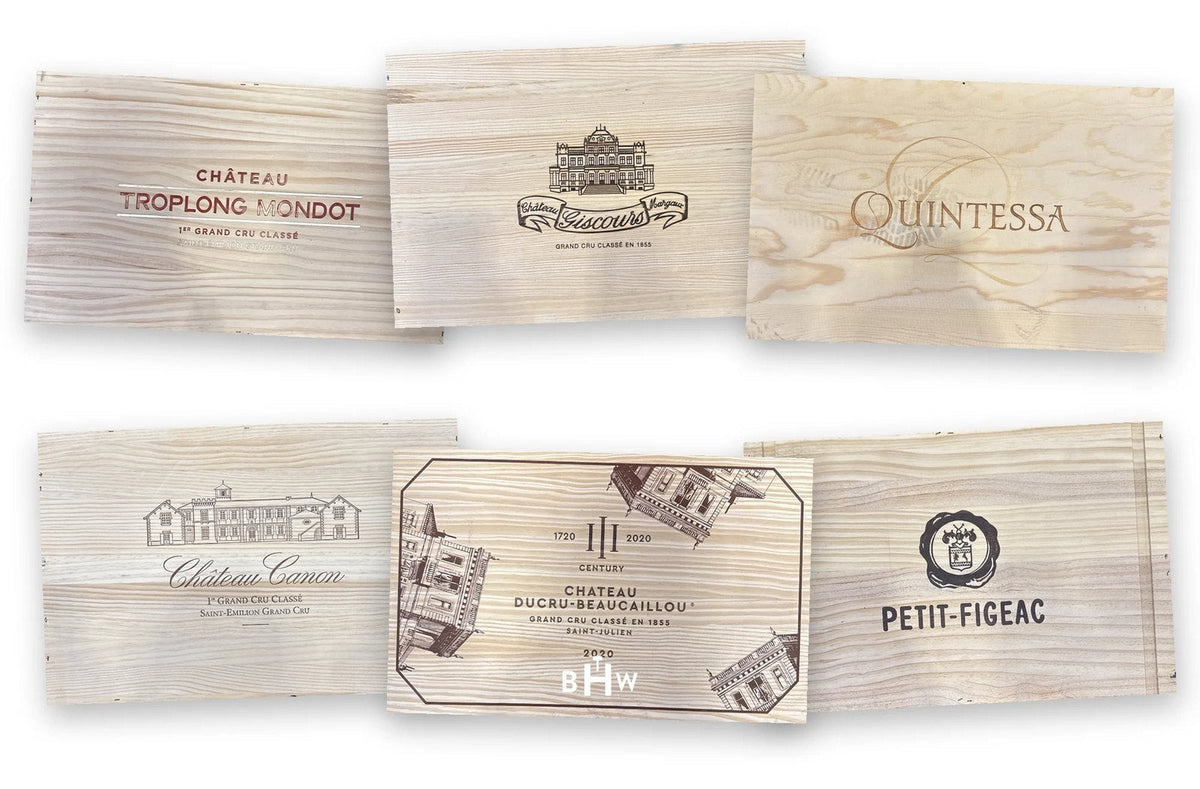
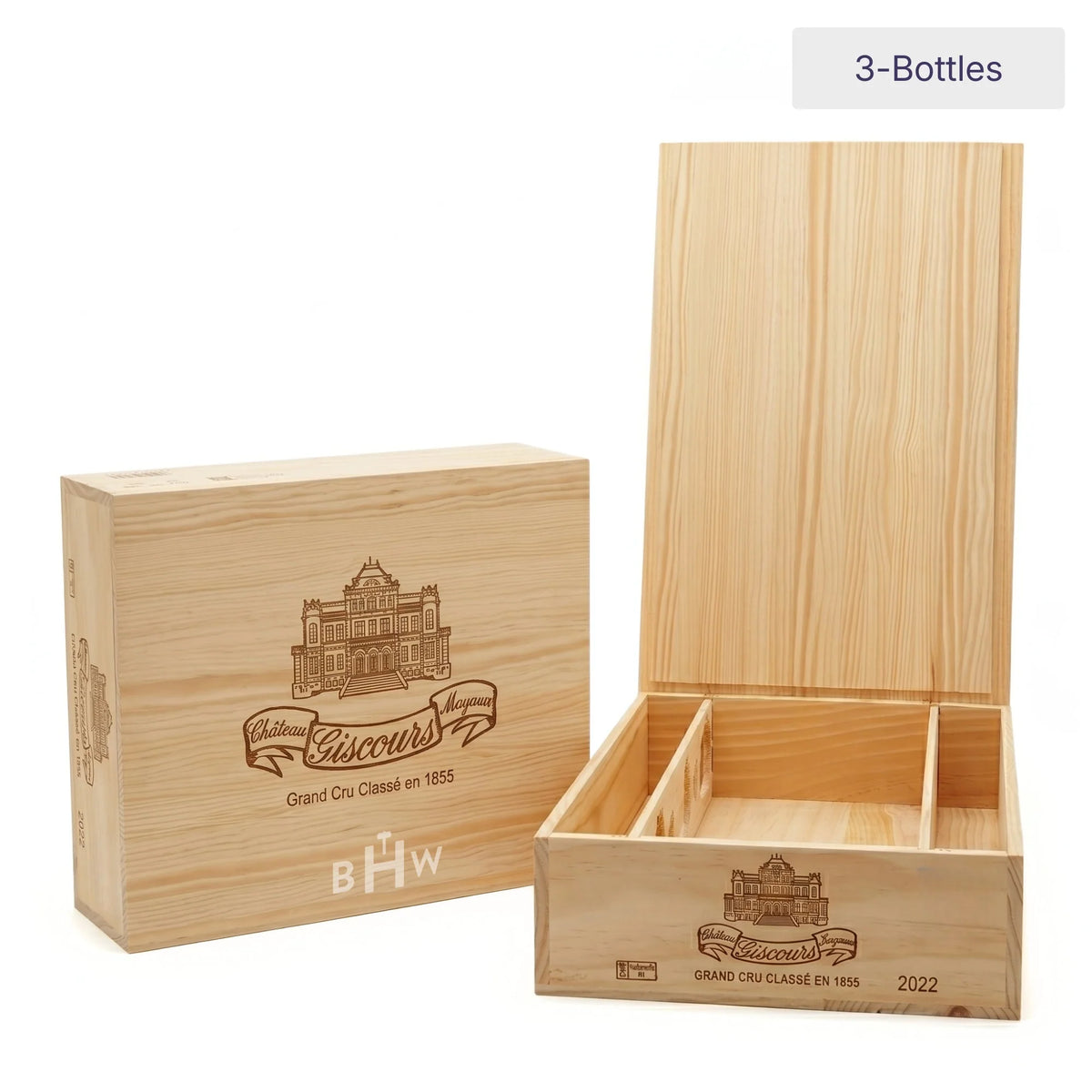
The best-looking wood in a wine shop is the box the wine came in. Top Bordeaux châteaux, Tuscan estates and Napa wineries still ship their best bottles in wooden cases, branded on the lid with the estate's crest, its name and often the vintage. Collectors have a name for it: OWC, original wooden case. Once the bottles are out, the lid and the sides are a ready-made piece of décor with real provenance. Here are 15 ways to use them, the sizes you'll be working with, and how to prep and hang the wood.
What You're Working With
A wine case breaks down into a branded lid and plain or lightly branded sides. Lids come in three sizes depending on the case, and the long sides make a fourth, narrow piece. All of it runs ¼" to ½" thick.
| Small lid | from a 1-bottle case | about 13–14" × 3.5–4" |
| Side panel | the long side of a case | about 20" × 6.5–8" |
| Medium lid | from a tall 6-bottle case | about 13.5" × 11.5" |
| Large lid | from a 12-bottle or flat 6-bottle case | about 20" × 13–14" |

These are used pieces. Every one comes off a case that has already shipped wine, so expect nail holes, ink stamps, shipping marks and, now and then, an original nail or staple still in the wood. Wear gloves and check the back before you start.
On the Wall
1. One statement lid over the bar cart
A single large lid from a famous estate does more than a framed print ever will, because it's the real thing. Hang it at eye level above the bar cart or the wine fridge and let it carry the corner.

2. A gallery wall of mixed estates
Mix Bordeaux, Tuscany and Napa on one wall. A large lid covers about 1.8 square feet, so a dozen fill roughly a 4' × 5' wall. Lay them out on the floor first, swap until no two neighbors share a color or a font, then hang.
3. A full wine wall behind the bar
Tile large lids edge to edge, staggered like brick, and fill the ends with side panels cut to length. It turns a plain drywall wall into the focal point of a home bar or tasting room.
4. The cellar stairway
Line the wall down to the cellar with lids at eye level, one every step or two. Guests read the estates on the way down, which is half the fun of a cellar visit.
5. A birth-year or anniversary lid
Many lids carry the vintage. A lid stamped with the year someone was born or married makes a gift nobody else thought of, and it costs less than the bottle that came in it.

In the Bar and Cellar
6. Clad a bar front with side panels
Side panels are long and narrow, so they run horizontally like shiplap. Glue and pin them across the front of a bar or a kitchen island for a wine-country finish.
7. Cellar rack signs
A small lid from a 1-bottle case is the right size to label a section of your racking: Bordeaux, Napa, Tuscany, Drink Now. Screw it to the rack end or hang it from a hook.

8. Shelf-edge trim
Cut side panels to the length of an open shelf and fix them along the front edge. The winery marks peek out under the bottles.
9. A tasting-night menu board
A medium lid makes a sturdy little sign. Paint the plain back with chalkboard paint for the evening's pour list, then turn the branded face out the rest of the time.

In Furniture
10. Drawer fronts
Medium lids fit many dresser and sideboard drawers. Glue and screw a lid from the inside of a plain drawer front for a piece that looks custom-built.
11. Cabinet door panels
Set lids into the frame of a frame-and-panel door in place of the plain center panel. A run of cabinet doors, each from a different estate, makes a kitchen or wet bar.
12. A tabletop under glass
Lay a mix of lids across a coffee table or dining table and top them with a sheet of glass. The wood stays protected and the names stay on show.
13. A headboard
Four to six large lids side by side on a wall cleat make a headboard for a guest room, and a good story for whoever sleeps there.
Small Projects and Gifts
14. Coasters and trivets
Cut side panels into 4" squares, sand the edges, seal the faces and stick felt pads underneath. A set of four from different estates is an easy host gift.

15. A serving board or tray
Add two handles to a large lid and it becomes a serving tray for glasses and cheese. If food will touch the wood, finish it with a food-safe oil or wax, or keep food on a board or plate on top.
How to Prep and Hang the Wood
- Pull the metal first. Remove any nails or staples with end nippers or pliers before you sand, cut or hang.
- Sand the edges, not the face. A light pass with 120-grit on the edges takes out splinters; leaving the face alone keeps the stamps and the patina.
- Finish lightly, or not at all. Raw wood looks most authentic on a wall. For coasters, trays or anything handled, use a matte clear finish, and test it on the back first, because some ink stamps can run.
- Hang with short screws. Two D-rings or a sawtooth hanger on the back, with screws shorter than the wood is thick so they don't come through the face.
- For a wall of lids, use a French cleat, or construction adhesive plus a few brad nails into the studs.
- Cut with a fine-tooth blade. The wood is thin and can split; tape the cut line to keep the edge clean.
Where to Get Real Wine Crate Wood
Ours come off the wooden cases our wines arrive in, taken apart by hand once the bottles are out. You buy by size and we fill from the current mix of estates, so no two orders look alike. Want a particular winery? Ask in your order note and we'll match it if one is on the shelf.
- Small lid, about 13–14" × 3.5–4"
- Side panel, about 20" × 6.5–8", $5 each
- Medium lid, about 13.5" × 11.5"
- Large lid, about 20" × 13–14"
Lids are $10 each, and packs of 6, 12, 18 and 24 bring the price down to as little as $6 a lid. They ship at a flat rate by how many pieces you order and never ship free.
Shop wine crate lids and panels
Want the whole case? Our guide to wooden wine boxes and crates covers sizes, 20 more ways to use them and where to buy real ones.
Quick Answers: Wine Crate Lids and Panels
What is a wine crate lid?
The top of the wooden case a winery ships its bottles in. It usually carries the estate's name, crest and often the vintage, branded or printed on the wood.
What is a wine crate side panel?
One of the long sides of the same case. It is narrower than a lid, about 20" × 6.5–8", and often plain or lightly marked.
What sizes do wine crate lids come in?
Three: about 13–14" × 3.5–4" from a 1-bottle case, about 13.5" × 11.5" from a tall 6-bottle case, and about 20" × 13–14" from a 12-bottle or flat 6-bottle case. All run ¼" to ½" thick.
Are the lids new or used?
Used. Each one has shipped wine, so expect nail holes, stamps and handling marks, and possibly an original nail or staple. Handle them with care.
Can I choose a specific winery?
You buy by size and we fill from the current mix. Ask for a winery in your order note and we'll match it if one is on the shelf.
How many lids do I need for a wall?
A large lid covers about 1.8 square feet, so a dozen fill roughly a 4' × 5' wall. Order a few extra to swap during layout.
How do I hang a wine crate lid?
Two D-rings or a sawtooth hanger on the back, with screws shorter than the wood is thick. For a full wall, use a French cleat or construction adhesive with brad nails.
Should I seal the wood?
On a wall, raw wood looks best. For coasters, trays or anything handled, use a matte clear finish and test it on the back first, since some ink stamps can run.
Can I cut a wine crate lid?
Yes. Use a fine-tooth blade and tape the cut line, because the wood is thin and can split.
Can I use a lid as a serving tray?
Yes, with handles added. If food will touch the wood, finish it with a food-safe oil or wax, or keep food on a board or plate on top.
How much do wine crate lids cost?
Ours are $10 a lid, down to $6 a lid in packs of 24, and side panels are $5 each.
Do lids ship free with wine?
No. Wine in the same order keeps its own shipping offer; lids and panels ship at a flat rate by how many pieces you order.
Built something with a lid from us? We'd love to see it.













































































Share:
Wooden Wine Boxes and Crates: Sizes, Uses and Where to Buy Real Ones
Wooden Wine Boxes and Crates: Sizes, Uses and Where to Buy Real Ones
Comments Section