

If you love Cabernet Sauvignon, start with its Bordeaux relatives: Cabernet Franc, Petit Verdot, Carménère, and Malbec all share Cab's dark fruit, firm tannin, and savory edge.
Then widen out to Aglianico from southern Italy, Touriga Nacional from Portugal, and Sagrantino from Umbria — three grapes that match Cab's structure with completely different aromatics. Pick based on what you actually like about Cab: the grip, the fruit, or the savory finish.
Key Takeaways
- Cabernet fans are not chasing a flavor. They're chasing a structure: firm tannin, real acidity, dark fruit, and a savory finish.
- Cabernet Franc and Petit Verdot are the two closest relatives — and both are probably already blended into the Cab you drink.
- Carménère and Malbec give you the Cabernet silhouette from regions that don't charge the Cabernet premium.
- Aglianico, Touriga Nacional, and Sagrantino match Cab's structure but change the accent entirely.
- Diagnose what you like about Cab first — the grip, the fruit, or the savory herb — then pick the grape that leads with it.
Nobody Actually Loves "Cabernet." They Love One Thing Cabernet Does.
Here's the question I get across the counter more than any other: I drink Cabernet. What else should I be drinking?
Most answers to that question are useless because they treat Cabernet as one thing. It isn't. A Napa Cab and a Left Bank Bordeaux are both Cabernet Sauvignon, and they are not the same drink. Somebody who loves cassis and cedar and somebody who loves that dry chalky grip on the finish are two different customers, and sending them both to Malbec is lazy.
So before the list, do the diagnostic. It takes thirty seconds, and it's the difference between finding a new house grape and wasting money on a bottle you don't like.
The Cab Lover's Diagnostic: Three Questions Before You Buy
Answer these honestly. Not what you think a wine person should say — what you actually reach for.
Question 1 — What's the part of Cabernet you'd miss most?
- The grip. That firm, drying, structural pull on the finish. → Go to Sagrantino or Petit Verdot.
- The dark fruit. Cassis, blackberry, plum, depth. → Go to Malbec or Touriga Nacional.
- The savory side. Tobacco, graphite, bell pepper, dried herb. → Go to Cabernet Franc or Carménère.
- The age-worthiness. You buy bottles to forget about for a decade. → Go to Aglianico or Sagrantino.
Question 2 — Do you like the oak, or tolerate it?
Be honest here. If what you love about Napa Cab is vanilla, mocha, and sweet toasty spice, that's oak, not Cabernet. You'll find that character in plenty of New World reds and almost none of the Old World grapes on this list. If you'd be happier with less of it, this list is going to be a good week for you.
Question 3 — Tonight, or in ten years?
Cabernet is a patient grape. Some of these are more patient. Sagrantino and Aglianico ask for time and they are not subtle about the request. Carménère and Malbec will pour tonight without complaint. Buy the one that matches your actual drinking habits, not your aspirational cellar.
Now the seven.
The 7 Grapes At a Glance

1. Cabernet Franc — the parent grape hiding in your glass
Start here, because you're already drinking it. Cabernet Sauvignon is a natural cross of Cabernet Franc and Sauvignon Blanc — a piece of vine genealogy confirmed by DNA work at UC Davis in the 1990s. Cabernet Franc is literally half of what you love.

What it does differently: it takes the savory, leafy, graphite side of Cabernet and moves it to the front. The fruit gets redder — currant and raspberry rather than cassis and blackberry. The tannin softens. The whole wine gets lighter on its feet without losing the frame.
Two very different versions exist and you should know the difference before you buy. Loire Cabernet Franc — Chinon, Bourgueil, Saumur-Champigny — is the leaner, herbal, mineral expression. Right Bank Bordeaux uses it as the structural backbone alongside Merlot, which gives you a rounder, riper wine.
My read: if you like Cabernet but sometimes find it heavy, Cab Franc is not a compromise. It's the same conversation at a lower volume.
2. Petit Verdot — the seasoning grape, served straight

For two centuries, Petit Verdot has been the salt in the Bordeaux blend. Two percent, five percent, rarely more. It ripens late and unreliably in Bordeaux, which is why it stayed a supporting player there — but it brings color, tannin, and a dark violet perfume that nothing else in the blend supplies.
Then people started planting it where it ripens every single year: Napa, Paso Robles, Spain, Australia. Bottled on its own, it's a revelation for anyone who likes Cabernet's architecture. Deeper color than Cab. More tannin than Cab. Blueberry and violet instead of cassis and cedar.
It is not a subtle wine, and it is not trying to be. If you've ever finished a big Cabernet and thought I could have handled more, this is the grape.
My read: this is the one I recommend when someone tells me their Cab is starting to feel tame. It fixes that in one glass.
3. Carménère — the Bordeaux grape that ran away to Chile

The best story in wine. Carménère was a major Bordeaux variety before phylloxera tore through the region between 1869 and 1880. It never came back — too hard to ripen, too prone to failure. Bordeaux moved on and effectively wrote it off.
Except it hadn't disappeared. Chilean growers had been farming it for over a century, believing it was Merlot. In 1994, a French ampelographer identified it correctly, and Chile discovered it owned a Bordeaux grape nobody else had.
In the glass, it splits the difference between Cabernet and Merlot. Black cherry and plum, a dark chocolate richness, and that unmistakable savory green note — bell pepper, soy, black olive — that Cabernet drinkers already recognize and like. Softer tannin than Cab, so it drinks well young.
Chile also grows Cabernet Sauvignon exceptionally well, which means Maipo and Aconcagua are worth walking through if this list appeals to you at all.
My read: Carménère is the shortest jump on this list. If you like Cab and you're nervous about leaving it, start here.
4. Malbec — the one you think you know

Malbec has a branding problem in reverse. It's so associated with Argentina that people forget it's a French grape with real Bordeaux history — prominent in the blend before phylloxera, then finished off in Bordeaux by the catastrophic frost of 1956. Cahors in southwest France still makes it in a dark, structured, tannic style that has nothing to do with the soft supermarket version.
For a Cabernet drinker, Malbec delivers the dark fruit almost exactly: blackberry, plum, violet. What changes is the texture. Malbec's tannin is rounder and less angular than Cabernet's. You lose some of the grip, you gain some plushness.
Where it's grown matters enormously. High-altitude Mendoza fruit keeps its acidity and gets more floral. Cahors is the savory, structured end. Same grape, two different wines.
My read: if you buy Malbec, buy Cahors or high-altitude Mendoza. The flat, sweet, low-altitude stuff is why some people think they don't like this grape.
5. Aglianico — southern Italy's answer to a serious Cabernet

Now we leave Bordeaux entirely. Aglianico grows in Campania and Basilicata, on volcanic and marly-limestone soils, often at real altitude — the best Irpinia vineyards climb toward 700 meters.
It gets called the Barolo of the South, which undersells it. What it shares with Cabernet is the frame: high tannin, high acidity, serious structure, and a genuine ability to age. What's different is everything else. Instead of cassis you get sour cherry. Instead of cedar you get ash, smoke, and dried herb. It's darker and more mineral and, when young, frankly a little severe.
This grape rewards patience more than almost anything on this list. It also produces one of Italy's most interesting rosés when handled with no skin contact, which is a fair way to meet the variety before committing to a bottle of the red.
My read: Aglianico is what you drink when you want a Cabernet's seriousness without a Cabernet's price ceiling. That gap is real and it's the whole reason I stock it.
6. Touriga Nacional — Portugal's structural masterpiece

Most Americans know Touriga Nacional only as a Port grape, and that's a shame, because the dry table wines from the Douro, Dão, and Alentejo are where the argument gets interesting.
It has everything a Cabernet drinker wants: deep color, firm tannin, dark fruit, and a long life. What it adds is a floral, almost bergamot lift on the nose that Cabernet simply does not have. Blueberry and violet underneath, schist minerality if the fruit came from the Douro.
Bordeaux itself has noticed. Touriga Nacional was one of the red varieties approved for Bordeaux plantings as the region hedges against a warming climate — it handles heat, ripens late, and resists disease. When Bordeaux starts planting a Portuguese grape, that tells you something.
You'll find it as a varietal wine and as the backbone of Douro blends alongside Touriga Franca, Tinta Roriz, and Tinto Cão.
My read: Portugal is where the math still works for structured reds. Touriga is the grape that proves it.
7. Sagrantino — the deep end

Fair warning: this one is not for everybody, and I'd rather tell you that than sell you a bottle you pour down the sink.
Sagrantino from Montefalco in Umbria sits alongside Tannat as one of the most tannic grapes in the world. Not more tannic than Cabernet by a little. By a lot. Deep-colored, structured, forward, with aromatics that run from dark berry to violet to mocha to an almost balsamic edge.
If the grip is the thing you love about Cabernet, this is the maximum expression of it available in a wine bottle. If you love Cab's fruit and merely tolerate the tannin, skip this one and go back to number 4.
Buy it with age on it, or give it age yourself. Young Sagrantino needs air, and this is one of the narrow cases where I'll tell you to open the bottle well ahead of dinner. Montefalco Rosso — mostly Sangiovese with Sagrantino blended in — is the gentler doorway if you want to test the water first.
My read: Sagrantino is a commitment, not a Tuesday. Buy it knowing that and it's one of the great values in structured red wine.
What I Left Off This List, and Why
Three grapes that come up constantly in this conversation and don't make my seven:
- Merlot. Yes, it's the other half of most Bordeaux. But it's a lateral move, not a discovery — it takes away the structure you like about Cab and gives back softness. If you wanted softer you'd already be drinking it.
- Syrah. A great grape and a genuinely different one — the pepper and cured-meat register is its own thing. It's on my shortlist for a Cab drinker, just not on this list, because it answers a different craving.
- Nebbiolo. Structurally it makes sense: enormous tannin, enormous acidity, built to age. But the pale color and the tar-and-rose aromatics throw Cabernet drinkers more than any other switch I've watched. It's a fantastic grape. It's also the hardest jump here.
How to Actually Test the Switch (the two-bottle method)
Don't buy six bottles of a grape you've never had. Do this instead.
- Buy one bottle of the new grape and one bottle of a Cabernet you already know and like. Similar price range.
- Open both on the same night. Same glasses, same temperature, same food.
- Pour a small glass of each. Taste the Cab first, then the new grape, then the Cab again.
- Ask one question: what did the new wine do that the Cab didn't? Not "which is better." That question tells you nothing.
- If the answer excites you, buy more. If it doesn't, you spent one bottle finding out. That's a cheap education.
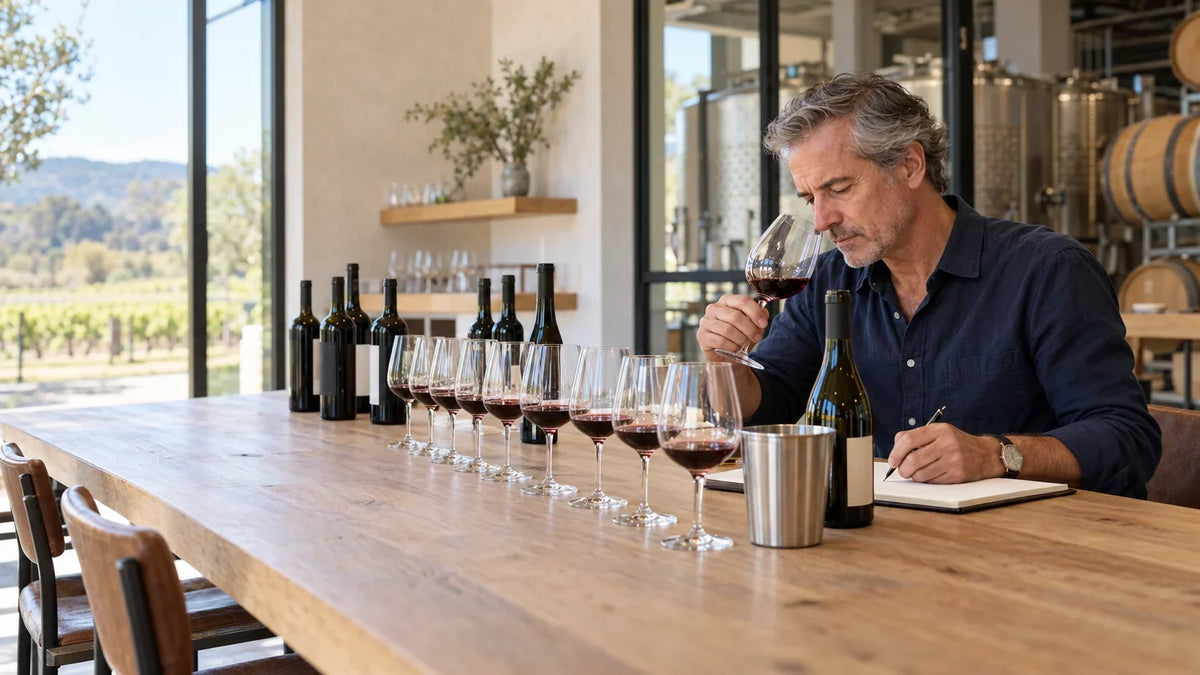
This is how I taste professionally, and it's the only method I recommend to anyone trying to widen their range. Side-by-side is the whole thing. Tasting a new grape in isolation, a week apart from your reference point, tells you almost nothing.
Serving These Grapes Properly
Everything on this list is a structured red, and structured reds get ruined by heat more than by anything else. Room temperature is a phrase from an era before central heating. Aim for 60 to 65 degrees — which for most homes means twenty minutes in the fridge before you pour.
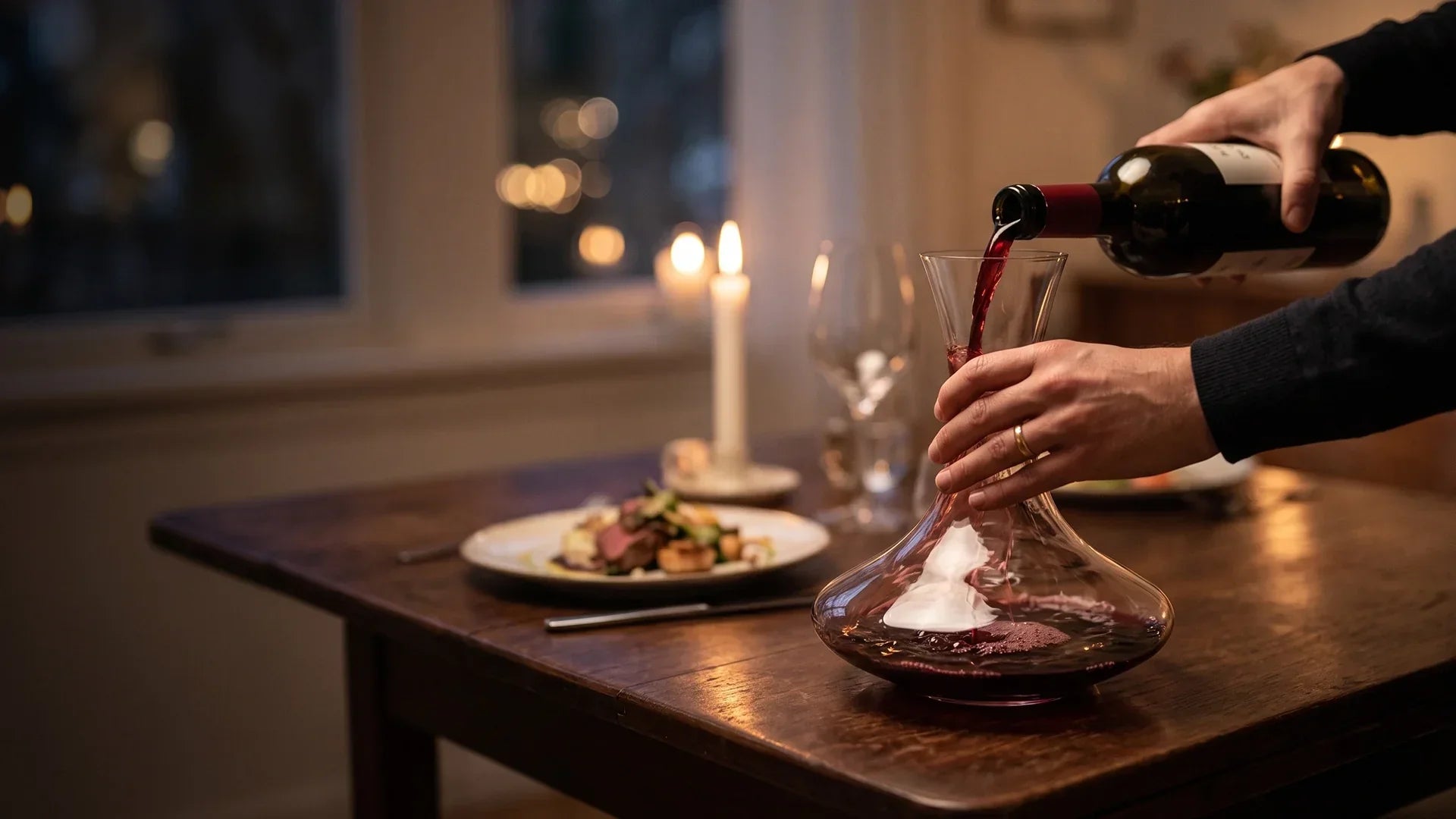
On decanting: most of these don't need it, and I've written at length about why the ritual is oversold. The exceptions on this list are young Sagrantino and young Aglianico, where the tannin genuinely benefits from air. Everything else, pour it and let it open in the glass.
Mini-Glossary
Ampelography — The science of identifying grape varieties by their vines and leaves. It's how Chile's "Merlot" was revealed to be Carménère in 1994.
Tannin — The compound from grape skins, seeds, and oak that creates the drying, grippy sensation on your gums. It's the backbone of Cabernet and the reason these seven grapes belong together.
Structure — The combined framework of tannin, acidity, and alcohol that holds a wine together. When Cab drinkers say they like "big" wines, structure is usually what they mean.
Varietal wine — A wine made from a single grape variety, as opposed to a blend. Petit Verdot is normally a blending grape; a varietal Petit Verdot is bottled alone.
Phylloxera — The root louse that devastated European vineyards from roughly 1869 to 1880. It reshaped which grapes Bordeaux planted and effectively exiled Carménère.
Left Bank / Right Bank — The two halves of Bordeaux. The Left Bank's gravel soils favor Cabernet Sauvignon; the Right Bank's clay favors Merlot and Cabernet Franc.
Indigenous variety — A grape native to a specific place — Aglianico in Campania, Touriga Nacional in Portugal, Sagrantino in Umbria. These grapes rarely carry the brand premium attached to international varieties.
Cassis — Blackcurrant. The single most-cited fruit note in Cabernet Sauvignon and a useful reference point when comparing it to other grapes.
Pyrazines — Aromatic compounds responsible for the green, herbal, bell-pepper notes in Cabernet Sauvignon, Cabernet Franc, and Carménère. Loved by some drinkers, disliked by others — worth knowing which you are.
Montefalco Rosso — An Umbrian red built mostly on Sangiovese with Sagrantino blended in. A gentler introduction to Sagrantino's character.
Schist — The layered rock soil of Portugal's Douro Valley, associated with the mineral edge in the region's Touriga Nacional–based reds.
High-altitude viticulture — Growing grapes at elevation, where cooler nights preserve acidity. Relevant to both Mendoza Malbec and Irpinia Aglianico.
Frequently Asked Questions
What wine is most similar to Cabernet Sauvignon?
Cabernet Franc is the closest genetic relative — Cabernet Sauvignon is a natural cross of Cabernet Franc and Sauvignon Blanc. For the closest match in style rather than genetics, Carménère is the shortest jump: it keeps Cab's savory character with softer tannin.
If I like Napa Cabernet, what else should I drink?
Try varietal Petit Verdot first. It delivers more color and more tannin than Cabernet with blueberry and violet fruit, and it ripens reliably in Napa and Paso Robles. Malbec from high-altitude Mendoza is the other natural step.
Is Malbec similar to Cabernet Sauvignon?
Similar in fruit, different in texture. Malbec gives you the same blackberry and plum depth but with rounder, less angular tannin. You trade some of Cabernet's grip for plushness.
What is the most tannic wine grape?
Sagrantino and Tannat are widely considered the most tannic grapes in the world. Sagrantino from Montefalco in Umbria is the one to try if Cabernet's structure is what draws you to it.
Why is Carménère no longer grown in Bordeaux?
Phylloxera devastated Bordeaux between 1869 and 1880, and Carménère — difficult to ripen and prone to failure — was not replanted. It survived in Chile, where growers farmed it for a century believing it was Merlot until it was correctly identified in 1994.
Is Petit Verdot a good wine on its own?
Yes, in warm climates where it ripens reliably. In Bordeaux it stays a small blending component because it ripens late and inconsistently. In Napa, Paso Robles, Spain, and Australia it makes excellent varietal wine — deeper and more tannic than Cabernet.
What is Aglianico similar to?
Structurally it resembles Cabernet Sauvignon and Nebbiolo: high tannin, high acidity, and long aging potential. Aromatically it's its own thing — sour cherry, ash, smoke, and dried herb rather than cassis and cedar.
Is Touriga Nacional only used for Port?
No. It's Portugal's most important red grape for dry table wines from the Douro, Dão, and Alentejo as well as for Port. Bordeaux has approved it for planting as a climate-adaptation variety.
Which of these grapes is best for aging?
Sagrantino and Aglianico ask for the most time and reward it most. Touriga Nacional and Petit Verdot also age well. Carménère and Malbec are generally built to drink younger.
Where to Start
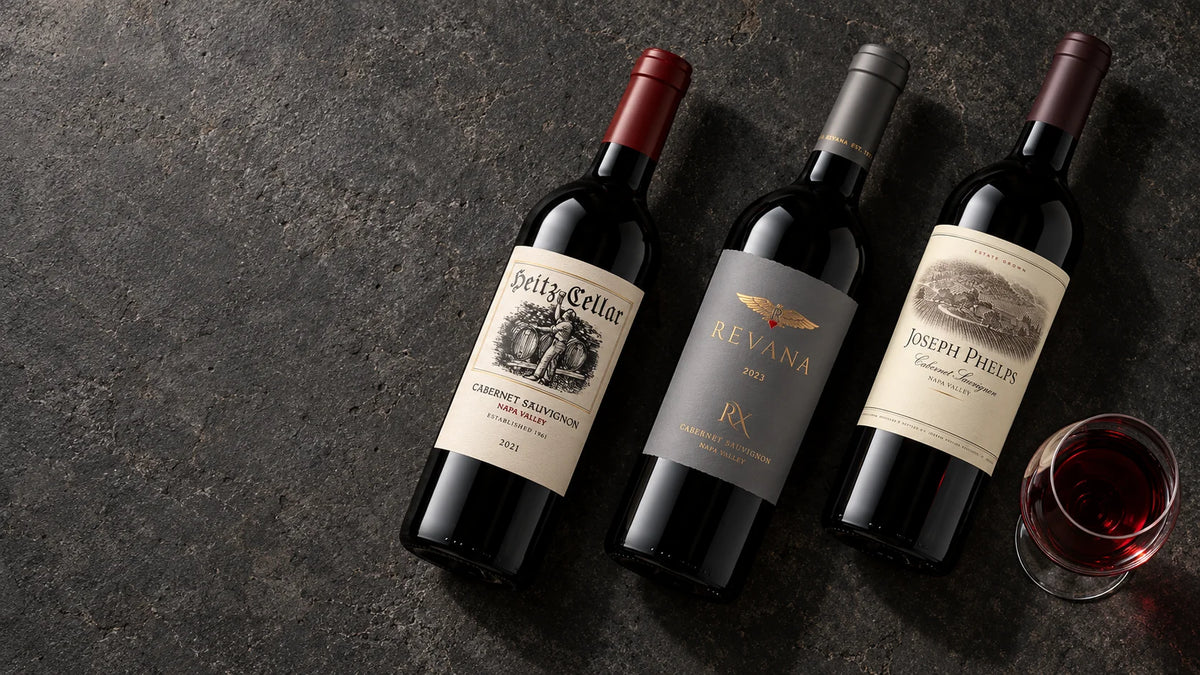
Curious how these compare against the real thing? Our Cabernet Sauvignon collection is the reference point — use one of those bottles as the control in the two-bottle method above.
Ready to wander? The full red wine collection is where Carménère, Malbec, Aglianico, Touriga Nacional, and the rest of this list live. Filter, browse, and save the ones that look interesting.
For the Italian side of this list — Aglianico and Sagrantino especially — start with our Italy collection.
If you'd rather have this kind of pick sent to you than go looking for it, the Founders Text Club is where I send them first.














Share:
Chablis Wine Guide: What It Is, How It Tastes, and Which Tier to Buy
Wine Isn't Dying. Americans Are Drinking Less and Buying Better
Comments Section