

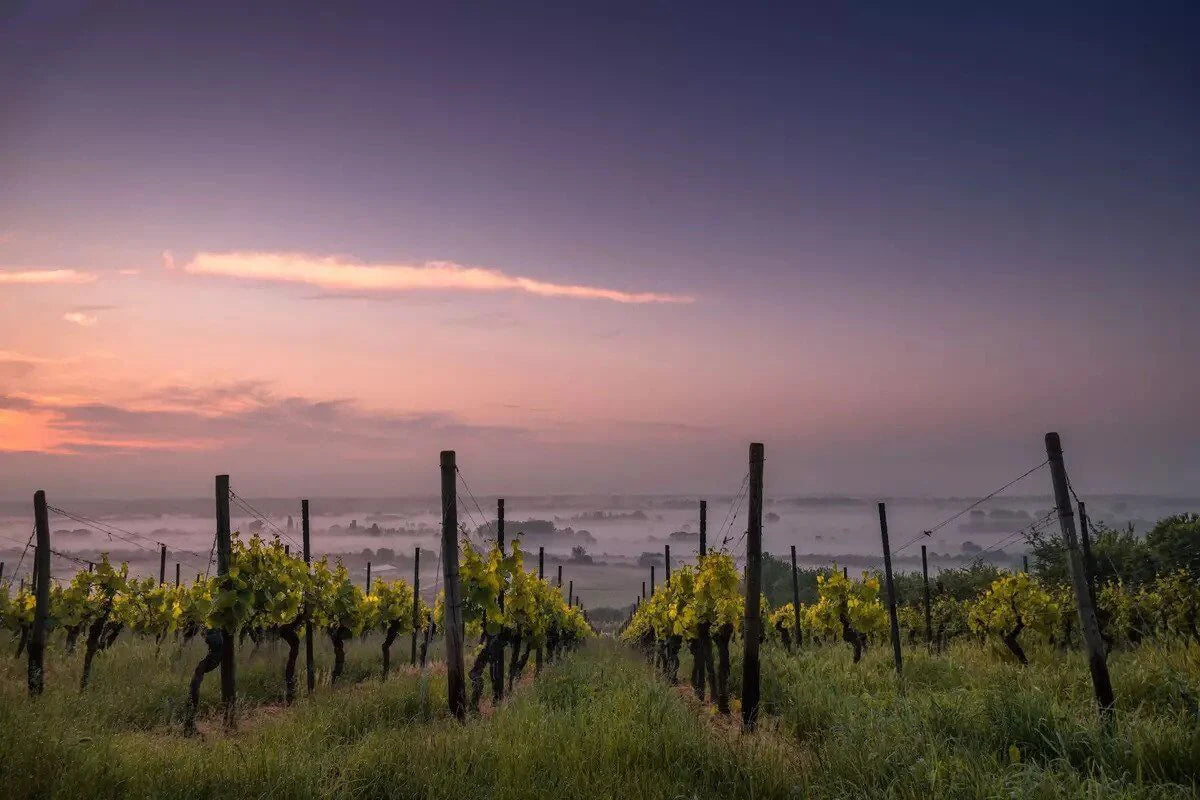
Chablis is a dry white wine from the northernmost part of Burgundy, France, made entirely from Chardonnay.
It is grown on Kimmeridgian limestone packed with fossilized oyster shells and is rarely aged in new oak, which gives it a lean, stony, high-acid style unlike most Chardonnays. Chablis has four tiers: Petit Chablis, Chablis, Premier Cru, and Grand Cru.
Pronounce it: shah-BLEE. Two syllables. The "s" at the end is silent, and so is the "h" in the middle.
Here's the problem with Chablis: most Americans learned the word from a jug.
For decades, California bulk producers put "Chablis" on the label of whatever pale, slightly sweet white they had in the tank. It had nothing to do with France, and it taught two generations that Chablis means cheap and forgettable. So when you see the real thing on a wine list at $70 a bottle, the name fights you.
I've been importing the real thing for years, and I still watch people flinch at the word. This guide is the fix. What Chablis is, why it tastes the way it does, what the four labels mean, and which tier I'd buy for which night.
Key Takeaways
- Chablis is a place, and the grape is always Chardonnay. Every bottle of Chablis, from Petit Chablis to Grand Cru, is 100% Chardonnay grown in the Chablis appellations of northern Burgundy.
- It is always dry and rarely oaky. The steel-and-stone style is the point. If you dislike buttery Chardonnay, Chablis is the Chardonnay you'll like.
- Four tiers, one pyramid. Petit Chablis (about 20% of production), Chablis (about 65%), Premier Cru (13%) and Grand Cru (1.5%). The label tells you exactly where on the hill the grapes grew.
- The soil is the story. Kimmeridgian limestone, a fossil seabed roughly 150 million years old, gives Chablis its flinty, saline edge. Petit Chablis sits on younger Portlandian limestone, which is why it tastes softer.
- You can buy the whole pyramid from one estate. The fastest way to understand Chablis is a village bottle and a Grand Cru from the same producer, opened side by side.
Is Chablis a Chardonnay?

Yes. Every drop of it.
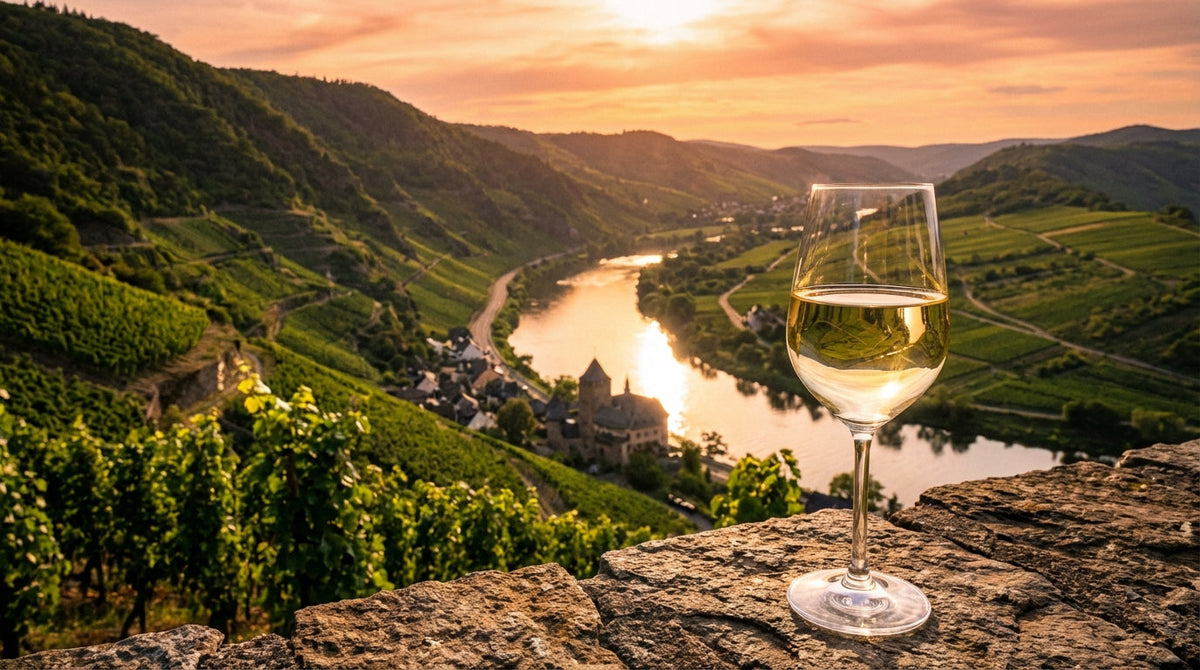
Chardonnay is the grape. Chablis is the place. The Chablis appellations sit in the Yonne department at the top of Burgundy, about halfway between Paris and Beaune, along a small river called the Serein. Only Chardonnay grown inside those boundaries can carry the name. That's why the label says "Chablis" in big letters and often never says "Chardonnay" at all.
The confusion runs the other way too. People taste Chablis, love it, and swear they don't like Chardonnay. Same grape. Different climate, different soil, different winemaking. Chablis is what Chardonnay does when you take away the sun and the barrel.
Chablis vs. Other Chardonnay: What Actually Changes

If Napa Chardonnay is a hug, Chablis is a handshake. Firm, cold, and you remember it.
Why Chablis Doesn't Taste Like Chardonnay
Three reasons, in order of importance.

The soil. Most of the Chablis vineyard sits on Kimmeridgian limestone. That is a specific geological layer laid down as seabed roughly 150 million years ago, and it is visibly full of fossilized oyster shells. Dig a hole between the vines, and you'll find them. The same seam runs southwest to Sancerre and northwest under the English Channel to Dorset. Wines grown on it share a saline, chalky edge that no winemaker can fake.
The climate. Chablis is the northernmost still-wine region in Burgundy, closer to Champagne than to the Côte d'Or. Spring frost is a yearly threat; growers light burners in the vineyard to protect the buds, and the grapes ripen slowly. Slow ripening keeps the acid high and the sugar modest. That's where the "nervy" in every tasting note comes from.
The winemaking. Most Chablis is fermented and aged in stainless steel, or in large old casks that add texture but no vanilla. New oak is the exception, not the rule, and it's used with restraint even at the Grand Cru level. Nothing gets in the way of the fruit and the stone.
The Kimmeridgian story continues 100 miles southwest. Read our Sancerre wine guide for the Sauvignon Blanc grown on the same fossil seam.
What Does Chablis Taste Like?
Dry. Bright. Light to medium body. And then the part that matters.
Expect green apple and lemon first, sometimes white flowers, then a flinty, chalky, almost salty finish that lasts longer than the fruit does. The texture is tight and clean. Good Chablis should never taste sweet, heavy, or toasty. If it does, someone put it in a new barrel, and the label will usually tell you.
Young Chablis drinks crisp and sharp. Give a serious Premier Cru or Grand Cru five to ten years and the citrus softens toward honey, beeswax, and toasted nuts while the mineral spine stays exactly where it was.
The Four Tiers of Chablis, Decoded
This is where Chablis stops being "a French white" and becomes a system you can actually use. The appellation is a pyramid with four levels. The label tells you which one you're holding, and the level tells you what's in the glass and roughly what it costs.

Production shares are the official 2023 figures from the Chablis appellation body. Village-level "Chablis" is the remainder.
Petit Chablis: The One People Underestimate
"Petit" reads as "lesser." It really means "outer." Petit Chablis vineyards sit higher up, on Portlandian limestone rather than Kimmeridgian, and the wines are lighter and fruitier as a result. It's the right Chablis for a Tuesday, for a crowd, and for anyone who finds village Chablis too austere. Drink it young and cold.
Chablis: The One to Learn On
About two-thirds of everything the region makes. Village Chablis is where the Kimmeridgian character shows up in full, and at $30–$45 a bottle it is the best-value expression of that soil I know of. If you buy one Chablis this year, buy this tier from a family estate, not a négociant blend.
Premier Cru: The One That Needs a Year
There are 40 Premier Cru climats grouped under 17 main names. Vaillons, Montmains, Fourchaume, Montée de Tonnerre and Mont de Milieu are the ones you'll see most. These come from better-angled slopes, carry more weight and length than village Chablis, and reward two or three years in the cellar. This is the sweet spot for a dinner party where the wine needs to hold up to the food.
Grand Cru: The One Slope
All seven Grand Crus sit on a single south-facing hillside on the right bank of the Serein, directly above the town, at 100 to 250 meters. Just under 100 hectares in total, producing 1.5% of what Chablis makes. Les Clos is the largest and the most famous. These are the Chardonnays that age for decades and go quiet for years in between. Buy them for a cellar, not a weeknight.
The Seven Grand Cru Climats

Sizes vary slightly between official sources; treat as orientation, not survey data.
How to Pick the Right Chablis: A 4-step Decision
Chablis is one of the few wine regions where the label really does tell you what you need to know. Use it.
- Decide the job. Weeknight oysters or a Thursday fish taco → Petit Chablis or Chablis. Dinner party with a real main course → Premier Cru. A birthday, a cellar, a gift for someone who knows → Grand Cru.
- Read the tier, then the climat. If the label says Premier Cru or Grand Cru, the vineyard name will be on it. That name is the second-most important word on the bottle after "Chablis."
- Favor the estate over the négociant. A family domaine that grows its own fruit on its own Kimmeridgian slope will show you the soil. A blended négociant bottling will show you the average.
- Check the age against the tier. Petit Chablis and Chablis want to be drunk within five years. Premier Cru hits stride at three to seven. Grand Cru is often better at ten than at two.
The two-bottle ladder. The fastest education in Chablis is a village bottle and a Grand Cru from the same estate, opened the same night, same glass, same temperature. Same grape, same cellar, same winemaker. The only variable is where on the hill the vines stand. We keep at least one estate in stock at both ends of the ladder for exactly this reason.
Is Chablis Dry?
Always. Every tier of Chablis is a dry white wine, fermented fully, with the crispness coming from acidity rather than sugar. If a wine says "Chablis" and tastes sweet, it's either very ripe fruit reading as sweetness or it isn't French Chablis at all.
Is Chablis Oaked?
Mostly not. The regional default is stainless steel, or large, old, neutral barrels that add texture without flavor. Some producers use a portion of oak at the Premier Cru and Grand Cru level, but new-oak Chablis is rare and usually declared. The steel-and-stone style is the reason the region exists.
What to Pair with Chablis

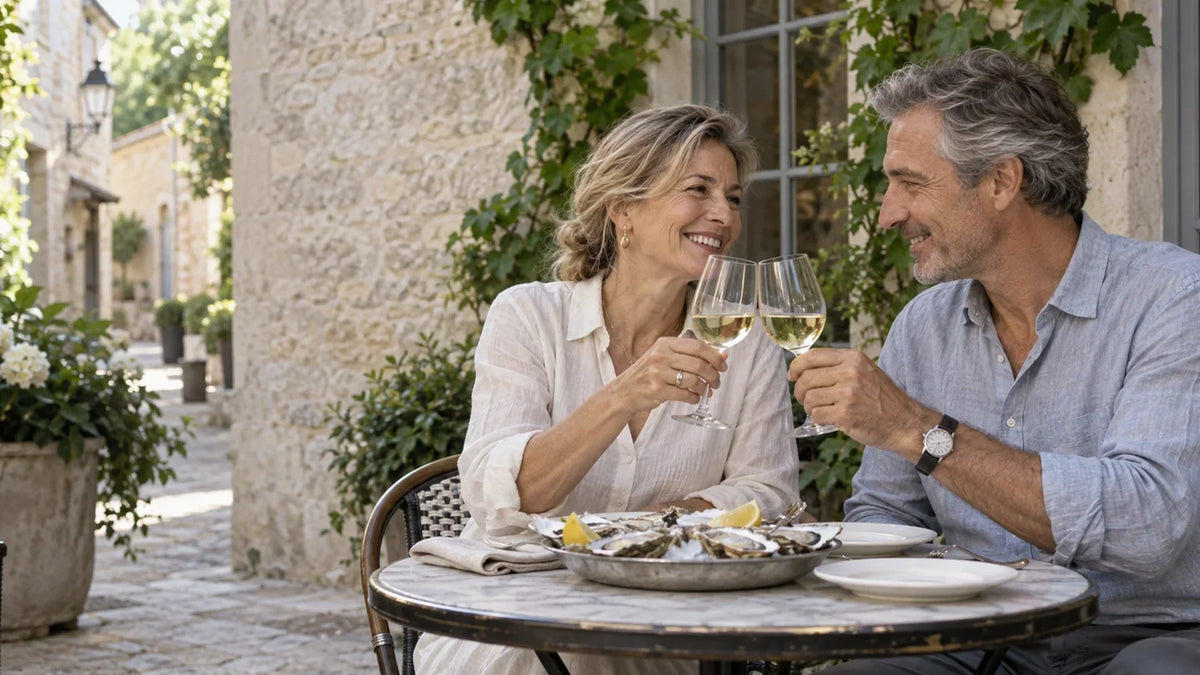
- Oysters — the pairing the region was built for, and the soil explains why. Fossil oyster shells in the vineyard, live oysters on the plate.
- Raw and lightly cooked shellfish — shrimp, crab, scallops, clams. The acid does the lemon's job.
- Sushi and sashimi — cold, clean, high-acid, nothing to fight the fish.
- Goat cheese and Chaource — Chaource is the local cow's-milk cheese from the Yonne; it's the pairing you'll get in the village.
- Fried fish and chips — Chablis cuts fat the way a squeeze of lemon does.
- Roast chicken with lemon and herbs — for Premier Cru and up, when there's enough weight in the glass to meet the bird.
Serve village Chablis and Petit Chablis at 45–50°F. Premier Cru and Grand Cru want a few degrees warmer, 50–55°F, so the texture shows. Straight from the fridge is too cold for anything above village level.
Where to Start: The Collection, and a Few Bottles I Keep Coming Back To
I'd rather point you at the whole shelf than at one bottle, because the shelf changes and this guide shouldn't. Every Chablis we have in stock lives here:
Browse the Chablis collection →
That said, here's what the pyramid looks like on our shelf right now. Prices and vintages rotate; the tiers don't.
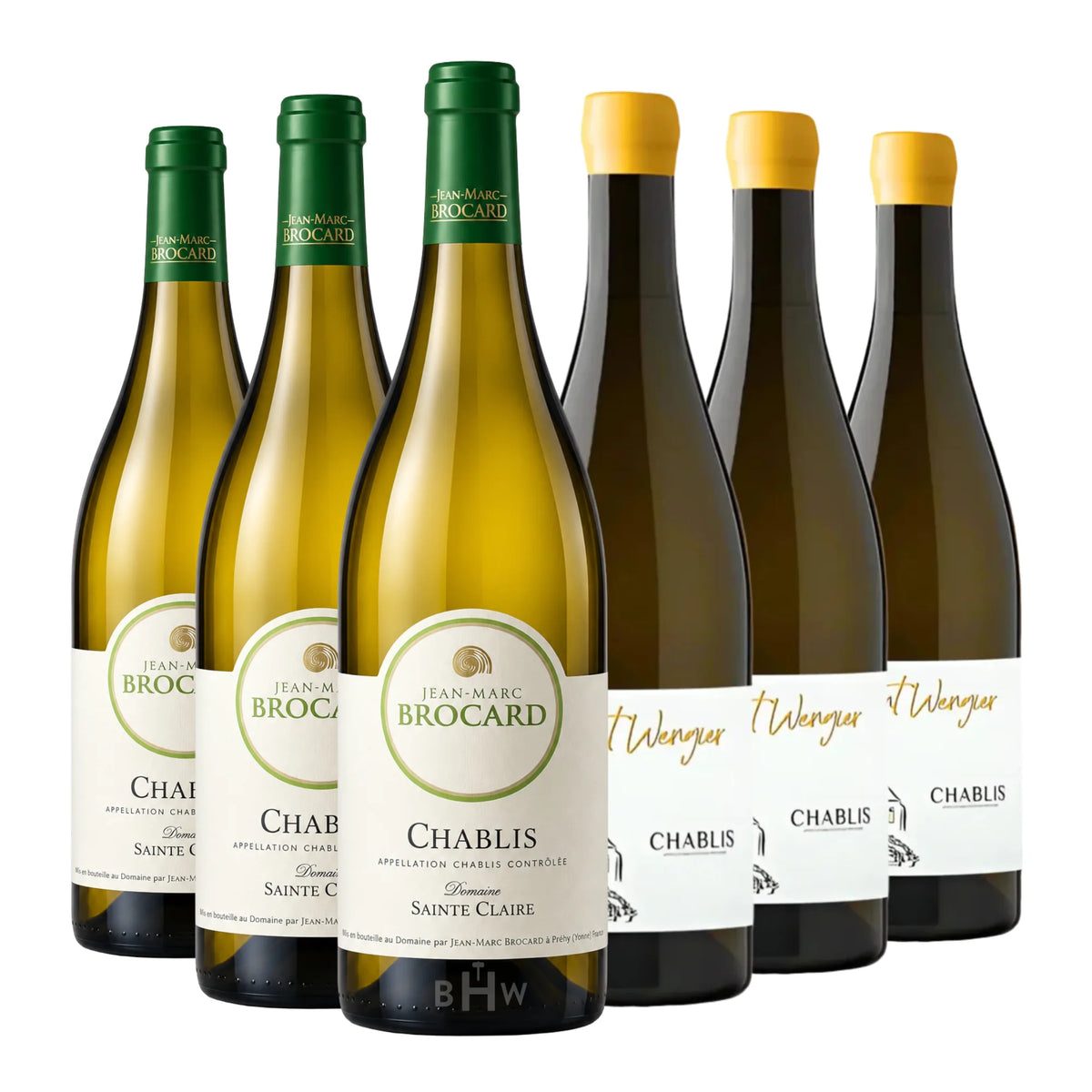
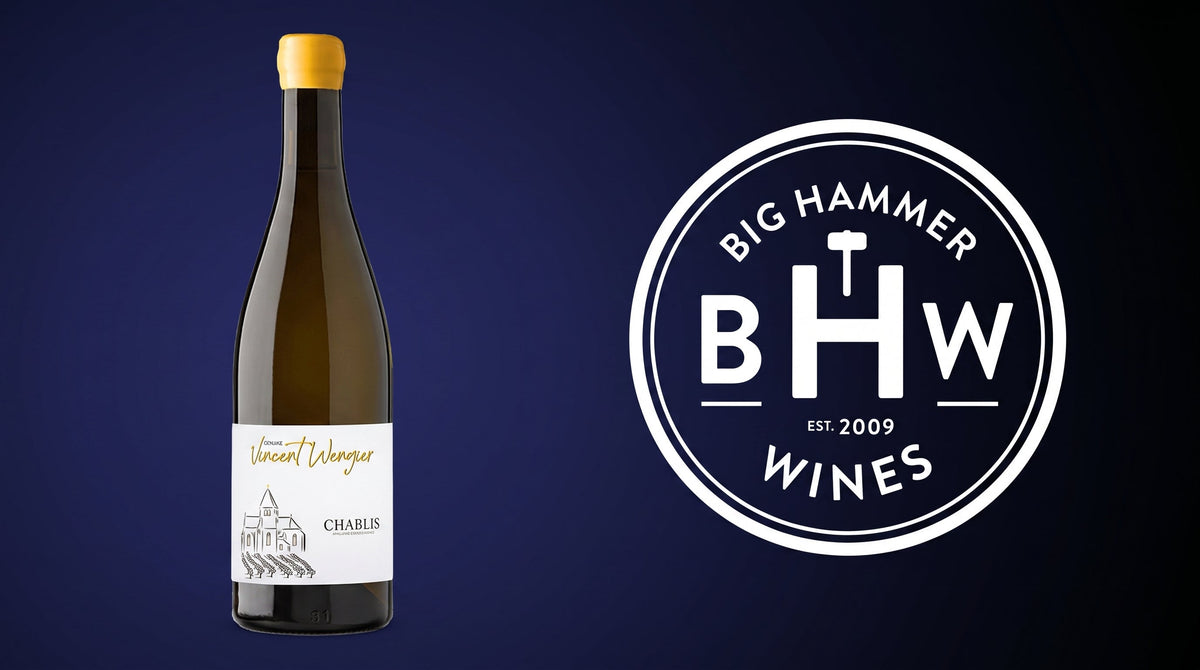
Village Chablis, $30–$45. Two family estates anchor this tier for us. One is the Chablis we've named our #1 of the year four years running, from a domaine in the village of Préhy that farms organically. The other is a biodynamic estate that has been converting the region to organic viticulture for over a decade, working 30-year-old vines on Kimmeridgian limestone and fossilized oyster shell. Either one is the bottle I'd hand a first-timer.
Grand Cru. The same biodynamic estate makes Grand Cru from Les Clos and from Vaudésir, which is the two-bottle ladder in one producer's hands. We also carry a Grand Cru from one of Chablis' most sought-after old-guard domaines, rated 97 points by Wine Advocate and built for decades in a cellar. Stock at this level is thin by nature; check the collection.

Can't decide? Shop this Chablis 6-pack sampler that covers more than one tier and more than one estate.
Merchant's Note
I've tasted a lot of Chardonnay, and Chablis is the version I keep in my own fridge. It's the wine I pour for people who tell me they don't like Chardonnay, and it wins that argument every time. Start with a village bottle from a family estate. If it lands, buy the Grand Cru from the same house and taste the hill. And if you still remember the jug, that's fine. So do I. This is the wine that erases it.
Browse every Chablis we're pouring →
Chablis is the northern gate to Burgundy. The full Burgundy collection runs south from here to the Côte d'Or.
Mini-Glossary
Chablis — A group of four white-wine appellations at the northern tip of Burgundy, France, in the Yonne department. All Chablis is 100% Chardonnay.
Petit Chablis — The outer, higher-elevation tier of Chablis, grown mostly on Portlandian limestone. Lighter and fruitier; about 20% of production.
Chablis Premier Cru — The second-highest tier, from 40 named hillside vineyards (climats) grouped under 17 main names. About 13% of production.
Chablis Grand Cru — The top tier, from a single south-facing slope above the town of Chablis, divided into seven climats. About 1.5% of production.
Climat — A precisely delimited, named vineyard plot in Burgundy. In Chablis, Premier Cru and Grand Cru labels may carry the climat name.
Kimmeridgian — A layer of clay-limestone laid down as seabed roughly 150 million years ago, rich in fossilized oyster shells. The soil of Chablis, Premier Cru and Grand Cru vineyards, and of Sancerre.
Portlandian — A younger, harder limestone that sits above Kimmeridgian on the plateaus. The soil of most Petit Chablis vineyards.
Serein — The small river that runs through the town of Chablis. The Grand Cru slope faces it from the right bank.
Yonne — The French department (roughly a county) that contains Chablis; the northernmost part of Burgundy.
FAQ
What is Chablis wine?
Chablis is a dry white wine from the northern tip of Burgundy, France, made entirely from Chardonnay. It is grown on Kimmeridgian limestone and usually made without new oak, giving it a lean, mineral, high-acid style.
Is Chablis a Chardonnay?
Yes. All Chablis, at every tier, is 100% Chardonnay. Chablis is the name of the place; Chardonnay is the grape.
What is the difference between Chablis and Chardonnay?
Chardonnay is a grape grown worldwide. Chablis is a specific French appellation where that grape is grown in a cool climate on limestone and rarely aged in new oak. The result is leaner, drier and more mineral than most other Chardonnay.
How do you pronounce Chablis?
Shah-BLEE. Two syllables, with the emphasis on the second. The final "s" is silent.
Is Chablis dry or sweet?
Chablis is always dry. Its crispness comes from high natural acidity, not from residual sugar.
What is Petit Chablis?
Petit Chablis is the outermost, highest-elevation tier of Chablis, grown mostly on Portlandian limestone. It is lighter and fruitier than village Chablis and best drunk young. It represents about 20% of Chablis production.
What is the difference between Chablis Premier Cru and Grand Cru?
Premier Cru comes from 40 named hillside vineyards across 11 communes and makes up about 13% of production. Grand Cru comes from seven climats on a single slope above the town of Chablis and makes up 1.5%. Grand Cru is deeper, fuller, and longer-lived.









Ready to Taste Real Chablis? Shop the Collection →
SHOP COLLECTIONShare:
The 12 Best Sangiovese Wines to Buy Right Now, From Everyday Bottles to Brunello
7 Grape Varieties to Try If You Love Cabernet Sauvignon
Comments Section