

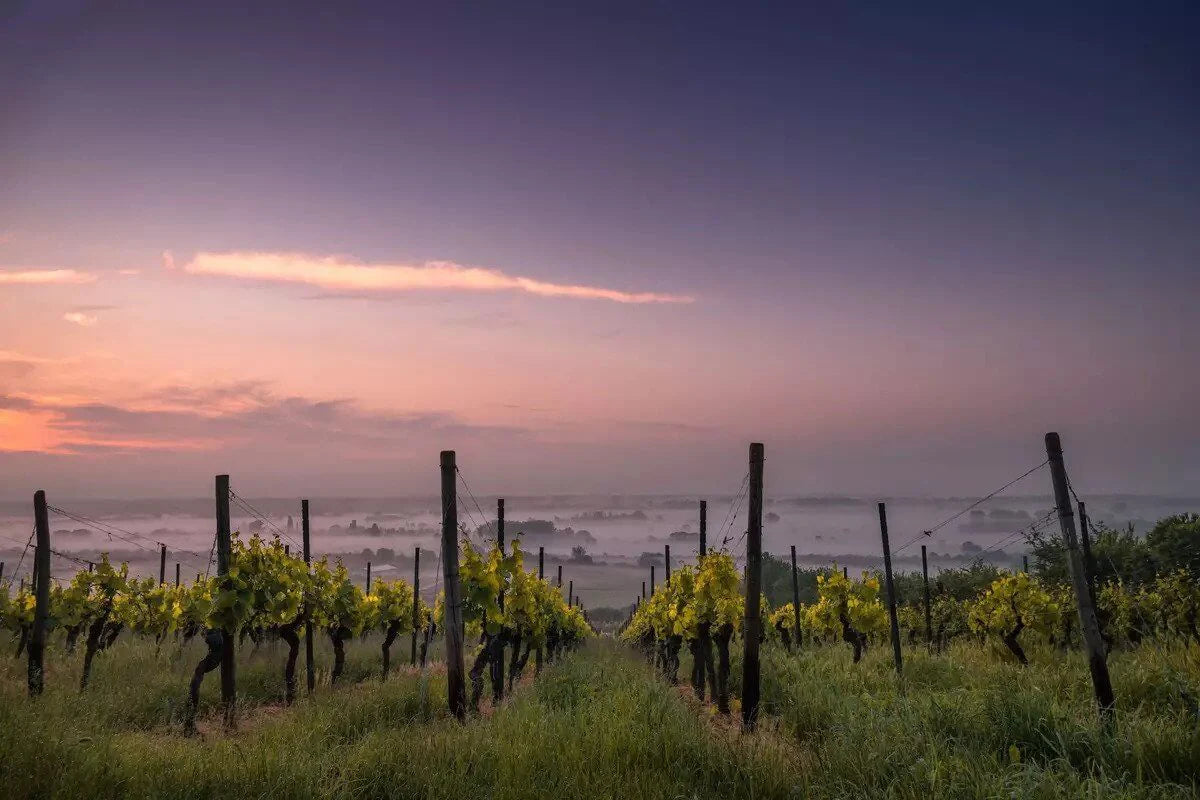
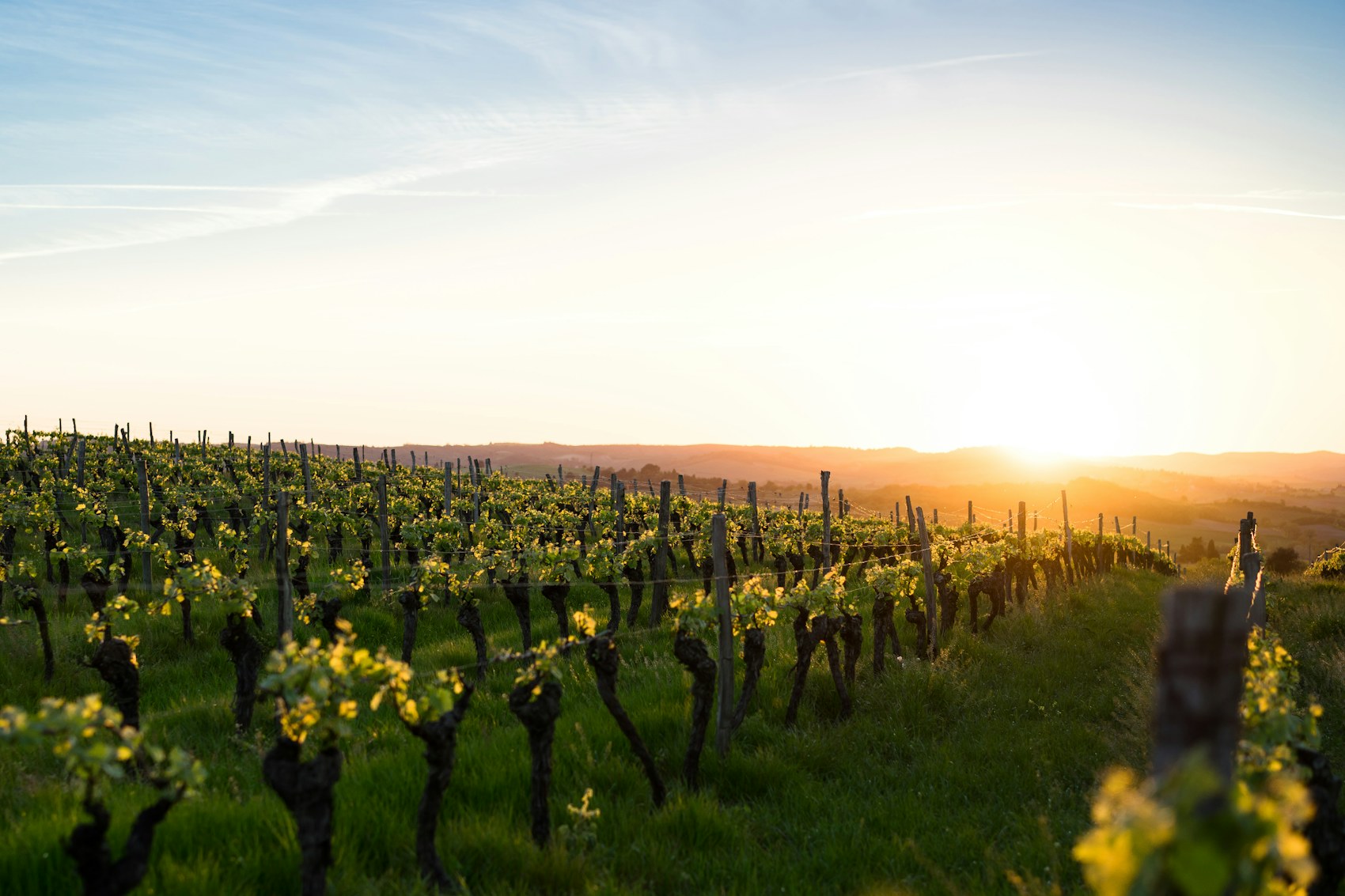
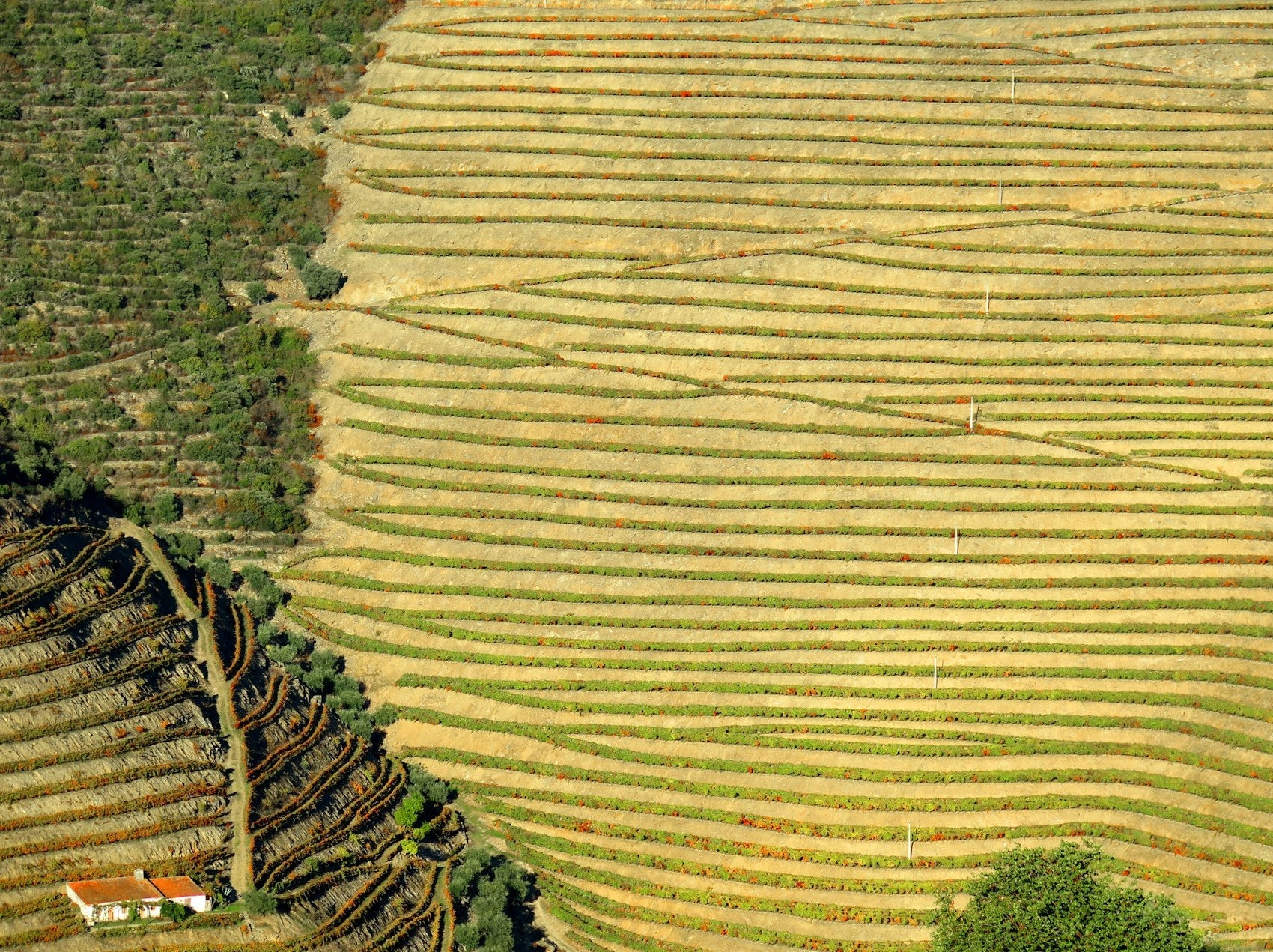
The Rhone is one river wearing two completely different wines. In the north, the river knifes through a granite gorge so steep the vineyards hang off it in stone-walled terraces, farmed by hand and ladder, every one of them pointed at the sun like a solar array - Syrah's birthplace, and still its benchmark. Forty miles south, the walls fall away and the land opens into a sun-hammered plain of garrigue scrub, olive trees, and round river stones, where Grenache leads sprawling blends under a wind that can knock you sideways. Same river, same name on the label - two of the greatest red-wine cultures on Earth, and between them some of the best value in France. If Bordeaux is a bank and Burgundy a chapel, the Rhone is a kitchen: generous, savory, and built for the table.
The North: Syrah on Granite
Northern Rhone is tiny - a few slivers of hillside producing a single-digit share of the valley's wine - and it operates on one red grape: Syrah, which DNA testing confirmed is a native child of these hills. The style is the point of reference for the grape worldwide: blackberry and black olive, cracked pepper, violets, smoke, iron - savory where the New World runs sweet. Cote-Rotie, the "roasted slope," twists the knife with tradition's strangest trick: growers may co-ferment a splash of white Viognier with the Syrah, and the white grape somehow makes the red darker-seeming, silkier, and more perfumed. Hermitage is the single great hill - a granite monolith above Tain crowned by a little chapel - whose wines built the region's fame (in the 18th and 19th centuries, Bordeaux quietly "hermitaged" its thin vintages with this wine to add muscle). Cornas is the black, wild southern amphitheater; Saint-Joseph and Crozes-Hermitage are where mortals buy northern Syrah without auction paddles.
The north also hides France's great white rescue story: Condrieu, the apricot-and-honeysuckle Viognier, was down to a last few dozen acres in the 1960s before a handful of stubborn growers replanted the terraces. And white Hermitage - Marsanne and Roussanne - ages half a century into honey and hazelnut; insiders buy it while the world chases white Burgundy.
The South: Grenache and Warm Stones
The southern Rhone is fifteen times the north's size and runs on Grenache - raspberry, garrigue herbs, warm spice - flanked by Syrah's structure and Mourvedre's dark, meaty grip: the G-S-M formula the world copied. Its capital is Chateauneuf-du-Pape, the "Pope's new castle" from the popes' 14th-century Avignon residency, and the region's history is bureaucratically momentous too: Chateauneuf's growers wrote the rules that became France's first appellation in 1936 - the model for every AOC that followed. The postcard image is real: galets roules, smooth quartzite stones left by the ancient river, paving whole vineyards and radiating stored daytime heat into the night. Thirteen grape varieties are permitted; the fuller-figured wines that result are France's most generous - and its most food-flexible, swallowing everything from cassoulet to barbecue.
The mistral - the cold, violent wind that funnels down the valley a hundred days a year - is the south's secret quality engine: it dries the vineyards after rain, concentrates the berries, and keeps disease pressure so low that organic farming here is almost the default.

The Ladder Below the Icons
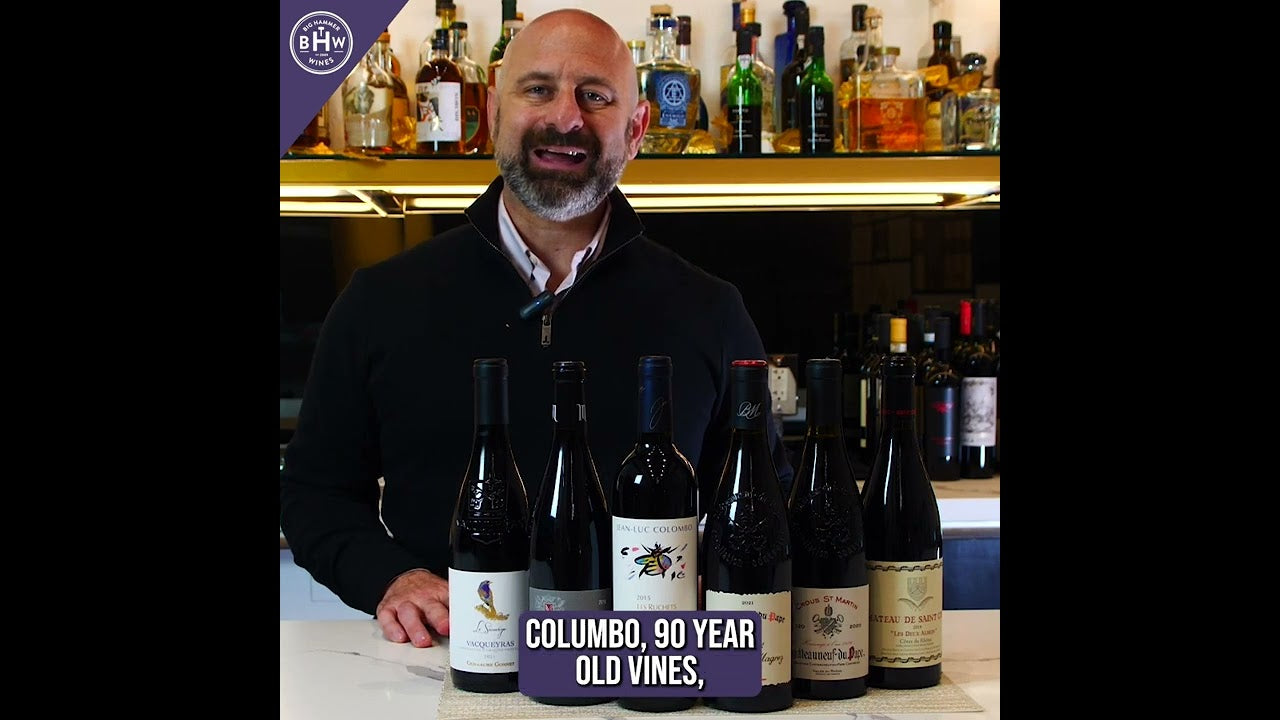
The south's real gift to drinkers is its hierarchy of values. Gigondas, under the jagged lace of the Dentelles de Montmirail, is "Chateauneuf with altitude" - fresher, firmer, usually 40 percent cheaper. Vacqueyras runs warmer and earthier; Rasteau and Cairanne - recently promoted to full cru status - are where sommeliers spend their own money. Below them, Cotes-du-Rhone Villages (watch for named villages on the label) and plain Cotes-du-Rhone deliver France's definitive house red. Two specialties round the map: Tavel, the only French appellation that makes rose exclusively - dark, dry, structured, a food wine with centuries of royal fans - and Muscat de Beaumes-de-Venise, the golden fortified sweet that turns a peach into dessert.
Names That Define It
Guigal is the valley's colossus - its single-vineyard Cote-Roties (the "La-La" wines: La Mouline, La Landonne, La Turque) collect perfect scores, while its basic Cotes-du-Rhone may be the most reliable value red in France. Chave means Hermitage - sixteen generations on the hill. Clape is Cornas; Jamet is Cote-Rotie's purist heart. In the south, Chateau Rayas makes ethereal, pale, haunting Chateauneuf from pure Grenache under pine trees; Beaucastel builds for decades using all thirteen varieties; Vieux Telegraphe bottles the stony La Crau plateau. These are the canon - and unlike most of France's canon, half of them still sell for double digits somewhere on the shelf.
Buying the Rhone Smart
Climb the ladder deliberately: a named-village Cotes-du-Rhone for Tuesday, Cairanne or Rasteau when the braise is serious, Gigondas when you want Chateauneuf's soul at Crozes prices, and the crus of the north - starting with Saint-Joseph - when Syrah is the point. Cellar Hermitage, Cornas, and top Chateauneuf ten to twenty years without fear. And keep one Condrieu and one Tavel in rotation to remind yourself the Rhone was never only red.
Ready to explore? Our Rhone Valley collection carries our current selection. And if you are hunting a specific bottle from the region, contact us for a quote - we source wine globally, with a 12-bottle minimum on special orders.
















Share:
Veneto Wine: Amarone, Soave, Prosecco and the Art of the Dried Grape
Veneto Wine: Amarone, Soave, Prosecco and the Art of the Dried Grape
Comments Section